

The 126th U.S. Open arrives at Shinnecock Hills Golf Club in Southampton, New York on June 18, with all eyes on Scottie Scheffler and his bid to complete the career Grand Slam. With that in mind, RotoWire's Claude simulation model ran 100 probabilistic iterations of the projected Shinnecock Hills field, weighted by FanDuel outright odds, course fit metrics, major championship pedigree, U.S. Open history and recent form.
Results reflect projected win likelihood and are not predictions of a single tournament outcome.
Which Players Have the Best Shot at Winning?
Our top golf betting candidates to win the 126th U.S. Open align closely with the current odds board at FanDuel, with the world No. 1 separating himself from the pack both on the book and in the model.
Scottie Scheffler U.S. Open Odds and Career Grand Slam Outlook
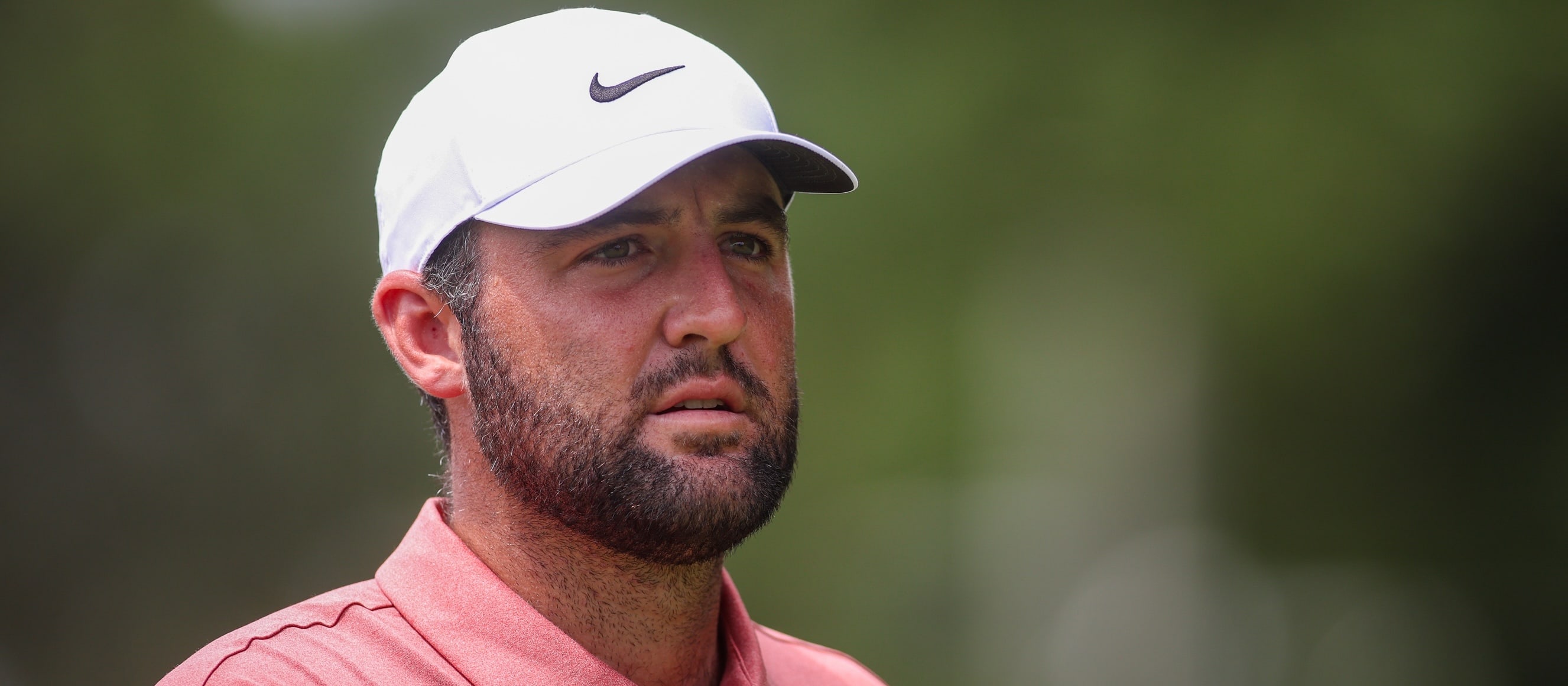
That's because our top pick for this year's U.S. Open is Scottie Scheffler, who is currently listed as the betting favorite at +460. The 29-year-old Texan produced the most simulated victories with 16 out of 100 iterations, as well as a field-leading 57 top-5 finishes and 86 top-10 finishes -- meaning Scheffler cracked the top 10 in more than eight out of every 10 simulations.
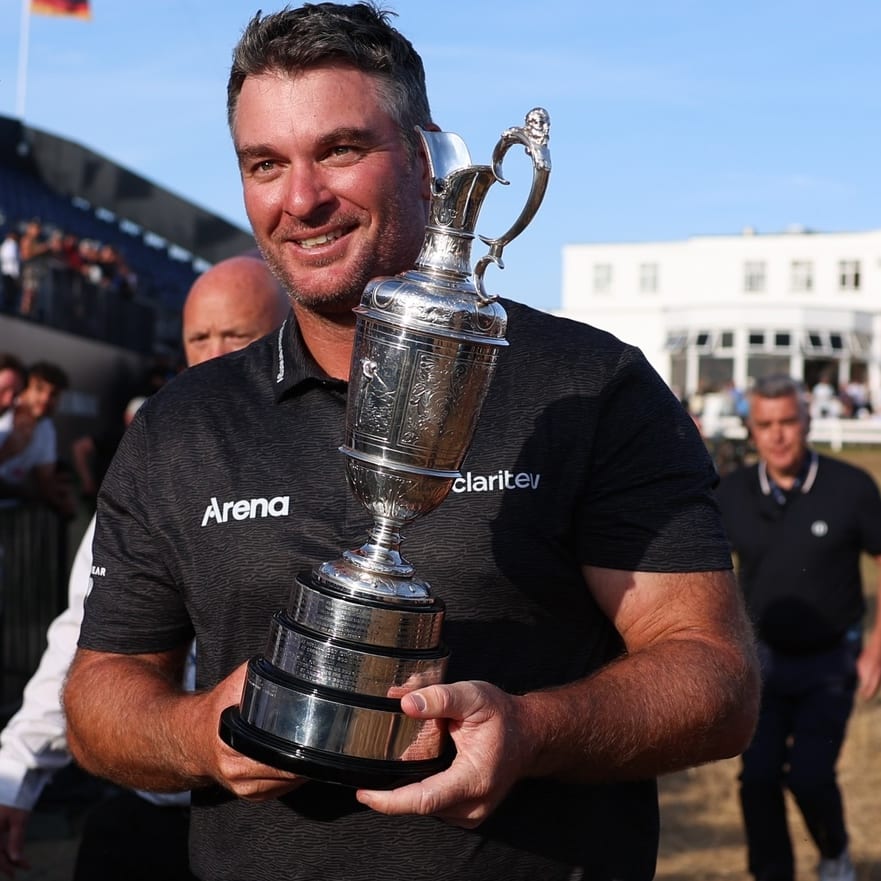
The stakes are as high as they get. Scheffler has won four major championships -- two Masters titles, the PGA Championship, and The Open Championship -- and needs only the U.S. Open to complete the career Grand Slam. If he lifts the trophy at Shinnecock, he'd do so on his 30th birthday (June 21) -- joining Tiger Woods, Jack Nicklaus, Ben Hogan, Gary Player, Gene Sarazen, and Rory McIlroy as the only players to complete the career Grand Slam. He would also do it in his first chance, having won last summer's Open Championship.
Scheffler's U.S. Open pedigree supports the model's enthusiasm: he's finished inside the top 10 in four of his last five starts at the national championship, including a solo second at Brookline in 2022.
Rahm, Xander, McIlroy U.S. Open Projections
Behind Scheffler, Jon Rahm (+1100) and Xander Schauffele (+1600) tied for the second-most simulation wins with seven apiece. Rahm, competing on LIV Golf, brings elite ball-striking and a 2023 Masters title, though his competitive form is harder to gauge outside the PGA Tour ecosystem. Schauffele brings two major titles and finished T7 at the 2026 PGA Championship.
Rory McIlroy (+800) posted just six simulation wins but led the field in top-5 consistency with 38 top-5 finishes and 71 top-10s -- second only to Scheffler. McIlroy became the most recent career Grand Slam winner when he captured the 2025 Masters, then successfully defended at Augusta this April, making him the first back-to-back Masters champion since Tiger Woods in 2002. His 2011 U.S. Open triumph at Congressional (by eight strokes) adds further pedigree.
The model's biggest value mover was Collin Morikawa (+2700), who posted five simulation wins despite carrying implied odds of just 3.6%. The two-time major champion's elite iron play and precision approach game is tailor-made for Shinnecock's demanding green complexes and coastal winds. Cameron Young (+1400) -- a Long Island native who knows the Northeast winds — also posted five wins, rounding out the model's top tier.
LIV Golf U.S. Open Contenders and Simulation Value Picks
One of the more intriguing wrinkles in the simulation: LIV Golf players combined for 18 of 100 simulated victories despite fielding just seven players (so far before final qualifying).
Rahm led the way with seven wins, followed by Bryson DeChambeau and Joaquin Niemann with four each, and Tyrrell Hatton with two. DeChambeau is a two-time U.S. Open champion (2020, 2024), which boosted his model weighting despite back-to-back missed major cuts entering the event. His power game and U.S. Open-specific pedigree keep him firmly in play, though the simulation reflects some skepticism at just four wins on +1600 odds.
Cameron Smith (zero wins but one top-5 finish) also appeared for LIV, though the lack of consistent competitive data against PGA Tour fields remains a factor the model discounts.
Notably, Brooks Koepka -- who won the 2018 U.S. Open at Shinnecock -- is no longer competing on the LIV circuit. The five-time major champion departed LIV after 2025 and returned to the PGA Tour via the Returning Member Program ahead of this season. His Shinnecock course history gave him a significant model boost: one simulation win and 14 top-5 finishes on +3500 odds, well above his 2.8% implied probability. Keep an eye on Koepka's wrist this week, as he was forced to WD from the RBC Canadian Open last Sunday.
Best U.S. Open Longshot Bets and Sleeper Picks
While the top five simulation winners all sit inside the top 10 on FanDuel's odds board, the model identified several players whose simulated performance significantly outpaced their implied probability.
Shane Lowry (+4000) stood out with four simulation wins -- matching DeChambeau and Niemann -- despite sitting well below them on the odds board. The 2019 Open Championship winner brings a links pedigree and wind-tested game that the model rewarded at Shinnecock. However, golf bettors are more than aware of Lowry's struggle to close this season, namely at the Cognizant Classic in March.
Perhaps the most surprising name on the board: Rasmus Neergaard-Petersen (+7000), who posted three simulation wins and nine top-5 finishes. The rising Danish star won the Australian Open earlier this season and earned dual PGA Tour/DP World Tour membership for 2026. At just +7000, his three sim victories represent a significant overperformance relative to his 1.4% implied probability -- the kind of emerging talent the model flags as underpriced.
Russell Henley (+5000) also posted two wins and 10 top-5 finishes, while Sahith Theegala (+10000) emerged as a deep longshot with two sim victories. On the extreme longshot end, Denny McCarthy (+15000) and Andrew Novak (+15000) each posted one simulation victory, while Davis Riley (+20000) was the longest-odds winner in any iteration.
Koepka's value angle was already covered above, but it bears repeating: no other player in the field has won a U.S. Open on this specific course. At +3500, that course history multiplier makes him one of the more interesting mid-tier plays on the board.
The Defending Champion: JJ Spaun
No U.S. Open preview is complete without mentioning the man who hoisted the trophy last. JJ Spaun won the 2025 U.S. Open at Oakmont in dramatic fashion, draining a 64-foot birdie putt on the 72nd hole to win by two strokes over Robert MacIntyre -- one of the most memorable walk-off moments in championship history.
Spaun enters Shinnecock at +7000 and didn't win any of the 100 simulations, but his model profile was stronger than the raw odds suggest: two top-5 finishes, nine top-10s, and a 74% made-cut rate, all boosted by the defending champion's major pedigree and U.S. Open history multipliers. In a field this deep, that's a solid showing for a player at his price point.
The question is whether Spaun's Oakmont magic was a one-off or the start of something bigger. The model says he belongs in the conversation -- just not at the top of it.
What Does Shinnecock's History Tell Us?
Shinnecock doesn't give up birdies. Across five previous U.S. Opens here, only Retief Goosen (2004) and Raymond Floyd (1986) have finished under par. Koepka won at 1-over in 2018. Corey Pavin took the trophy at even par in 1995. This is a course where par wins championships.
Scheffler himself scouted the course earlier this year and noted that "the green complexes there are extremely difficult, and I think that's where the greatest challenge comes from." Past champions at Shinnecock have been patient ball-strikers who control trajectory in the wind and putt well on firm, undulating surfaces -- a description that fits Scheffler, Fitzpatrick, Morikawa and Fleetwood better than anyone else in the field.
Redeem any of the best sportsbook promos here to activate generous sign-up bonuses and offers to use on golf betting odds.
Early Weather Outlook
Shinnecock Hills in late June typically sees highs between 62°F and 82°F, with overnight lows dipping into the upper 40s. The more significant factor is wind: coastal gusts averaging 20 mph are standard for the Hamptons in June, with fog and surprise rain always possible.
Historically, weather has been a decisive factor at Shinnecock -- the 2004 edition saw the USGA lose control of the greens on Saturday, leading to some of the most controversial conditions in U.S. Open history.