The fantasy football offseason is essentially a months-long stock market. Player values rise and fall as coaching changes happen, depth charts shift and news breaks across the league. Free agency doesn't just create winners and losers among players who changed teams. It also reshapes the fantasy outlook for players who stayed put. A new teammate, a departed rival for targets or a coaching change can alter a player's projected role just as dramatically as switching jerseys.
In this installment, we'll evaluate the players whose fantasy value shifted the most based on the moves made around them. Some of these players are poised for breakout seasons they wouldn't have had a month ago. Others are watching their path to production narrow through no fault of their own. If you've missed any previous installments of this series, you can find them here.
Quarterback
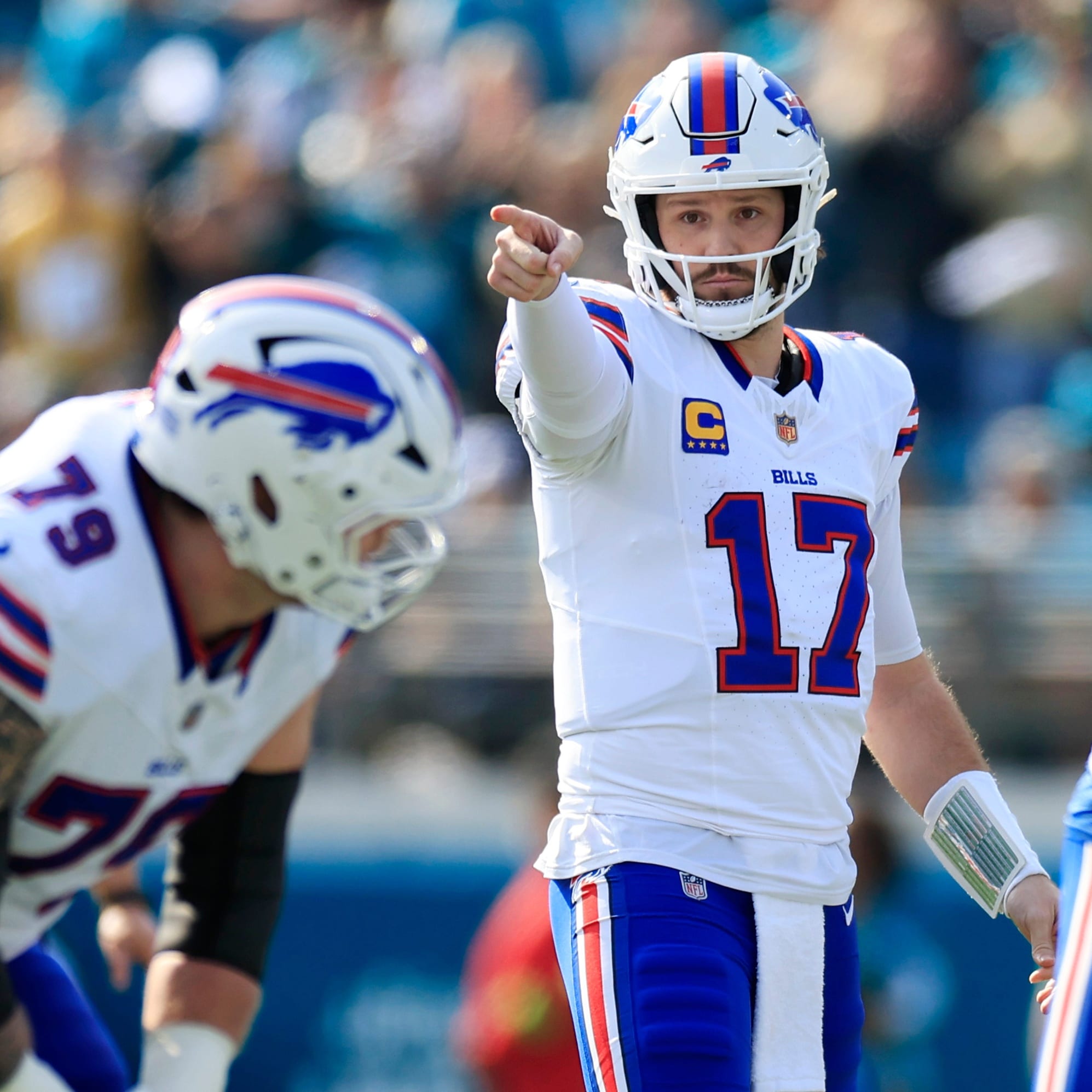
 Josh Allen, Buffalo Bills
The last two years, the Bills have largely operated with a talent deficiency at outside wide receiver. Buffalo had a great rushing attack with James Cook and Allen, and solid performers in the middle of the field with Khalil Shakir and Dalton Kincaid. The lack of outside help allowed defenses to focus on the middle of the field while taking their chances that Allen would run into inconsistency on the perimeter. Any team with Super Bowl hopes will have that type of flaw exposed. Remember when Buffalo was counting on an aging Brandin Cooks to try to win the AFC divisional round?
In comes DJ Moore, and even though it's only one player, this changes the calculus dramatically. Moore was a terrible fit with Caleb Williams in Chicago, and the receiver was often ignored by coach Ben Johnson in game planning. In the games that Moore was involved, he still put up excellent numbers. Moore can win on every type of route, and that ability will lead to Allen leaning on his new receiver early and often.
This matchup should be electric. Even on a run-first team, expect Moore to be a target hog and produce as a borderline WR1. The ripple effect on Allen is meaningful as well. Adding a legitimate outside threat opens up the middle of the field for Shakir and Kincaid, which means defenses can no longer crowd the areas where Buffalo's passing game lived the past two seasons. Allen was already a top-five fantasy quarterback. Moore could push him into the conversation for QB1 overall.
Running Back
 Quinshon Judkins, Cleveland Browns


Judkins' season ended early with a dislocated ankle last year, though he's on track to be ready for training camp. On the surface, the rookie year was disappointing. He averaged 3.6 yards per carry while posting just 49 rushing yards per game over his last seven games. There were two major factors driving the struggles. Cleveland had a horrible offensive line, and defenses had zero respect for Browns quarterbacks.
The bad news is the quarterback situation isn't likely to improve. The good news is that the addition of Elgton Jenkins and Tytus Howard potentially gives Judkins closer to a serviceable offensive line. Those are two proven starters who immediately upgrade the interior and right side of the line. That matters for a back like Judkins, who has the talent to produce if the blocking gives him anything to work with.
Talent isn't the question with Judkins. Situation is. The offensive line additions give a glimmer of hope for an improved second season, but the ceiling remains capped by the quarterback play around him. He's a backend RB2 in fantasy if the line holds up, and a disappointing RB3 if Cleveland's offense continues to be one of the least functional in the league.
Wide Receivers
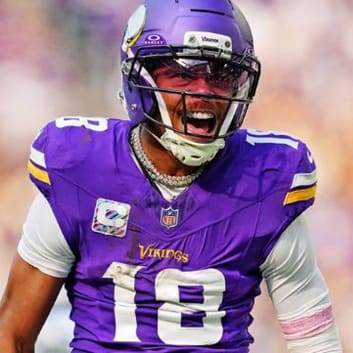
 Justin Jefferson, Minnesota Vikings
Going into the 2025 season, I was on record as saying Jefferson was quarterback-proof. I was wrong. Apparently, the star receiver was not J.J. McCarthy-proof.
Now, Jefferson will catch passes from Kyler Murray. The fantasy community has rightly soured on Murray, but some of that blame must be placed on a toxic Arizona organization that has not figured out how to put together a quality team in years. Murray has excellent arm talent. There are areas of the field where Murray has shown good accuracy. And Jefferson is elite at getting open at all levels of the field. He has made average quarterbacks look good throughout his career.
In the four seasons before McCarthy took over, Jefferson averaged 1,508 yards and eight touchdowns. Those numbers include 2023, when he missed seven games. The volume and efficiency were that dominant. Look for Jefferson to get back into the 1,600-yard range and end the year as a top-3 fantasy receiver.
Kevin O'Connell's system is the key variable. The coach uses pre-snap motion and play action at one of the highest rates in the NFL, which creates easy reads and open windows for his receivers. Murray has never had that kind of coaching infrastructure. Jefferson has always thrived in it. The combination of Murray's arm talent and O'Connell's scheme should be more than enough to restore Jefferson to elite fantasy production.
 Emeka Egbuka, Tampa Bay Buccaneers
Egbuka broke onto the scene during a three-week stretch beginning in Week 3 last year. During that span, he averaged 116 yards and 0.67 touchdowns per game. It looked like a star was born. Until it wasn't.
In the last eight games of the season, Egbuka averaged just 32 yards with zero touchdowns. He had one game with more than 42 yards during that stretch. The first issue was Baker Mayfield, who was never the same after injuring his shoulder around Week 7. The entire Tampa Bay passing game was disappointing from that point forward.
Aside from the expected return to health of Mayfield, the bigger ripple effect comes from Mike Evans leaving to play for the 49ers. As long as Evans was on the field, he was always going to be a focal point of the offense. Evans commanded targets, red zone looks and defensive attention that limited the opportunities available to everyone else in the passing game.
With Evans gone, Egbuka steps into a significantly larger role. He could come at a slight discount in drafts based on the ugly second-half numbers, and that creates a buying opportunity. The situation is prime for Egbuka to build on his early season success now that the target competition has thinned out. Buy the dip. The talent flashed, the quarterback should be healthier, and the path to volume just opened up.
Tight Ends
 Tyler Warren, Indianapolis Colts
Warren was an integral part of the Colts offense until their Week 11 bye. Through that stretch, the tight end averaged five catches, 62 yards and 6.7 targets per game. He was on pace to sail pastm 1,000 receiving yards.
Then the quarterback situation fell apart. Daniel Jones dealt with a fibula injury before tearing his Achilles, and Warren's production cratered. After the bye, he averaged just 3.8 receptions and 28 yards per game, though his targets held relatively steady at 6.4. The issue was clearly at quarterback, not a decline in Warren's usage or ability.
The ripple effect from free agency is significant. After the Colts traded Michael Pittman to the Steelers, 111 targets from a possession-plus receiver have been removed from the offense. That creates an enormous opportunity for Warren. Aside from Alec Pierce, the options battling for targets are Josh Downs and Ashton Dulin. Unless the Colts add to the wide receiver room in the draft, Warren could see more than 130 targets in 2026, giving him the potential to flirt with top-three tight end status.
The Jones health question still looms over everything. If Jones returns at full strength, this offense has the pieces to be productive and Warren is the primary beneficiary of Pittman's departure. If Riley Leonard has to take over, the upside shrinks but the target volume should still be there given the lack of receiving options around him.
 Chig Okonkwo, Washington Commanders
Okonkwo has been in the league for four seasons. During that time, he's averaged 504 yards per season despite averaging just 68 targets. He's been stuck in a series of dysfunctional offenses during his time in Tennessee.
At his best, Okonkwo is a seam stretcher with the ability to be moved around the formation. He's expected to take on the primary receiving tight end role in Washington after Zach Ertz departed. The last two seasons, Ertz averaged 82 targets and played 15 games per year while scoring 11 touchdowns and totaling 1,158 yards across those 30 games. That's the target share and red-zone role into which Okonkwo is stepping.
Okonkwo is a much more athletic option than Ertz was during his time in Washington. The upgrade in quarterback from Cam Ward's rookie struggles in Tennessee to Jayden Daniels is substantial. Daniels loves the middle of the field, and Okonkwo's skill set is built for crossers, seam routes and play-action leaks that this offense generates consistently.
Unless the Commanders use a premium draft pick on a wide receiver, the depth chart behind Terry McLaurin features Luke McCaffrey and Treylon Burks. Volume is king in fantasy football, and if Okonkwo finally gets consistent targets in a functional offense, the production ceiling is much higher than anything he's shown in Tennessee. He projects as a top-12 tight end with upside if the target volume materializes.
Conclusion
The ripple effects of free agency have created meaningful fantasy value shifts across multiple positions. Allen gets the outside weapon Buffalo has lacked for two years. Jefferson gets the Murray upgrade that should restore him to elite production. Egbuka inherits a larger role with Evans departing Tampa Bay. Warren's target ceiling expands significantly with Pittman gone from Indianapolis. And Okonkwo finally has the quarterback and the offensive infrastructure to unlock the athletic potential that's been wasted in Tennessee.
On the running back side, Judkins gets a modest offensive line upgrade that provides hope without guaranteeing results. The quarterback play in Cleveland remains the limiting factor.
The common thread across all of these players is that none of them changed teams. Their fantasy values shifted because the players around them did. Staying ahead of these ripple effects is what separates prepared fantasy managers from those who show up to draft day with outdated information. For the latest depth chart updates and player movement, be sure to visit RotoWire's NFL depth charts.