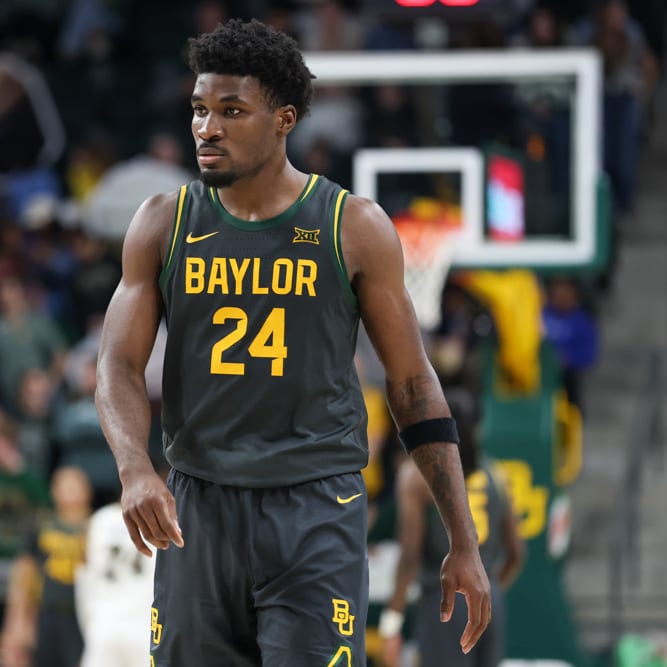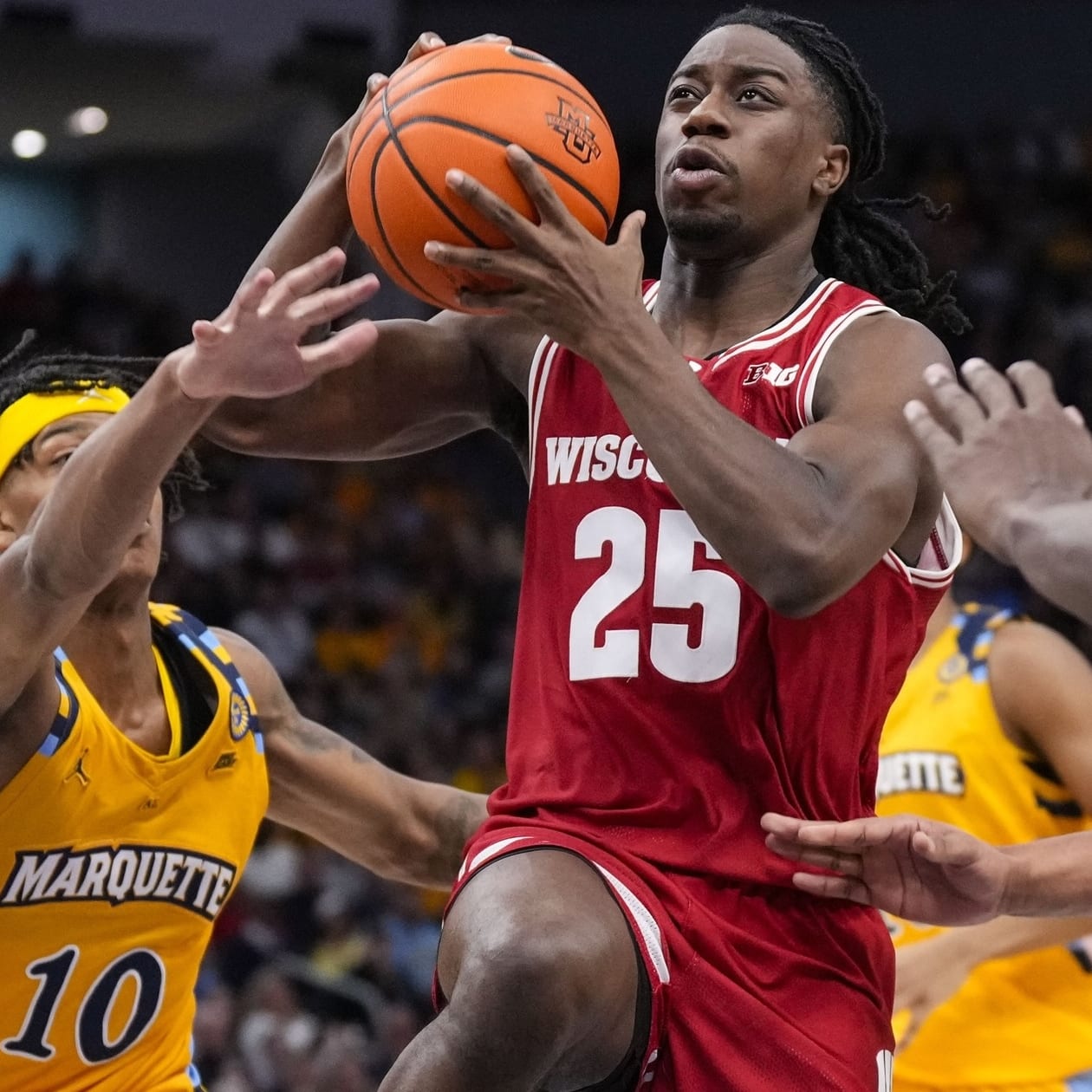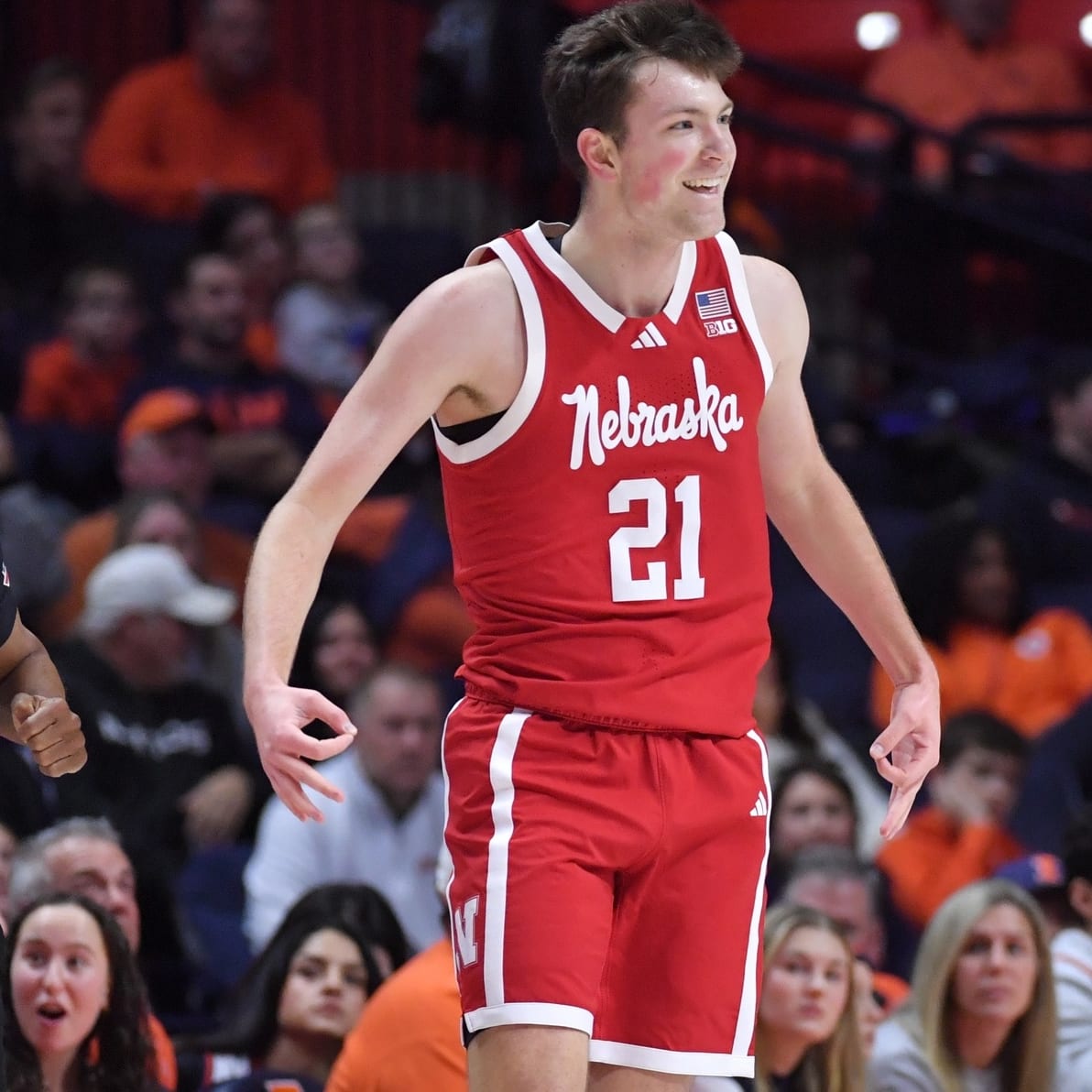



With this week's news of longtime  Creighton Bluejays men's basketball head coach Greg McDermott's retirement, the 61-year-old represents the latest domino in an unprecedented wave of legendary college basketball coaches stepping away.
With that in mind, the team at RotoWire.com tracked 14 coaching successions from the past decade, analyzing what happens to a program in Year One after the legend leaves.
While you're here, get the rundown on new injuries and updates to previously-injured players ahead of the Sweet 16 matchups.

Year One After the Legend Coach
What happens when a long-tenured college basketball coach retires — and someone new takes the wheel? History says: brace for turbulence.
Studied
In Year One
Tourney Yr 1
Rank Drop
Rank Drop
The Case Studies
Click each card to see the full Year One breakdown
The quiet handoff. Fisher spent 18 years building San Diego State from afterthought to mid-major powerhouse, making 8 NCAA Tournaments and winning 386 games. His longtime assistant Brian Dutton took over and has kept the program competitive — SDSU reached the national championship game in 2023 — but the transition was more evolution than disruption. Dutton improved the win total in Year 1 despite missing the NCAA Tournament, and has since delivered the program's greatest moment.
The Cinderella that didn't last. Davis inherited a roster that underperformed in Williams' final season and rode an 8-seed all the way to the National Championship Game — beating Duke in the Final Four in Coach K's farewell. But the magic faded: UNC became the first preseason #1 to miss the tournament the following year, and Davis is now on the hot seat after back-to-back first-round exits, including a shocking loss to VCU in 2026.
The mid-major star hire. Kruger retired after 10 years and a Final Four (2016), and OU hired Porter Moser fresh off taking Loyola Chicago to the Sweet 16. Moser inherited a gutted roster and went 19-16 in Year 1, narrowly missing the NCAA Tournament. Five years in, his record is 91-73 with just one tournament appearance (2025). It's a case where a well-regarded external hire hasn't been able to replicate the predecessor's consistent postseason presence — especially after OU's move to the SEC raised the competitive bar.
The gold standard for succession. Scheyer won the ACC Tournament in his debut season, went undefeated at home (a Duke first for a new coach), and has only gotten better since — reaching the Final Four in 2025 with Cooper Flagg. Coach K himself said Scheyer has done things "better than I would have." The key: Scheyer was embedded in the program for a decade and Duke's recruiting machine never skipped a beat.
The cautionary tale for "Villanova Way" culture. Jay Wright retired at 60, just weeks after a Final Four, stunning the sport. Neptune — a longtime Wright assistant — inherited a program with healthy NIL money, strong recruiting, and the nation's leading scorer in Eric Dixon. None of it mattered. He went 54-47 in three seasons without a single NCAA Tournament bid and was fired in March 2025. Fans chanted "Fire Neptune" at home games. The culture Wright built — senior-led, player-developed — couldn't survive the portal era without Wright's hand on the wheel.
The father-to-son handoff. After 33 years and 634 wins, Bob McKillop passed the program to son Matt, a 14-year assistant. Davidson went from an A-10 champion and NCAA Tournament team to a .500 squad that missed the postseason entirely. Matt has stabilized things since (17-16 in Year 3), but the Wildcats haven't sniffed the NCAA Tournament since his dad left.
A slow decline. Boeheim spent 47 seasons at Syracuse — more time at one school than any D-I basketball coach ever. Adrian Autry, a former Orange point guard and 12-year assistant, was promoted immediately after Boeheim's exit. Year One was actually an improvement at 20-12, but the program never made the tournament under Autry and he was fired in March 2026 after going 15-17 in Year 3. Boeheim blamed the roster's underperformance, but the broader issue was structural — Syracuse ranked among the ACC's lowest in NIL spending.
Inheriting the ruins. Brey stepped down after 23 years and 483 wins — the most in program history — but the program had badly declined in his final years (one NCAA bid in his last 6 seasons). Shrewsberry, a former Penn State coach, inherited a depleted roster and went 12-20 in Year 1. Three years in, he's 41-56 with zero tournament appearances and is 0-11 against ranked opponents. Sometimes the problem isn't the succession — it's that the program was already in freefall before the coach left.
The cautionary tale. Bennett's stunning mid-October retirement left the program scrambling. Key transfer Jalen Warley re-entered the portal, and interim coach Ron Sanchez couldn't replicate Bennett's defensive identity. Virginia went 15-17 — their first losing record in over a decade. Sanchez was not retained, and Ryan Odom was hired. The silver lining: under Odom, the Cavaliers are 30-5 this season and back in the Sweet 16 conversation.
The clean-break bounce back. Larrañaga stepped down mid-season in December 2024, exhausted by NIL negotiations and portal churn. Interim coach Bill Courtney finished the year 7-24. Rather than promote internally, Miami hired Jai Lucas — a Kentucky and Duke assistant with no prior head coaching experience — and he overhauled the roster through the portal. The result: 26-8, a 7-seed in the NCAA Tournament, and ranked #25. It's the strongest argument that sometimes the best succession plan is a total reset.
The steepest fall. Bruce Pearl retired just 42 days before tip-off, handing the reins to his son Steven. Auburn started 14-7 but collapsed down the stretch, losing 9 of their final 12 games to miss the NCAA Tournament entirely — a 15-win drop from a Final Four season. The nepotism criticism was loud, and the program finished in the NIT. Steven Pearl faces a pivotal Year Two with the pressure firmly on.
The NBA pipeline hire. Hamilton resigned after 23 years in February 2025 amid a losing season and NIL lawsuits from former players. FSU hired Luke Loucks — a former FSU point guard who'd been an assistant with the Sacramento Kings, Warriors, and Suns. In Year 1, Loucks essentially held serve at 18-15 (Hamilton's final year was 17-16), missed the tournament, but showed flashes with wins in the ACC Tournament before falling to Duke. The jury is still out, but the "program alum from the NBA" model gives FSU a different kind of credibility in recruiting.
The planned succession. Unlike the other cases, Creighton had a coach-in-waiting plan in place since April 2025. Alan Huss — a Creighton alum and former associate head coach who spent two years leading High Point to the NCAA Tournament — was positioned for a smooth transition. The upside: McDermott's final season was already a down year (15-17), meaning Huss inherits lower expectations rather than a Final Four hangover. History suggests the bar is more manageable when the legend leaves on a low note.
The Emerging Patterns
What the data tells us about life after a legend
Data compiled from Sports Reference, ESPN, CBS Sports, 247Sports, KenPom · March 23, 2026
The Successes
Between McDermott's retirement at Creighton and the possibility of Bill Self's retirement at Kansas, there's no shortage of potential trendsetting leaders stepping away from the men's game this offseason.
In recent years we've seen Jon Scheyer emerge as Duke's Coach K successor, while head coach-in-waiting Alan Huss will look to do the same in McDermott's stead next year.
Among the coaches that set the bar for their respective schools that chose McDermott's way out, success stories include the Coach K-Scheyer transition in 2022, in addition to San Diego State's move from Steve Fisher to his longtime assistant, Brian Dutcher.
While Fisher had an impressive .649 win percentage with the Aztecs, you could argue his heir apparent has performed even better on The Mesa, taking the Aztecs to the program's first Division, I title game in 2023 and posting a .736 win percentage since taking over full-time in 2017.
While Scheyer's first season in Durham (27-9) and Dutcher's debut in San Diego (22-11) were impressive, other coaching replacements' Year One campaigns weren't as pretty.
Scheyer inherited the top recruiting class in the nation upon assuming the Duke throne ahead of his debut campaign, but he also managed to keep the Blue Devils at the level his coach left it at, with that year's team finishing 16th on Ken Pomeroy's KenPom.com rankings, down nine spots from the year before but still among the nation's elites.
Dutcher did equally impressive work, upping San Diego State's win total from 19 in Fisher's final year there to 22, while getting the Aztecs back into the Big Dance after they missed out in each of his longtime mentor's final two seasons with the Mountain West power.
Another success story (at first, at least) happened in Chapel Hill, where Roy Williams' hand-picked successor, Hubert Davis, took the North Carolina Tar Heels to the title game before ultimately falling to Kansas, 72-69.
While Davis' future remains in doubt following successive first round defeats, his first year success on the heels of a man who won 485 games with the ACC blue blood spoke to how there doesn't have to be a drop-off after a legend retires.
In more recent years, the Miami Hurricanes have seen a similar trajectory after Jai Lucas assumed the head coaching role from Jim Larrañaga, who retired at the end of the 2025 season.
In Coral Gables, Lucas has taken over a 'Canes team that went 7-24 and taken them to the second round of the Big Dance, where UM ultimately fell to second seed Purdue, but not before setting the bar for future teams at the ACC program.
In the case of recent transitions (or at least when it came to the three ACC programs), recruiting was the name of the game in keeping the pace up, with Duke, Miami and UNC all keeping top 15 classes intact after their longtime leaders left.
Check out RotoWire's South Region Sweet Sixteen Preview and Predictions for matchup breakdowns and other key factors to consider when prediction the Sweet 16.
The Failures
The same cannot be said of those in the latter camp, including now-former head coaches like Kyle Neptune, who replaced Villanova legend Jay Wright in 2022, only to go 17-17, 18-16 and 19-14, missing the NCAA Tournament each season.
Throw in names like Adrian Autry at Syracuse and Virginia's Ron Sanchez and you have a decent snapshot of the mixed bag that can come from trying too hard to keep it in-house when a campus legend hangs up the whistle.
In Autry's case, that run at Syracuse lasted all of three seasons, with the former Orange guard winning 20 games his debut season after Jim Boeheim's retirement, followed by consecutive clunkers on The Hill, going 29-36 and finishing his tenure with zero NCAA Tournament berths before handing the ropes to another of Boeheim's star guards, in Gerry McNamara.
In Neptune's case, an inability to recruit at the level that Wright did (with Villanova's first team after his retirement falling 26 spots, from 12th to 38th nationally) ultimately tanked his tenure, leading to a change on the bench that ultimately allowed Kevin Willard to take over in Philadelphia.
Sanchez's case at UVA is unique, as national championship-winning coach Tony Bennett announced his retirement 18 days before the start of the season in 2024.
That lack of heads-up, timing wise, plus the glut of UVA stars that abandoned ship through the transfer portal helped explain why the Cavaliers wound up going 15-17 during Sanchez's lone season in charge of the program before former UMBC, Utah State and VCU head coach Ryan Odom got the job.
It appears that another in-house hire is at risk of falling through the cracks, with Auburn's decision to keep it in the family when Bruce Pearl retired at the end of the 2025 season led to a huge fall-off, wins wise, under his son, Steven's watch.
In total, the Tigers went from 3rd on Pomeroy's rankings at the end of last season to 62nd in Steven's first year as a head coach, while Auburn's recruiting rank crumbled from fifth to 34th, helping explain Auburn's 17-16 clunker of a season.
The common theme between all of the men who found their names in this part of the story is the lack of recruiting wins for each, with each of the programs mentioned above seeing their rankings crumble after their cornerstone coaches called it a career.
Check out RotoWire's West Region Sweet 16 Preview for an in-depth breakdown of the matchups and Elite 8 picks.
The Pattern: Recruiting Is Destiny
When it comes to trying to read the proverbial tea leaves on whether a coaching succession will succeed, the bottom line is that recruiting rankings have a way of foretelling things.
That's because those rankings, put together by sites like 247 Sports, have served as the strongest indicator of what separates the success stories from the failures that led to coaching changes.
Each program surveyed for this story that kept its recruiting rankings in the top 15 nationally on 247 Sports the year after their long-time head coach left made the Big Dance.
Conversely, those that dropped off in recruiting by 20 spots or more failed to reach the tourney, with transfer portal emigration and on-court brain drain hampering any shot at substantive momentum for those programs.
What's Next
While the nation waits to see if two-time national champion Bill Self will follow McDermott into retirement, after hinting at such after KU lost on a last-second layup to St. John's in Sunday's second round, we know that there will undoubtedly be substantive change in men's college basketball soon.
That's because, whether it's Self or the sport's other elder statesmen like Tom Izzo at Michigan State (who's 71 and in his 31st season in East Lansing), Rick Barnes (72) or Houston's Kelvin Sampson (70), we know that the end's coming for all involved sooner rather than later.
In Sampson's case, the three-time Final Four head coach has already tabbed his son, Kellen, tabbed to take over the Cougars' program, as the 40-year-old has been an assistant with Stephen F. Austin, Appalachian State and under his father at Houston since 2010, giving him ample knowledge heading into what will be his first head coaching role.
In Creighton's case, Alan Huss' ascension from assistant to head coach in Omaha comes after his three-year stint leading High Point, where he won two Big South regular season and the 2025 Big South Tournament title.
Also, Huss played at Creighton from 1997 to 2001, before serving as an assistant at New Mexico (from 2014-2017) and under McDermott (from 2017 to 2023), meaning he should know full well what it'll take to get the Bluejays back atop the Big East.
Based on those 247 Sports' recruiting rankings, the number to watch for Huss and company is 27, which was where McDermott's final class in 2025 ranked.
So far, the same site has the Bluejays 37th nationally in the class of 2026 rankings, though there's still ample time for Huss to clean up and get Creighton back where they finished the year before.
Still, when it comes to succession plans in men's college hoops, there's no such thing as a sure thing, even if the legends themselves give their respective employers plenty of time to come up with a plan.
One such case study is Izzo at Michigan State, with the national championship winning coach telling media members on March 22 that his current team, "Just prolonged my retirement for two years." Still, based on the data, it seems like the various athletic directors of the Division I level should start preparing now.