

Ask any NFL fan which stadium they most want to visit and they'll have an answer ready. It might be the iconic venue their team has never played in, a legendary building they grew up watching on TV or the flashiest new stadium in the league. But when you actually survey fans across all 30 NFL venues, the rankings tell a more interesting story than you might expect.
RotoWire.com - home to the top sports betting apps ahead of the NFL Draft - surveyed 215 fans in March 2026 and asked them to pick one stadium. Here's how every building ranked -- and what those results reveal about what actually makes a stadium worth the trip.
NFL Stadium Bucket List Rankings
Lambeau Field: The Undisputed #1
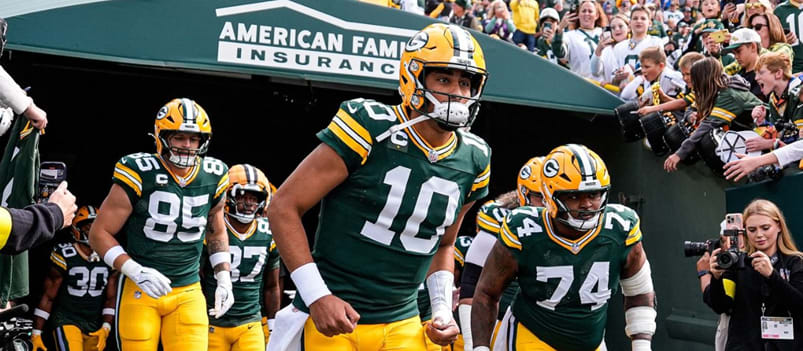
Lambeau Field earned 20.9% of all votes -- nearly 6.5 percentage points clear of second place. In a survey with 30 options, having more than one in five respondents pick the same answer is a landslide.
What makes it remarkable is who voted. Only 5 of the 45 Lambeau votes came from Packers fans. The other 40 came from fans of 21 different franchises -- rivals, coastal fans who have never been to Wisconsin, supporters of teams with their own storied venues. That is not home-stadium loyalty. That is collective reverence.
Opened in 1957 and named after legendary  Packers founder Curly Lambeau, the stadium sits in the smallest market in professional sports and is the only publicly owned franchise in major American pro sports. The "frozen tundra" label it earned from the 1967 Ice Bowl -- played at minus-13 degrees Fahrenheit -- became one of the most enduring images in NFL history. More than six decades later, fans who weren't alive for that game still put it at the top of their list.
SoFi and Allegiant: New Money, Real Appeal
SoFi Stadium (14.4%) and Allegiant Stadium (9.8%) both opened in 2020, and both cracked the top three. These are the two most ambitious stadium builds in NFL history, drawing fans who want to experience what the next generation of football venues looks like.
SoFi Stadium cost roughly $5.5 billion -- the most expensive sports venue ever constructed. Its defining feature is a translucent ETFE roof that lets natural light in while keeping weather out, a design that took years to engineer and has no real precedent in American sports architecture. From any seat in the building, fans feel like they're in an open-air stadium while being sheltered. It hosted Super Bowl LVI in 2022 and will be a fixture on the Super Bowl rotation for decades, including Super Bowl 61 on Feb. 14, 2027.


Allegiant Stadium in Las Vegas has something SoFi doesn't: the Strip. The  Raiders' $1.9 billion venue is inseparable from its city, and Las Vegas is uniquely good at turning a sporting event into a multi-day destination. Fans who vote for Allegiant aren't just voting for the stadium — they're voting for the weekend around it. The all-black exterior and dramatically lit interior earned it the "Death Star" nickname, and the retractable natural-grass field adds a practical element to match the spectacle.
AT&T Stadium and Soldier Field: Two Kinds of Iconic
AT&T Stadium (8.8%) and Soldier Field (5.1%) round out the top five and represent opposite ends of the architectural spectrum.
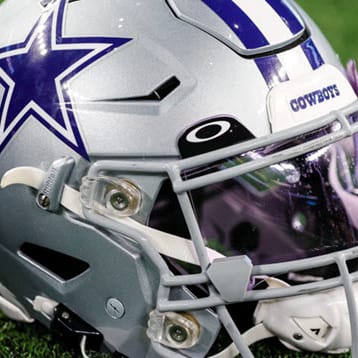
AT&T Stadium, known universally as Jerry World, is maximalism at full volume. When it opened in 2009 in Arlington, Texas, it was the world's largest domed stadium. The 160-foot-wide high-definition video board suspended above the field remains one of the most jaw-dropping things in any sporting venue.  Cowboys owner Jerry Jones wanted it to be as much spectacle as stadium, and by any objective measure it succeeds. People want to see Jerry World whether they like the Cowboys or not.
Soldier Field is the opposite proposition. Opened in 1924 on the lakefront of Lake Michigan in Chicago, it's the oldest stadium in the NFL by nearly 35 years. Its neoclassical colonnade looks more like a Greek temple than a football stadium and is listed on the National Register of Historic Places. A controversial 2002 renovation inserted a modern bowl inside the historic exterior. But for fans who want to stand somewhere genuinely old and genuinely different, Soldier Field is the answer.
The Middle Tier: Atmosphere, Architecture, Location
Below the top five, a cluster of venues compete on different terms -- some on atmosphere, some on architecture, some simply on geography.
Levi's Stadium (3.7%) in Santa Clara is the most tech-forward venue in the NFL, its design reflecting the Silicon Valley zip code it occupies. Rooftop solar panels power every 49ers home game. It hosted Super Bowl 50 in 2016 and Super Bowl 60 on Feb. 8, 2026. It remains a go-to venue for major events in Northern California.
Hard Rock Stadium (3.3%) in Miami has hosted five Super Bowls and sits in one of the best sports cities in the country. A 2016 renovation added a canopy structure -- nicknamed "the wing" -- that provides shade across the entire seating bowl while keeping the venue open-air. Outdoor football in South Florida went from barely tolerable to genuinely comfortable.
Highmark Stadium (3.3%) in Orchard Park is the great outlier in this tier. There's nothing architecturally remarkable about it -- it's cold, wind-swept, and was built in 1973. But the Bills Mafia tailgate culture is among the most famous in professional sports, making it a bucket-list destination for fans who want an atmosphere that can't be replicated elsewhere. The  Bills are building a new stadium next door, which is scheduled to open next season. We will see if the team can finally capitalize at the best NFL betting sites with a Super Bowl for Josh Allen.
Arrowhead Stadium (2.8%) in Kansas City holds the Guinness World Record for loudest outdoor stadium, certified at 142.2 decibels in 2014. The  Chiefs have sold out every home game since 1991. Arrowhead's 9th-place finish likely reflects the survey's sample size more than any lack of reputation.
Mercedes-Benz Stadium (2.8%) in Atlanta opened in 2017 and immediately became an architectural landmark. Its retractable roof -- eight panels that fold back like a camera aperture, inspired by the Roman Pantheon oculus -- has no equivalent in the NFL. It was the first American professional sports venue to earn LEED Platinum certification.
Lumen Field (2.8%) in Seattle is widely regarded as the loudest enclosed stadium in football. The cantilevered roof design traps and focuses crowd noise onto the field, and the 12th Man tradition has produced multiple decibel records. The view of Elliott Bay and the Seattle skyline from the upper deck adds a geographic appeal most stadiums can't match.
The Lower Third: Underrated Venues Worth Knowing
U.S. Bank Stadium (2.3%) in Minneapolis may be the most underrated building on this list. Its asymmetric glass exterior functions as a genuine city landmark, and ETFE panels flood the interior with natural light that gives it a greenhouse atmosphere unlike any other NFL venue. It hosted Super Bowl LII and the 2019 Final Four.
MetLife Stadium (1.9%) in East Rutherford is the largest venue in the NFL at 82,500 seats and the only one co-tenanted by two teams as full co-owners. It hosted Super Bowl XLVIII in 2014 and is the anchor venue for the 2026 FIFA World Cup, including the final. Its ranking likely suffers from New Jersey's limited destination appeal.
Caesars Superdome (1.9%) in New Orleans has hosted more Super Bowls than any other single venue -- seven in total. Its history deepened when it served as a shelter during Hurricane Katrina in 2005, sustaining major damage before reopening just 13 months later. New Orleans is one of the great sports cities in America. The Superdome's 1.9% ranking feels low for the  Saints.
Empower Field (1.9%) in Denver offers something no other NFL stadium can: Rocky Mountain views from the upper deck and an elevation of exactly one mile above sea level. Three Super Bowl-winning teams have called it home, and the thin air is a genuine factor in games played there.
Raymond James Stadium (1.9%) has hosted three of Tampa's five Super Bowls. It was the first stadium to host a Super Bowl featuring its own home team -- the  Buccaneers won Super Bowl LV on their home field in 2021. The 103-foot pirate ship in the north end zone that fires cannons after every score is one of the more distinctive features in the league.
Ford Field (1.9%) in Detroit is a retractable-roof indoor stadium built into a downtown warehouse block, with the original red-brick Hudson's warehouse facade incorporated into the north wall. It hosted Super Bowl XL in 2006. As the Lions have become one of the NFL's most exciting teams in recent years, Ford Field's atmosphere has transformed with them.
The Rest of the Field
Gillette Stadium (1.4%) in Foxborough carries the weight of the Patriots dynasty -- six Super Bowl championships -- within its walls. State Farm Stadium (1.4%) in Glendale is one of the few NFL venues with a fully retractable playing surface and has hosted three Super Bowls. NRG Stadium (1.4%) in Houston was the first NFL venue with a retractable roof and has hosted two Super Bowls. Acrisure Stadium (1.4%) in Pittsburgh sits at the confluence of the Allegheny and Monongahela Rivers with a skyline view that rivals any in football. Northwest Stadium (1.4%) in Landover has served the Washington Commanders since 1997.
EverBank Stadium (0.9%) in Jacksonville is mid-renovation, with a $1.4 billion overhaul that will transform it into one of the most distinctive venues in football. Bank of America Stadium (0.9%) in Charlotte is among the largest open-air venues in the league.
Lucas Oil Stadium (0.5%) in Indianapolis is one of the most praised stadium experiences in the league for sightlines and amenities despite a modest vote total. Huntington Bank Field (0.5%) in Cleveland sits on the shore of Lake Erie with the legendary Dawg Pound end zone. M&T Bank Stadium (0.5%) in Baltimore earns consistently high marks for sightlines and atmosphere. Lincoln Financial Field (0.5%) in Philadelphia -- "The Linc" -- is legendary for its noise and intensity.
Two Stadiums Got Zero Votes
Of all 30 NFL venues, two received no votes from the 215 fans surveyed: Nissan Stadium (Tennessee Titans) and Paycor Stadium (Cincinnati Bengals).
Neither is a bad stadium. Both are functional venues that serve their teams adequately. But neither has a defining hook -- no iconic architectural feature, no legendary atmosphere, no must-visit city appeal that compels a neutral fan to make the trip. For a stadium to earn a spot on someone's bucket list, it needs at least one of the following: historical significance, visual spectacle, an electric fanbase culture, or a great city around it. Nissan and Paycor don't yet clear that bar.
Nissan Stadium is at least getting replaced -- a new $2.1 billion domed venue is under construction next door in Nashville, expected to open in 2027. Paycor opened in 2000 along the Ohio River in Cincinnati and has been the backdrop for the Bengals' recent AFC Championship runs, but hasn't yet developed the cross-fanbase identity that drives bucket-list interest.
What Makes a Stadium Worth the Trip
The full ranking across all 30 venues suggests three factors that consistently separate the bucket-list buildings from the ones fans would simply attend if they happened to be in town.
History is the most powerful draw. Lambeau's dominance is the clearest evidence. The frozen tundra, the Ice Bowl, the dynasty, the public ownership -- none of it can be manufactured in a new building. Soldier Field's top-five finish and the Superdome's Super Bowl record point the same direction: time creates something money cannot buy.
Architecture drives cross-fanbase tourism. SoFi, Allegiant, AT&T, Mercedes-Benz, and U.S. Bank all have a single defining visual feature that makes them worth seeing regardless of who's playing. The NFL's stadium construction wave since 2000 has produced buildings that function as tourist attractions independent of the teams inside them.
The city around the stadium matters as much as the stadium itself. Las Vegas's rise to third place, Miami's consistent presence, New Orleans's Super Bowl record -- destination cities punch well above their weight. Fans aren't just buying a ticket. They're buying a trip. The venues that struggle to make bucket lists tend to be functional buildings in markets that don't independently generate travel demand. Being good at hosting football games isn't enough.
Methodology
RotoWire surveyed 215 NFL fans in March 2026. Respondents selected one stadium from all 30 NFL venues (32 teams play in 30 buildings, as SoFi Stadium and MetLife Stadium are each shared by two franchises). The survey was distributed to RotoWire's audience of NFL and fantasy sports fans. Results represent fan opinion and are not statistically representative of the general population.