The best fantasy football managers know that fantasy football ADP rankings can move at a moment's notice. These managers understand that it is imperative to track market trends, analyze projections and adjust for shifting player values. This should be done before your draft, even as late as the moment right before your fantasy drafts start.
This review will show you how to identify fantasy football ADP risers and fallers before your draft. It will cover what causes ADP to rise or fall during draft season, detail how to use projections and rankings to confirm trends, walk you through monitoring NFL depth charts and injury reports, give you insights on spotting the difference between overreactions and legitimate breakouts and help you turn ADP movement into draft-day advantage.
What Causes ADP to Rise or Fall During Draft Season
There are many elements that cause ADP to rise or fall during fantasy draft season. One of the most common is a change to a player's status on the NFL injury report. This type of news can impact the ADP valuation of both the injured player and one or more of his teammates. You can keep track of this news by subscribing to RotoWire and looking at the aggregated injury reports available to RotoWire subscribers.
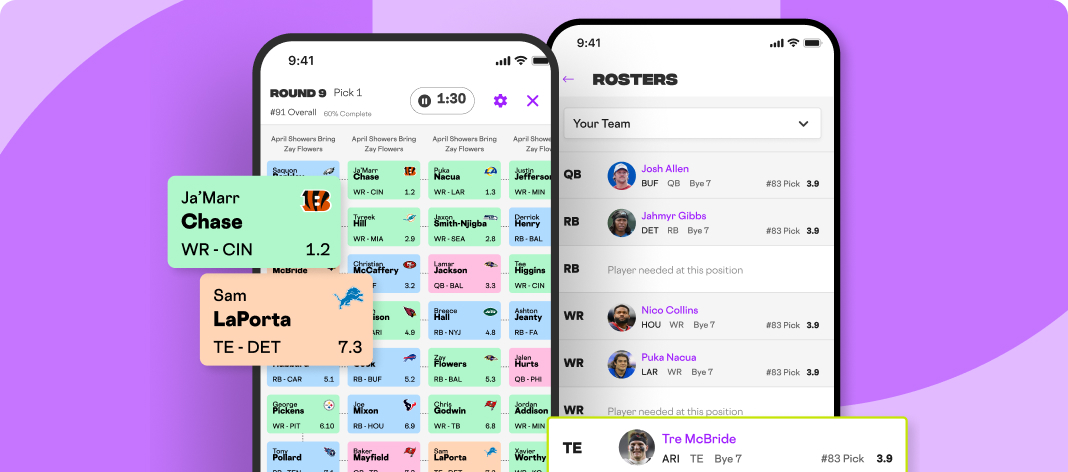
Other factors that will impact fantasy football rankings include depth chart changes, preseason performance and hype cycles that influence player movement in the fantasy ADP world. These moves will affect every type of fantasy league environment, including re-draft, dynasty, keeper, DFS and Best Ball. The key here is that certain moves may impact one type of league more than another. You can navigate the relative impact of these changes through the many tools available in the RotoWire fantasy football draft kit.
Using Projections and Rankings to Confirm Trends
Fantasy football ADP is solely a measure of how a player's perceived value is trending. These changes will oftentimes not match up with a player's updated RotoWire fantasy football projections.
For example, if a running back's fantasy football cheat sheet value is driven higher by an unsubstantiated report that he will be seeing more playing time, you can benefit by investing draft day stock in another running back on that squad. That investment should come at a relatively low price. If the report does not pan out and your running back ends up with more work, it can turn a later round draft pick into a valuable contributor all season long. This can also work in the other direction if you know which news reports are most likely to pan out.
Monitoring Depth Charts and Injury Reports
Every fantasy manager should make tracking NFL depth charts a central part of their fantasy football draft strategy. This is paramount in any league type, but gains even greater importance when you are playing in a 12-team league, one with expanded benches or dynasty formats. In these cases, your late round draft picks can turn into late season gold, but to get the most value out of those late season picks, you need the best ADP information you can find.


You should also monitor the injury reports on a regular basis. One thing that can help you in this area is to know how teams manage their injury reports. Some teams put every player with a minor injury on their report, while others raise the bar higher and tend to report only the most significant injuries. If you learn these trends and patterns, it can assist you in predicting ADP changes before they fully hit the market.
"Depth charts tell part of the story, but a list of players can't always paint a complete picture," said RotoWire fantasy football expert Jake Letarski. "Not every RB2 is built alike. That's why it's important to check out RotoWire's NFL position roles tool for an expanded breakdown of any team's position group, which can help identify late-round sleepers with major upside."
Spotting Overreactions vs Legitimate Breakouts
The fantasy football world is chock full of "experts" who thrive on generating short-term hype. Many fantasy managers will change their draft strategies based on this hype. You don't want to be one of those. Instead, you want to be the fantasy manager who can differentiate that hyperbole from real value changes.
One way to do this is to have a strong working knowledge of things like a player's statistical sample size, the competition level a player is due to face, and which players have long-term role stability. That last trait should be a cornerstone whether you are drafting players in re-draft or dynasty formats.
"Think about TreVeyon Henderson, or to a lesser extent, Jacory Croskey-Merritt in 2025. With Henderson, it was a few electric preseason games," said Letarski. "With Croskey-Merritt, it was a lot of camp hype. Both of these players saw their price inflate tremendously, to the point where managers overpaid for what they actually got."
Turning ADP Movement Into Draft-Day Advantage
With all of this information in place, you then need to learn how to turn ADP movement into a draft-day advantage. A great way to achieve this is by building tier-based boards. You should also prepare pivot options so that you can exploit real value rather than chasing hype-based trends.
You should also make the RotoWire fantasy football mock draft a go-to part of your ADP draft day preparation. Nothing will sharpen your draft day skills to a honed edge like going through multiple mock drafts. Be sure to do this in every type of league that you are in so that you can master all of the ADP value fluctuations.