I've had the pleasure of writing the Day 2 recap of the NFL Draft for the past six years at RotoWire. We've had two separate years of 25 skill position players selected in Rounds 2 and 3 of their respective draft, but I don't remember a time where so many picks felt so inconsequential like the 2026 class. Part of that can be attributed to bad landing spots, but a major issue I have is just the one-dimensional nature of the players involved in this class. You'll see it illustrated below in each position group, but my enthusiasm really is contained to only a select few options.
And as a reminder, make sure to check out the RotoWire 2026 fantasy football draft kit to get cheat sheets, rankings, auction values and more. You can run mock drafts with our mock draft simulator and check out the latest ADP rankings. My Day 1 recap of the 10 skill-position players is also up on the site and if you want a bit of the draft ambiance with your fantasy analysis, I have a ton of videos live on site right now over on X. My favorite is perhaps the Pittsburgh faithful reacting to their newest third-round pick, which you can check out below.
Safe to say I have a different reaction than Steelers faithful with the Drew Allar selection pic.twitter.com/Rbfo2nTg3F
— Joe Bartel (@JBFantasySports) April 25, 2026
Let's get into a bloated Day 2 of the 2026 NFL Draft where 23 skill-position players went off the board.
Quarterback
Carson Beck, 65th overall, Arizona Cardinals 
There was a ton of rumbling prior to the start of the draft Friday that Beck would be a second-round selection. The first pick in the third round isn't too far off from that, and the Miami product arguably lands in the perfect spot to play sooner rather than later. I just have my doubts that he'll be effective at the NFL level.
Let's at least acknowledge some of the positives first. Beck was tasked with overseeing two of college football's most pristine programs in Georgia and Miami over the past three seasons and he largely got results. It's been reported that the 24-year-old had the authority to make offensive line adjustments at the line of scrimmage, an increasing rarity at the collegiate level. It'd be a bit alarming, frankly, if the sixth-year senior didn't have the coaches confidence in that regard, but Beck's always had a willingness to extend plays and maneuver around pressure.
But that's also my biggest issue. Beck far too often makes boneheaded turnovers, runs himself into strip sacks and just overall extends plays too long. And I don't think he has the type of arm strength that makes you live with a player so hell bent on trying to make the most of every play. Beck also isn't a mobile quarterback, so when he does evade pressure, there's very few positive outcomes after that point. I do think that stuff can get coached out of a player, but at what point is the 24-year-old just that that type of player?


Over the past 10 years, there's not a lot of successful NFL quarterbacks selected in this range. Dillon Gabriel got some starts for the Browns last year and probably represents a similar spot in the timeline to what Arizona is facing with its quarterback room. Malik Willis has developed into a starting NFL quarterback, but it definitely wasn't thanks to the team that drafted him. Ironically Jacoby Brissett, the QB Beck will be competing with this year, is maybe the best-case outcome for Beck early in his career. If that's the case, I suspect the namebrand recognition Beck commands will supersede the type of fantasy impact he's actually going to have in the NFL.
Drew Allar, 76th overall, Pittsburgh Steelers 
I was caught off guard with just how much optimism people have for Will Howard until I set foot in Pittsburgh, but I wonder if those same Steeler fans might be more interested in the newest recycling of quarterback draft pick.
Allar absolutely looks the part of a sterling NFL quarterback, and it's for that reason that I don't really buy the narrative he'll threaten for a starting role anytime soon. I like to joke about how NFL teams don't know that much more than the average fan, but you're telling me multiple QB-needy teams passed on the opportunity to draft the 6-foot-5, three-year starter at a blueblood school? That type of description usually has teams willing to make foolish decisions in the first round, so Allar's collegiate tape, especially his senior season which highlighted far too many checkdowns before suffering a broken ankle late in the year, really must have been damaging. I understand the Aaron Rodgers yearly fiasco has people anxious to discuss literally any other avenue when it comes to Steel City's potential starting quarterback, but I'd be surprised if it's Allar in Year 1.
Running Back
Kaelon Black, 90th overall, San Francisco 49ers 
I don't have the energy to go back and look, but I swear I've written up a 49er running back in this article probably four times in the past six years. Forgive me if I'm unable to force myself to pretend that Black is going to be a difference maker for this offense immediately, if at all.
That San Francisco perpetually shuttles through Round 3 capital looking for -- I don't even know what -- is infuriating, but not as infuriating as some random Day 3 pick ultimately becoming the bell of Kyle Shanahan's ball for one year. Black is a hard runner and has all the intangible stuff good football teams want in their depth, but I'm done trying to label a 49er RB draft pick with some sort of fantasy relevance.
Wide Receiver
De'Zhaun Stribling, 33rd overall, San Francisco 49ers
Despite reported, and I think genuine, interest from a number of teams to acquire the top pick to begin Day 2, San Francisco stayed put and took Stribling who was a late riser during the draft process.
Stribling will be 24 years old by the end of the 2026 season, but this might be one of the rare times where I'm willing to ignore that from a dynasty perspective. Stribling in my mind is exclusively a boundary wide receiver, which likely means he'll be blocked by Mike Evans and presumably Ricky Pearsall in Year 1. On the other hand, San Fran simply doesn't have field-stretching speed in its receiving corps and I could see the 4.5-year collegiate starter getting snaps immediately with his 4.36 speed, even if it's effectively in a platoon sort of role. What's more, neither Evans nor Pearsall can be reasonably projected to be long-term difference makers in Kyle Shanahan's offense and you'd assume with this kind of draft capital there will be a more developed plan than "tall guy runs fast". I wasn't a major fan of some of the Round 1 wide receiver landing spots, so I wouldn't be surprised if Stribling pushes into dynasty first-round consideration.
Denzel Boston, 39th overall, Cleveland Browns 
I'm officially interested in what's happening with Cleveland's offense. First-round pick KC Concepcion was intriguing to me just given his utility as an offensive weapon, but the Browns were unquestionably in need of a perimeter monster. Boston absolutely solves that answer and coupled with Concepcion, each wideout really covers each other's weaknesses.
It's worth restating from the Day 1 Winners/Losers article that I doubt the talent upgrades at the skill positions offset what is a shaky quarterback room. And while I think Boston doesn't get enough credit for what he's capable of doing as a route runner, he's not going to get enough separation against NFL talent to draw targets at a rate that makes him a fantasy difference maker in his rookie campaign. That Cleveland suddenly has a diverse and reflexive receiving corps is great for what has been a moribund offense as of late, but it's still hard to stake legitimate fantasy confidence on anyone in early April.
Germie Bernard, 47th overall, Pittsburgh Steelers
Bernard's greatest attributes seem to be that he can do everything, but I'm just not compelled by the "jack of all trades, master of none" genre of wide receiver. That billing feels eerily similar to that of John Metchie, a 2022 second-round pick out of Alabama who's yet to make a difference in the NFL and already on his third team. Bernard never really popped the way you'd expect of a top-50 pick as he tallied just 1,656 receiving yards across two seasons as a starter at Tuscaloosa. And he's not entering a perfection situation either as Aaron Rodgers notoriously struggles to get young wideouts incorporated off the rip. Bernard's better than Roman Wilson, his theoretical competition for the No. 3 role behind DK Metcalf and Michael Pittman, but I struggle to project the 22-year-old to be anything more than a versatile No. 3 wideout on a competent offense.
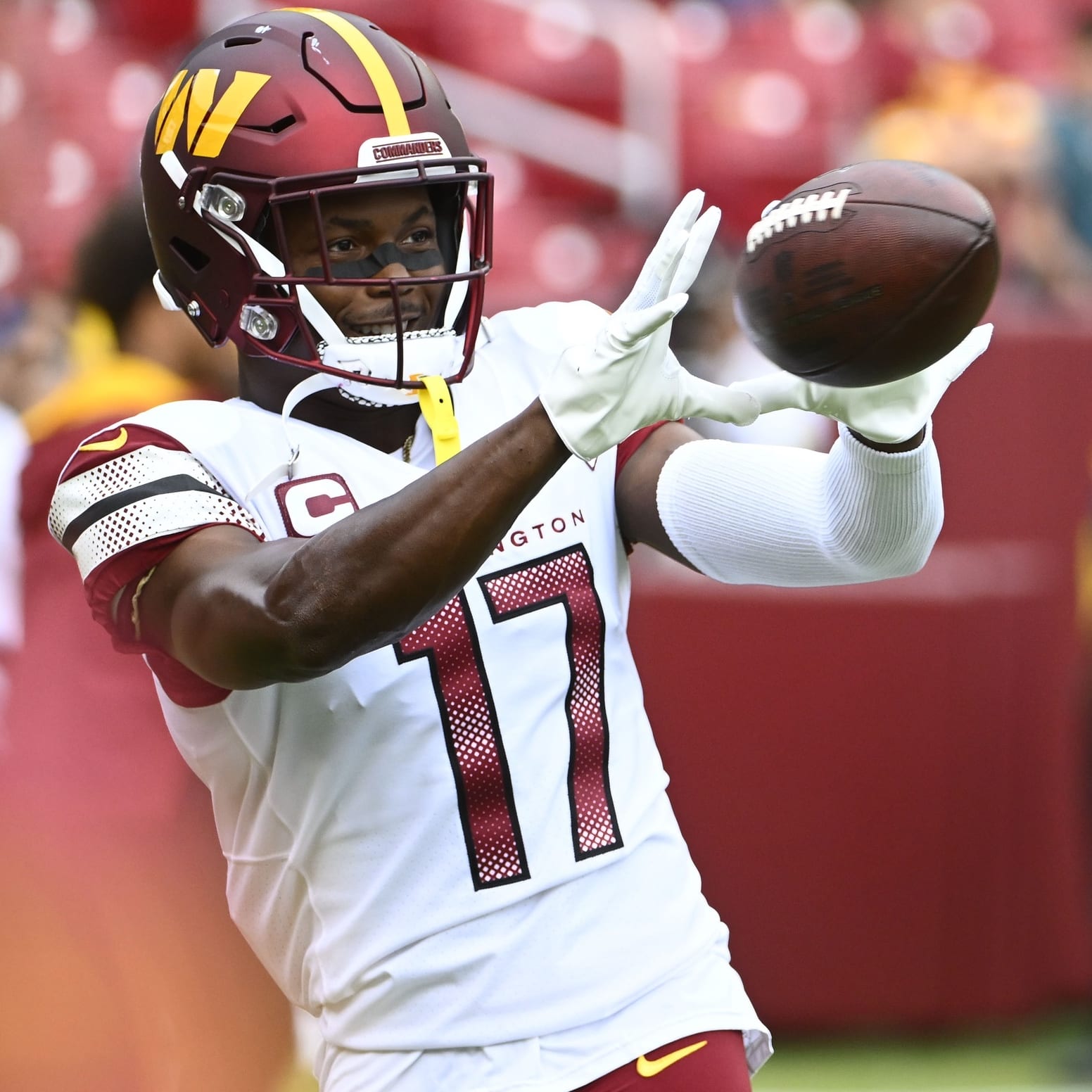
Antonio Williams, 71st overall, Washington Commanders 
The Commanders have tried for years to find a useful wide receiver in this range of the draft. Whether it's Luke McCaffrey or Jaylin Lane, I haven't been fond of the team's decisions, but we're entering desperate times in DC.
Williams isn't quite the jitterbug type wide receiver, but he's fast enough (4.41) to not be a liability for his frame (5-foot-11, 187 pounds) and he's a strong pass catcher. For a primarily slot receiver, I don't think the soon-to-be 22-year-old is especially good against press coverage, but you can move him around enough at the line of scrimmage to negate that somewhat. Washington's uninspiring depth chart behind Terry McLaurin is going to give Williams an opportunity to see relevant snaps immediately.
Malachi Fields, 74th overall, New York Giants 
Fields is a prototypical big-bodied receiver at least in terms of his frame (6-foot-4, 218 pounds) and the areas of the field that he could consistently win.
His 4.61 speed is evident on tape, especially when trying to gear down on comeback routes and sideline throws. There doesn't seem like a lot of fluidity in his route tree as well, so Fields feels limited to simply being a large human who catch the football in and around traffic. I actually do think that works fine enough within the constructs of New York's offense, but that kind of profile can so easily be capped out by opposing schemes. Malik Nabers will draw plenty of attention to afford Fields one-on-one looks, but it's unclear if he'll ever progress to the point as a route runner to capitalize on that.
Caleb Douglas, 75th overall, Miami Dolphins 
New Dolphins general manager and former Packers front office personnel John Eric Sullivan just found his new Marquez Valdes-Scantling.
Douglas is tall (6-foot-4) and fast (4.30 40-yard dash at the Combine), but his size is hardly present in contested-catch scenarios. The 23-year-old did lead Texas Tech in receiving yards last year and combined for 1,723 total yards in his two years with the Red Raiders, but it's hard not to question why someone with Douglas' immense athletic traits wasn't a more prominent offensive factor. Miami desperately needs able-bodied pass catchers so Douglas will be afforded ample opportunities to earn his place, but I'm not positive the senior will ever manifest into a reliable starter.
Zachariah Branch, 79th overall, Atlanta Falcons 
There was some expectations Branch could set NFL Combine records, but the three-year collegiate starter "merely" ran a 4.35 40-yard dash. The 22-year-old is obviously fast and nimble, but it's a bit troubling that Georgia, and to a lesser extent USC, seemingly only used Branch in that capacity (25.4 percent screen rate in 2025).
Beyond Drake London, Atlanta really doesn't have another pass-catching weapon in its receiving corps, so I'd be somewhat surprised if Branch isn't seeing significant snaps immediately. But if he's once again slotted to only be a short-yardage target, the 5-foot-9, 177 pound wideout might not emerge as anything more than a glorified gadget player.
Ja'Kobi Lane, 80th overall, Baltimore Ravens 
Lane was probably my favorite of the "second tier" wide receivers of this class. I always fall for the boundary wide receiver that can make spectacular catches in contested situations and that Lane was especially useful in the red zone (16 touchdowns in 24 games the past two seasons) is obviously a plus as well.
At 6-foot-4, Lane also flashed plus athleticism as well at the Combine (4.47 40-yard dash), but draft pundits have routinely taken issue with his limited route tree. I suppose I understand the hesitation, but give me the guy that consistently wins the jump ball and I'll figure the rest out. Besides Zay Flowers and Rashod Bateman, Baltimore has effectively nothing in the form of established depth in its receiving core meaning Lane is probably set to have a consequential role within this offense immediately in Year 1.
Chris Brazzell, 83rd overall, Carolina Panthers 
Brazzell comes from a long line of speedy tall Tennessee receivers that do nothing at the NFL level, but unlike someone like say, Jalin Hyatt, I do think Brazzell has more route-running nuance than his college colors may suggest.
The only issue is that the 23-year-old feels redundant to the Panthers' litany of other tall boundary targets, and again, given Tennessee's lack of success creating pro-ready targets, I anticipate there's going to be a steep learning curve for a player already in the thick of competition for a role. Xavier Legette has obviously been a disappointment and the team is by no means tied to making Jimmy Horn be a thing, but there's enough bodies there overall that make me hesitant to assume Brazzell will emerge as a key piece in the immediate future.
Ted Hurst, 84th overall, Tampa Bay Buccaneers 
I think Hurst would be a more divisive prospect if he played against better competition in college. A two-year starter at Georgia State, Hurst led the FBS in receptions of 20-plus yards (34) and yet was routinely the team's only offensive identity. I just assume the NFL's lack of interest in a 6-foot-4 wide receiver with plus speed (4.42 40-yard dash) was due to the level of competition Hurst dominated, therefore setting an uneven floor in which to grade him.
Unfortunately from a fantasy perspective, Tampa Bay is pretty loaded at wide receiver at the moment. Chris Godwin should be healthier after an injury-filled year and the combination of Emeka Egbuka and Jalen McMillan presumably can fill the boundary receiver void left by Mike Evans. I think Hurst could pretty easily push McMillan for more playing time, but compared to the majority of the situations listed with other players above, that's far from a guarantee.
Zavion Thomas, 89th overall, Chicago Bears 
Respectfully, I don't think there's a whole lot worth talking about with this pick. Thomas ran a 4.28 40-yard dash at the Combine and could be a special teams weapon for Chicago. Given the litany of young, talented pass catchers already in tow, it'd be hard for the LSU product to emerge as a key piece and especially given he never really broke out in college either (106-1,213-7 in 48 games played).
Chris Bell, 94th overall, Miami Dolphins
I love this swing for the fence by Miami. Bell tore his ACL in late November and likely won't be ready for the start of the 2026 season. If that injury hadn't happened, it's possible Bell could have been in consideration to be a top-50 pick in the draft.
A three-year starter at Louisville, Bell plays bigger than 6-foot-2 especially in contested-catch situations and yet still flashes real skills as a YAC weapon. It would be ideal for the 22-year-old to be present at the start of training camp, therefore staking his claim in a receiving corps devoid of defined talent, but even if the Dolphins opt to take it slow with the third-rounder, I'd expect him to make his presence felt in that room sooner rather than later.
Tight End
Eli Stowers, 54th overall, Philadelphia Eagles 
This is perhaps my favorite landing spot of the entire 2026 NFL Draft. At 23 years old, Stowers is a bit on the older side for a tight end, but the Vanderbilt product was a defining presence in their offense the past two seasons accounting for 1,407 receiving yards and 111 receptions to go along with nine touchdowns. A converted collegiate quarterback, the fifth-year senior is obviously still learning what it takes to be an NFL caliber blocker, but he's so talented as a pass catcher that it might ultimately benefit him from a fantasy perspective. That background has also made him noticeably better at finding pockets to settle down in coverage and he's able to threaten defenses through the seams with his 4.51 speed. Dallas Goedert looms as a rather large Year 1 roadblock, but the veteran signed a one-year, $7 million contract this offseason for presumably one last final hurrah. In this type of draft class, I'm absolutely convinced Stowers is worth late first-round dynasty consideration no matter the format, and I wouldn't be surprised at all if he's discussed as one of the upper-echelon redraft tight ends in the coming years.
Nate Boerkircher, 56th overall, Jacksonville Jaguars 
Boerkircher will be 25 by the time the season rolls around and he "broke out" for 19 total receptions in his final year at Texas A&M. In his previous five seasons at Nebraska the big-bodied target tallied a total 19 receptions across 39 games. Nominal starting tight end Brenton Strange is entering the final year of his rookie deal so I suppose there's a possibility Boerkircher could see more work in the future, but this pick screams "blocking specialist" in the same way Josh Oliver continues to hang around in the NFL despite minimal pass-catching prowess.
Marlin Klein, 59th overall, Houston Texans 
Klein's a tall target (6-foot-6) and a bit more toolsy (4.61 40-yard dash) than a few of his tight end colleagues drafted in the same range, but at least early on he'll likely see the field as a blocker with Dalton Schultz operating as the clear pass-catching option of the unit. Positional teammates Cade Stover and Brevin Jordan are no pushovers either, which could make it difficult for Klein to earn consistent playing time to begin his career.
Max Klare, 61st overall, Los Angeles Rams 
Klare had some of the best collegiate production of this rookie class outside of Kenyon Sadiq and Eli Stowers, but it's hard to get too excited about his prospects given the landing spot could not be worse. The Rams just selected a tight end in the second round last year (Terrance Ferguson) and yet still routinely deployed Tyler Higbee and Colby Parkinson over him when everyone was healthy. Neither Higbee or Parkinson will be around much past next year, but Klare will be fighting an uphill battle to carve out consistent playing time regardless. McVay's fixation on 12 personnel isn't changing anytime soon, but draft capital clearly does not guarantee much in Los Angeles.
Sam Roush, 69th overall, Chicago Bears
Roush's greatest attribute is the intangibles like worth ethic and toughness coupled with his immense frame (6-foot-6, 267 pounds). Credit to head coach Ben Johnson for prioritizing those things, but that doesn't really help us from a fantasy perspective. I anticipate Roush might be something like Chicago's version of Brock Wright, with Colston Loveland operating as the Sam LaPorta in this example.
Oscar Delp, 73rd overall, New Orleans Saints 
At 6-foot-5, 245 pounds, Delp's 4.49 40-yard dash at Georgia's pro day underscores how freaky of an athlete he is, but he never really broke out as a top-tier pass catcher in the way you'd think those tools could present. Juwan Johnson is halfway through a three-year, $31 million extension signed back in 2025, but the 29-year-old is getting up there in age. Problem is Noah Fant also figures to block Delp's ability to get on the field his rookie year meaning the development timetable could be stunted early on for the four-year Georgia player.
Will Kacmarek, 87th overall, Miami Dolphins
Kacmarek is probably best suited to be a run-blocking tight end at the NFL level, but at 6-foot-6, his size alone could make him a weapon in the passing game if unaccounted for. Outside of Greg Dulcich, the Dolphins truly have no one in terms of depth at the position, so Kacmarek could become one of the defacto leaders in TE rookie production almost by default.
Eli Raridon, 95th overall, New England Patriots 
Similar to Oscar Delp, Raridon is a toolsy tight end with the type of frame (6-foot-6, 245 pounds) that lets you imagine what that player could look if fully realized. While the Notre Dame tight end isn't quite as fast (4.62), he flashed real potential in one season as a starter in South Bend (32-482). Much like Juwan Johnson, Hunter Henry is nearing the end of his staying power as a consistent starting tight end and Raridon could be in position to fill that role down the road.