Fantasy baseball involves cutting and adding players throughout the season, sometimes even just for a day or two. After you've used RotoWire's fantasy baseball draft kit to dominate your draft, you'll still need to tinker with your roster throughout the year to build the best team.
Knowing when to stream a player vs. keeping them for the long haul is a delicate process. Cut bait on a player with long-term value and you'll have regrets; hang onto a streamer too long and he begins to negatively impact your team. MLB player stats count the same whether a player is on your team for one game or all 162, so it's critical to know how to value players you're churning through your roster.
What Is Streaming in Fantasy Baseball and How Does It Work?
Streaming a player in fantasy baseball means adding them from the waiver wire or free agent pool and onto your roster for a short period of time, typically for one day or one series. There are a host of reasons why fantasy baseball managers would stream players, either because they're chasing certain categories in a head-to-head league or because the player they're adding has a great matchup and is likely to help their fantasy baseball team.
"The later you get into the season, the more streaming becomes viable since you'll have a better idea of what categories you need and where you can afford to take a slight hit in ratio (like ERA, WHIP, or batting average/on-base percentage)," said RotoWire baseball expert James Anderson.
Unless you draft the perfect team, you're going to stream at one point or another throughout the season. Streaming can be highly impactful, but it's important to know the nuances of streaming and when it makes more sense to keep a player long term.
When Streaming in Fantasy Baseball Is the Right Call
In head-to-head leagues, it's always good to keep a couple streamer spots open, especially if you have deep benches. It's a good problem to have if all your players are rosterable, but that could even mean packaging a few of them for a single player to open up streaming spots. You'll almost always run into weeks where certain categories are close toward the weekend and you want a boost from a certain player, whether it's a batter with a favorable matchup or a pitcher who is starting late in the week. As long as you have a player in mind who you could cut, and not feel bad about losing, streaming is the right call.
"If you look at your roster and realize you're starting someone who you think will have a bad week or a bad day in daily leagues, then you should look at options on the wire," Anderson said. "In weekly leagues, adding a hitter you expect to start 5-6 times against mostly bad pitchers, or a decent pitcher scheduled to start against a poor offense, can be the difference between winning and losing your week."
You'll, of course, need to know your league settings, including whether your league uses daily or weekly lineups, and you want to know if there are a maximum number of moves a team can make over the course of the season.
When to Commit and Roster a Player Long-Term
Of course, fantasy baseball is not an exact science, so a little bit of your decision-making on what to do with players on the end of your roster will involve intuition and luck. A good rule of thumb is to wait an extra day or two to see if a player is for real rather than cutting a day or two early. Fantasy baseball is a marathon, so an extra day or two of poor stats won't crush you as much as letting a solid player go early will. Much of this will also depend on the format of your league; deeper benches mean you should really use caution, whereas shallower leagues are going to often have plenty of talent in the free agent pool.
"If you picked up the player because you thought they were a breakout candidate, you should hold them as long as you can, especially if the skill(s) you liked in the first place are starting to really show up," Anderson said. "If you just picked up a player for a favorable matchup, trust the process and add the next guy with a good matchup."
How to Evaluate a Fantasy Baseball Player Before Deciding
You'll want to evaluate a player's short-term and long-term potential before deciding to add them (and then later on whether to keep them or cut bait). Younger players with higher ceilings are going to get a longer leash on your roster because of this. A savvy veteran likely isn't going to explode in his ninth MLB season, but those mainstays often have higher floors. Know what your team needs, a steady presence or a dice-roll on major contributions, before evaluating how to handle a stream.
"We're looking for upside in fantasy baseball, and if a player has realistic upside, we need to keep them on our rosters if possible," Anderson said. "A lot of this is just feel: Does it feel like a bad decision to cut a guy? If so, you should listen to that intuition."
Balancing Your Roster Between Streamers and Keepers
The majority of your team will be players you roster all season. These will either be players you draft or players you pick up at some point and then keep the rest of the way. In a best-case scenario, you have 2-3 spots that are streamer spots that get rotated throughout the season. This allows you to either be active on the waiver wire to find the next great pickup or to go after certain categories once you see how your team is performing during the course of the 162-game season.
"Ideally, your keepers are building a strong base of stats, particularly the ratios (ERA, WHIP, BA/OBP/OPS) and power categories (HR, RBI, Pitcher Ks). You need streamers for the counting stats, as the replacement level types of players can really sink or swim based on their matchups/ballpark," Anderson said.
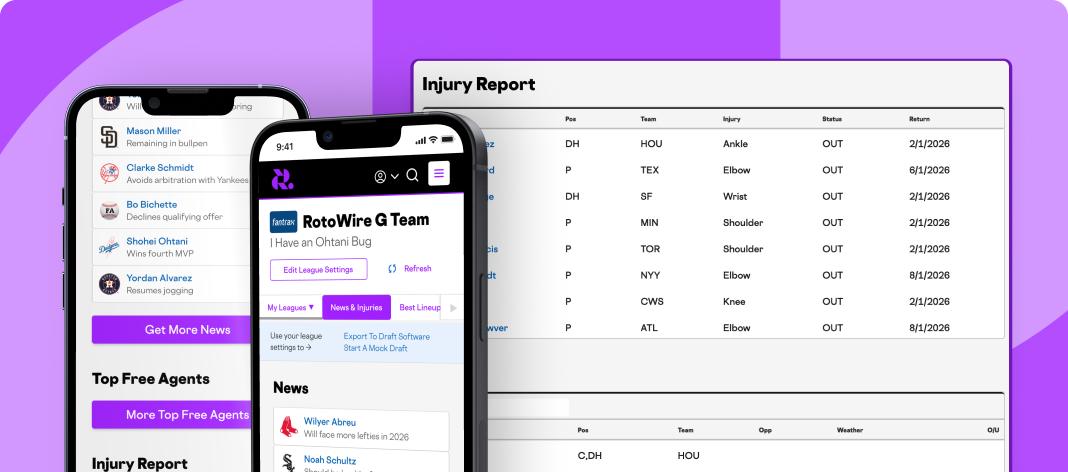
RotoWire's team of baseball experts will keep managers in the loop on the hot names they should target, while MLB projections will help managers pinpoint which categories are available on the waiver wire through certain players, and fantasy baseball news will be updated daily so you always know the latest happenings of players who may be worth streaming or committing to long term.
Subscribe to RotoWire now so you stay ahead of the competition on the best names to rotate through your team to give you an advantage against the rest of your league.