

What's the best part of writing about college basketball? March Madness. What's the worst part of writing about college basketball? Predicting March Madness. Everyone wants advice in March. "You watch all year, you must have some incredible insights!" The truth is, I don't always even win the bracket pool among my neighbors or law school friends. Let's be honest; your boss who couldn't name one player on Florida or pick Cameron Boozer out of a lineup has a better shot at winning.
That's what the Madness brings; you're bombarded with statistics, formulas, diagrams, depth charts, and "gut feelings". And, after all that time spent crunching numbers and doing research, your spouse who picked the games by color ends up with a better bracket than you. Or your four-year-old son picks No. 16 UMBC to beat No. 1 Virginia. Yes, that actually happened.
But fear not, my friends. There is hope for us yet. All hail, "The NCAA Tournament Gospel". The following five rules have been passed down for eons. These tenets have been collected over the years, revised, tweaked and edited. They highlight my strategies and theories on picking a successful bracket. I don't always pick the Final Four correctly, but when I do, these are my guidelines. Behold, the Commandments of Madness.
1. I'm begging you; please do not pick all four No. 1 seeds to make it to the Final Four. First of all, how is that fun? Secondly, the numbers do not back up that "strategy" anyway. Only twice since seeding began in 1979 have four No. 1 seeds made the Final Four; 2008 and 2025. The fact that it happened last year makes it even more unlikely to happen again in my book, even in the new era of NIL. In addition, the No. 2 seeds in this year's tournament all have looked like No. 1 seeds at one point or another this season as well.
2. If you don't like a higher-seeded squad, pick it to go out as soon as reasonably possible. So, if you don't believe in, say, Arizona, pick the Wildcats to lose once they get past the No. 16 seed. You'll be the only one who picks that game correctly, and even if it's an incorrect selection, you wouldn't have had Houston going that far anyway.
3. There are no bragging rights for picking a No. 10 over a No. 7 seed, or a No. 9 over a No. 8 seed. These are not upsets. All those teams are basically even. If you need proof, take a look at some of the betting lines for these games. Take bigger risks! Even the 11-6 matchup is starting to not feel like an upset anymore. And forget about 12-5, which will be explored in the next rule.
4. While we're on the subject of upsets, pick at least one 12-5 trap game. The gap between conferences is shrinking. Soon you're going to need to pick that Cinderella darling seeded 13 or lower to truly be able to pat yourself on the back for an upset. In 33 of 39 years since the tournament expanded, at least one No. 12 seed has dispatched of a No. 5 seed. In fact, historically, the No. 12 seed wins about 35 percent of the time versus the No. 5 seed. Last year, two No. 12 seeds knocked off No. 5 seeds; McNeese beat Clemson, and Colorado State defeated Memphis. McNeese is back in the Big Dance this season, once again as a 12-seed.
5. Pick at least one seed lower than a 10 to make the Sweet 16. Last year's qualifier was Arkansas, as the No. 10 Razorbacks defeated No. 2 St. John's for Coach John Calipari's staggering 16th trip to the Sweet 16. Besides, I'd rather pick the games by which mascot would win in a fight than pick all favorites.
Now that you're primed to fill out that winning bracket, let's take a more in-depth look at the regions.
MIDWEST REGION
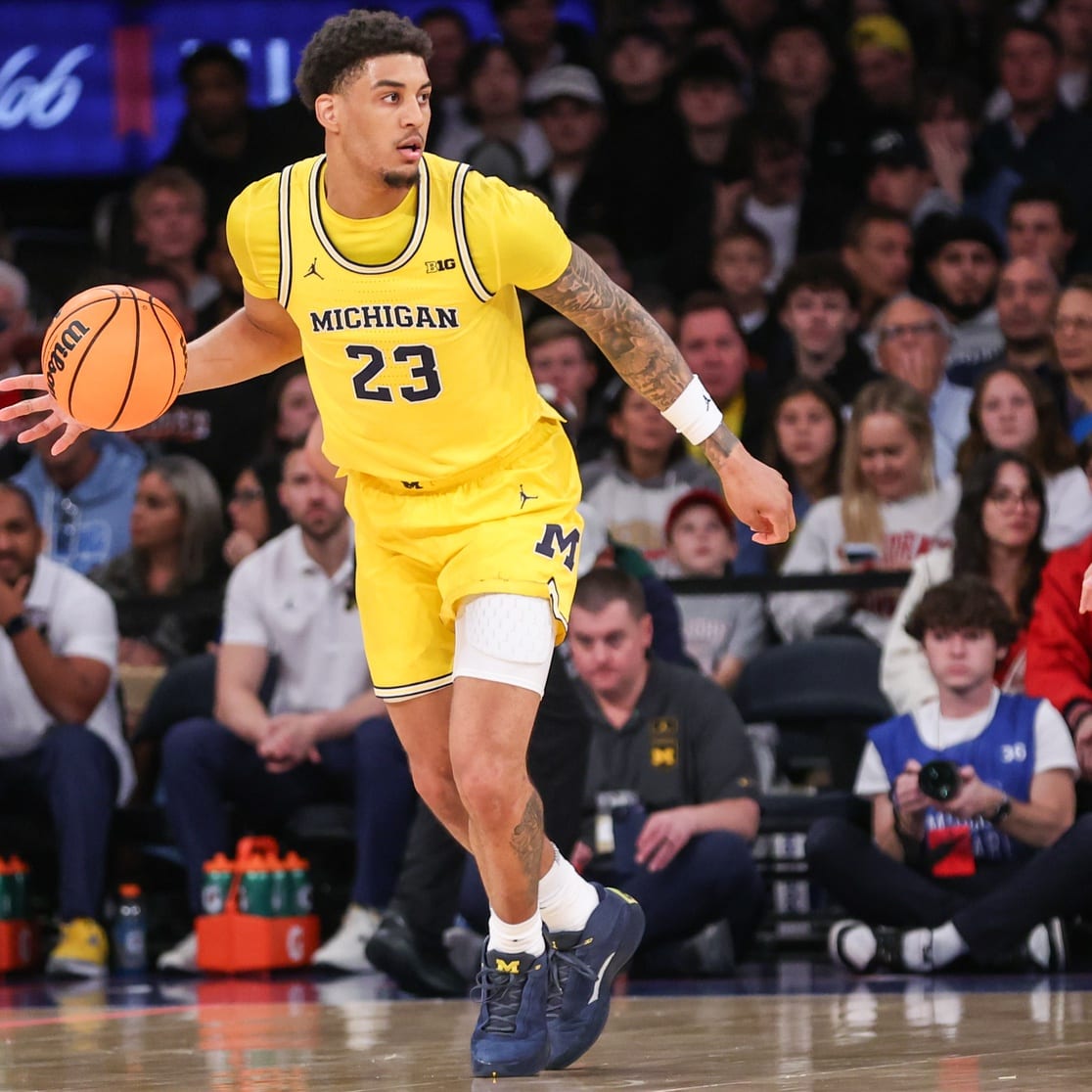
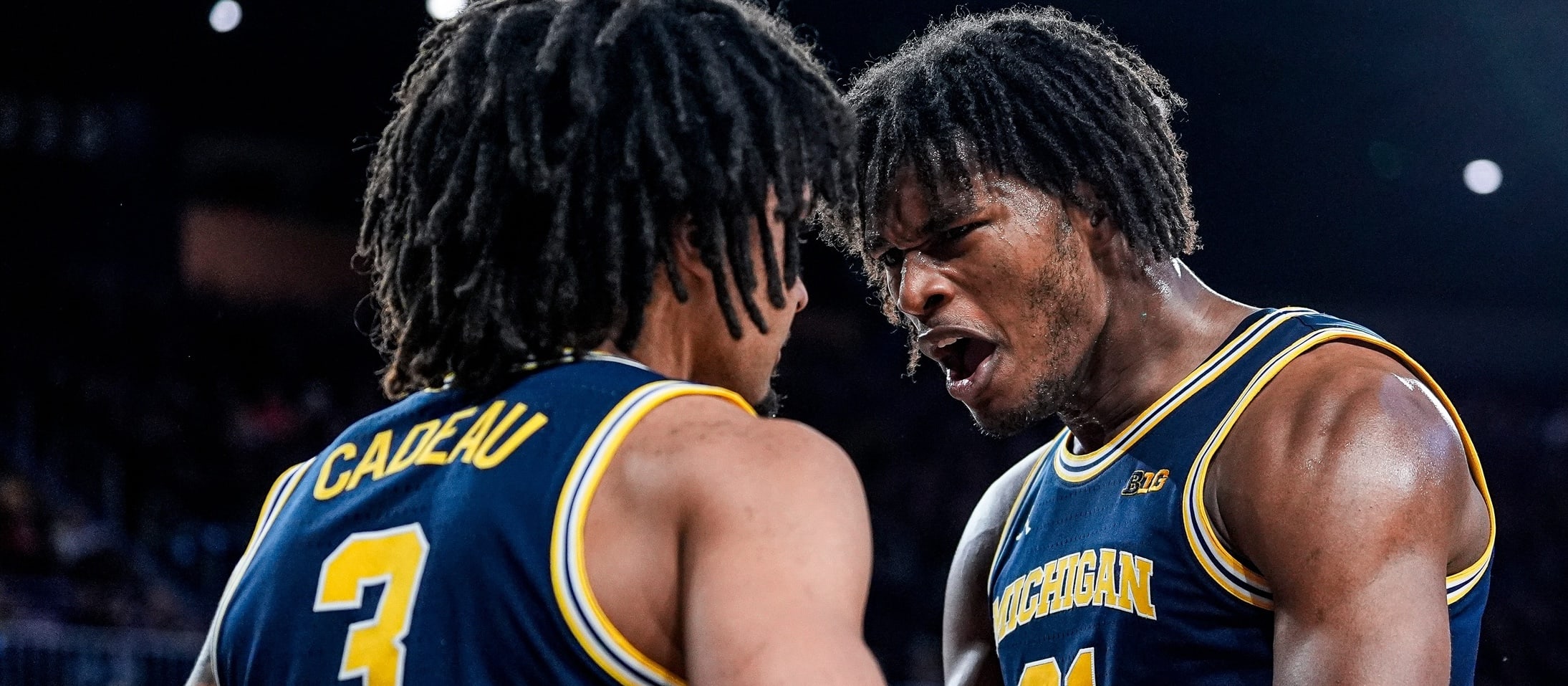
The top of the Midwest is stacked with the likes of Michigan, Iowa State and Virginia rounding out the top 3 seeds. The Wolverines looked like the best team in the country for a long stretch, and still have lost just three times this season. The committee did Michigan no favors, though, as No. 2 Iowa State has five losses all season to teams not named Arizona. Meanwhile, No. 3 Virginia has just three losses on the season to teams not named Duke.
Watch out for No. 13 Hofstra in the first round against Alabama. The Tide may be without standout guard Aden Holloway following an arrest on a felony marijuana charge. Alabama hoists more threes than any squad in the country, but Holloway is their top sharpshooter at 43.8-percent from beyond the arc.
SOUTH REGION
The South region features the defending champion Florida Gators, slightly revamped from their title run a season ago but no less dangerous. The NCAA Committee says they do not look ahead at potential matchups, but a rematch of last year's title game, Florida vs. Houston, looms in the Elite 8 of this region. No. 2 seed Houston spent some time atop the rankings earlier this season, but could not get past Arizona, losing to the Wildcats twice, including in the Big12 Tournament Championship. Aside from those two losses to Arizona, though, Houston only lost four other times on the entire season.
In terms of upsets, everyone will be looking at No. 12 McNeese again, and rightly so, as the Cowboys return to March Madness yet again, winners of 10-straight contests coming into the tournament. However, I am also high on No. 11 VCU. The Rams enter the big dance as one of the hottest teams in the country, winners of 16 of their last 17 contests, which included a run to Atlantic 10 Tournament crown. VCU's opponent, North Carolina, will also be without their top player, freshman guard Caleb Wilson.
WEST REGION
Arizona is the No. 1 seed in this region; geographically speaking, they will face perhaps the most misplaced school in the country in the form of No. 1 Long Island University. Technically, Long Island sticks out into the Atlantic Ocean, yet this game will be played in San Diego, California. But I digress.
An intriguing potential upset pick will be the winner of the play-in game between Texas and NC State. The victor of that contest will face No. 6 BYU; even with potential lottery pick AJ Dybantsa, the Cougars have been struggling since the loss of veteran guard Richie Saunders to a torn ACL. No. 7 Miami is favored against No. 10 Missouri, though this is almost a home game for the Tigers in Kansas City, Missouri. Once again, geography does not appear to be a strong suit of the committee.
EAST REGION
Like a season ago, Duke is the top seed in the East. The path looks mighty difficult for the Blue Devils, though. Some blueblood matchups lurk in Duke's path towards the Final Four, though. A Sweet 16 matchup with either Kansas or St. John's, and then a potential Elite 8 clash with UConn. Connecticut lost twice to the Johnnies, St. John's won the Big East Championship, but Rick Pitino's crew is underseeded at No. 5. A potential fourth matchup remains a small possibility between these two rival schools.
Louisville has some interesting metrics as a No. 6 seed, even after being ousted in the quarterfinals of the ACC Tournament by Miami. And it would not be March Madness without Tom Izzo; could the Spartans make some noise in a stacked region? Cinderella may have difficulty in this portion of the bracket; No. 7 seed UCLA is the lowest seed I could legitimately see making a deep run.
FINAL FOUR
Picking upsets correctly -- and bragging about it to anyone within earshot -- is one of the proudest traditions of March Madness. However, I will leave you with one last bit of advice when picking your Final Four and ultimately, your National Champion. While it is true that all four No. 1 seeds have only advanced to the Final Four in the same year twice, since the tournament expanded a No. 1 seed has won the whole enchilada 65 percent of the time. More specifically, 26 of the 40 winners were No. 1 seeds. Moreover, 36 of 40 winners were either No. 1, No. 2, or No. 3 seeds. In the last 25 years, only Connecticut, both as a No. 4 seed in 2023 and as a No. 7 seed in 2014, won it all as a seed lower than No. 3. So while I wholeheartedly encourage upsets in the early rounds, the best strategy for picking the 2026 National Champion may be to stick with the higher seeds.
The Big Ten ended up with a staggering 12 schools in the NCAA Tournament. Thus, it would seem to make sense that the winner will either be from that super-conference, or have to go through multiple squads from that conference. It would not be surprising to see Michigan come out of the Midwest. In the South, No. 2 Houston should exact revenge against Florida. The script is flipped this season, as it is the Cougars with the advantage in the backcourt. Meanwhile, Duke and UConn look to be on a collision course in the East; the Blue Devils may have the best player in the country, but they have been battling injuries, and Alex Karaban will look to cap off a dynamite collegiate career with his third title in four seasons. UConn over Duke in an instant classic. Rounding out the Final Four, Arizona always seems to falter on the big stage. I like freshman sensation Darius Acuff to stun the Wildcats and lead the Hogs all the way to Indianapolis.
Incredibly, the Big Ten has not won the NCAA Tournament since Mateen Cleaves and Michigan State in the year 2000! With more than 1/6 of the participants hailing from this conference, my pick will be MSU's rival Michigan, with exceptional guard play and a rough and tumble frontcourt, to defeat UConn in the final.
Good luck with your brackets, and enjoy the madness!