The first few weeks of the season can be very difficult to analyze due to small samples and a relative lack of information. It can be important not to overreact and drop or trade away key players, but it's also equally important to act where possible.
With that backdrop, one of the fastest stats to stabilize is swinging strike rate for pitchers, which has been found to stabilize at between 100 and 150 pitches or three to four starts. While those don't align perfectly, most pitchers with two starts in the books have thrown at least 150 pitches. This week's edition of the barometer will look at some of the more surprising names toward the top and bottom of the swinging strike leaderboard. To filter out even smaller samples, I set the FanGraphs leaderboard to at least 10 innings pitched through Sunday's outings. While this excluded some notable names such as Andrew Painter and Bubba Chandler, the majority of pitchers relevant to most fantasy formats were captured in the sample.
The purpose of this exercise was to use swinging strike rate as a starting point to dig into the early-season performances of these pitchers in general, though in some cases, there wasn't much additional information to either be excited or concerned by.
Risers
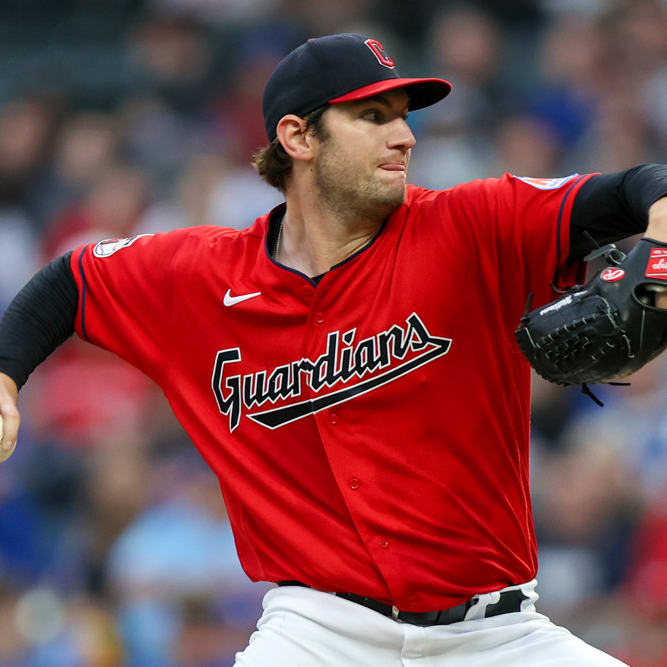
Cam Schlittler  16.8% swinging strike rate (6th among 75 qualified SP)
Chase Burns  20.6% swinging strike rate (2nd among 75 qualified SP)
Schlittler and Burns both impressed in relatively small samples in 2025, but enthusiasm for
The first few weeks of the season can be very difficult to analyze due to small samples and a relative lack of information. It can be important not to overreact and drop or trade away key players, but it's also equally important to act where possible.
With that backdrop, one of the fastest stats to stabilize is swinging strike rate for pitchers, which has been found to stabilize at between 100 and 150 pitches or three to four starts. While those don't align perfectly, most pitchers with two starts in the books have thrown at least 150 pitches. This week's edition of the barometer will look at some of the more surprising names toward the top and bottom of the swinging strike leaderboard. To filter out even smaller samples, I set the FanGraphs leaderboard to at least 10 innings pitched through Sunday's outings. While this excluded some notable names such as Andrew Painter and Bubba Chandler, the majority of pitchers relevant to most fantasy formats were captured in the sample.
The purpose of this exercise was to use swinging strike rate as a starting point to dig into the early-season performances of these pitchers in general, though in some cases, there wasn't much additional information to either be excited or concerned by.
Risers
Cam Schlittler 16.8% swinging strike rate (6th among 75 qualified SP)
Chase Burns 20.6% swinging strike rate (2nd among 75 qualified SP)
Schlittler and Burns both impressed in relatively small samples in 2025, but enthusiasm for a sustained breakout was somewhat muted for each due to a limited mix of pitches and a particular reliance on the fastball. Early on, each has done plenty to show that 2025 was no fluke. There wasn't much room for Burns to improve on his 35.6 percent strikeout rate from last season, but he has established himself as one of the top strikeout pitchers in the league. Injury concerns linger, but his per-inning production should be excellent.
Schlittler has a perfect 15:0 K:BB across 11.2 innings while not allowing any earned runs. Ironically, the primary adjustment he appears to have made this offseason is adding a sinker, something that generally lowers strikeout upside. However, the payoff could be worth it in the long term. Schlittler surrendered 1.2 HR/9 to right-handed hitters in his rookie season, a weakness his sinker could help mitigate.
Joe Boyle  – 12.8% swinging strike rate (29th among 75 qualified SP)
Boyle wasn't even slated to open the season in the Rays' rotation, but an injury to Ryan Pepiot (hip) opened a path for him. To this point, he's taken advantage of the opportunity and it will seemingly be difficult for the team to move him out of a starting role. The 12.8 percent swinging strike rate is the hook, but Boyle's improved walk rate and control have stood out. While those metrics haven't yet stabilized, the improvement has come across the board. His walk rate has dipped from a career mark of 13.6 percent (12.4 percent in 2025) to 6.5 percent early this season, with his first-pitch strike rate, swing rate and O-swing rate all at or near career highs.
Boyle has also expanded his pitch mix, adding a sinker and sweeper while relying less on his fastball. He's used both to neutralize right-handed hitters after having moderately reverse platoon splits in 2025. The end result has been Boyle completing at least 5.1 innings in both of his appearances to this point, something he accomplished only once in nine starts in 2025.
Kodai Senga  – 13.9% swinging strike rate (17th among 74 qualified SP)
Senga never looked to be quite right in 2025, plagued by a hamstring injury early in the season before struggling mightily in the second half to the point that he ended the campaign in the minors. There was some renewed optimism for him this spring when he displayed improved velocity, and he's carried that over through his two starts to begin 2026. Senga is averaging 96.7 mph with his fastball, and he has similarly posted career-best velocity on his forkball. Each pitch has seen a corresponding whiff rate increase of around 10 percent.
Senga's inflated whiff rates will normalize, but he appears to have returned to fantasy relevance in all formats.
Kyle Harrison  – 13.0 percent swinging strike rate (26th among 74 qualified SP)
It took a bit of digging to figure out what has led to Harrison's early-season success, but a post-game interview following his start Sunday against the Royals provided an important clue. He discussed the importance of getting ahead in the count to tunnel pitches off his fastball. A quick glance at his statistical profile suggests perhaps his early success is just that simple. Through two starts, Harrison has a 63.4 percent first-pitch strike rate. Taking that one step further, he's gotten to an 0-2 count to 15 of the 41 batters he's faced while falling to a 2-0 count only five times.
Not much else in Harrison's profile has changed, but his ability to throw strikes early in the count may be enough to make him this year's Quinn Priester. Priester had a 59.8 and 56.6 percent first strike rate in his first two seasons in the majors, but that jumped to 64.8 percent in his breakout 2025 season, his first full year with Milwaukee.
The Brewers have proven capable of getting the most out of high-pedigree pitchers, and their path to doing so with Harrison is very familiar.
Fallers
Matthew Liberatore  – 5.2 percent swinging strike rate (74th among 74 qualified SP)
Liberatore was a spring training riser after racking up 19 strikeouts across only 15 innings. His surface results have been solid to begin the 2026 season, as he's allowed only two earned runs across 11 innings of work. How Liberatore has gotten to those numbers is less convincing. His swinging strike rate is the lowest among qualified pitchers, and that has translated to an 8.7 percent strikeout rate. Instead, he's benefitted from a .216 BABIP and a 100 percent left on-base rate.
The one potential point for optimism is that Liberatore has faced the Rays and Mets, both lineups that rank in the bottom seven in terms of team strikeout rates. Libertore's outing Tuesday against the Nationals will be an interesting data point for his fantasy outlook moving forward.
Reynaldo Lopez  – 9.6 percent swinging strike rate (53rd among 74 qualified SP)
Lopez is in a very similar position to Liberatore. He has allowed only two earned runs across 11 innings, yet he's struck out only six batters. Lopez's 14.3 percent strikeout rate is a bit more palatable, but it's still only about half of his strikeout rate from his breakout 2024 season. While there was perhaps reason to give Liberatore the benefit of the doubt, Lopez has seen his velocity drop between 1.5 and 2 mph from where it peaked in his most successful seasons. Given the fact that Lopez is coming off of a shoulder injury, that's particularly concerning.
Lopez has also faced some low-strikeout teams in the Diamondbacks and Royals, but his dip in velocity outweighs any potential bounceback for the time being.
Sonny Gray  – 6.6 percent swinging strike rate (69th among 74 qualified SP)
Like Milwaukee, Boston has become a team known for a unique approach to try to maximize the effectiveness of its rotation members. In recent seasons, that approach has typically been to reduce fastball usage, a phenomenon that peaked in 2024 when the Red Sox's staff threw only 37.1 percent fastballs, the lowest mark in the league by over five percentage points.
It hasn't been that drastic to begin this season, but Gray's pitch mix has noticeably shifted in his first season in Boston. He has only a 6.6 percent swinging strike rate across his first two starts with his new team while cutting his fastball usage to a career-low 15.6 percent rate. Instead, he's thrown more cutters and sinkers, both of which typically generate weak contact at a higher rate while sacrificing swings and misses. The results for Gray have been mostly fine so far, but the days of his improved strikeout rate from St. Louis may be over even if he finds a way to still get outs for the Red Sox.
George Kirby  – 7.8 percent swinging strike rate (67th among 74 qualified SP)
It's far too early to panic on a high-profile and exceptionally talented pitcher still in his prime such as Kirby, but he has had an uncharacteristic start to the season. Kirby is typically the king of avoiding mistakes thanks to his ability to place his pitches, avoiding walks and home runs while still being able to generate a relatively high amount of strikeouts.
As for the latter point, Kirby has gotten strikeouts at his typical rate, but with minimal swinging strikes. Paired with a relatively high walk rate and surrendering a long ball in each of his first two starts, something simply seems slightly off to begin the season for Kirby. The most likely outcome is that his skills stabilize in a few starts from now, but his low swinging strike rate uncovered some surprising underlying metrics for Kirby to begin the new year.