

Fantasy baseball managers can choose from multiple paths in an auction draft. One strategy is to load up on, and pay top dollar for, a megastar to anchor your team in the league's most important categories. This strategy means your team will have one of the league's top stars and give you a better chance of success, but it also requires further strategy when budgeting for the rest of your team as the draft progresses.
This entails finding cheap talent and working to find value in the other categories your star doesn't contribute as much in. When done well and with purpose, it can turn great teams into contenders and champions.
What the Stars & Scrubs Strategy Looks Like in Auction Drafts
There are obvious stars in fantasy baseball, and owning them gives you the best chances of winning your league. But it comes at a cost. Standard auction drafts give all managers $260 to build their teams of 26 players. That averages out to $10 per player. Bidding on and winning an elite talent like Aaron Judge, Shohei Ohtani or Corbin Carroll can help form the foundation for your team, but it also means you'll need to budget for a few scrubs on the end of your bench and roster.
Rather than having a balanced lineup, the stars-and-scrubs approach means grabbing one of two of the top players and then putting lower-tiered players on your team at the end of the draft, usually for $1 or $2. It's a strategy that can pay off when done correctly and something that RotoWire's fantasy baseball draft assistant can help with on the big day. It's unique to auction formats, too, and is worth looking into.
"In a snake draft, it would be impossible to assemble three or more of the players who typically get drafted by the middle of the second round, but you can pull it off in an auction," said RotoWire baseball expert James Anderson. "The sacrifice is that you are stuck with at least a few $1 players and another handful of players under $6. These players are the 'scrubs.'"
Advantages and Risks of Investing Heavily in Elite Players
The biggest risk when investing in players with the highest fantasy baseball auction values is that you're relying on them to stay healthy and contribute at an elite level all season. It can feel like putting all your eggs into one basket, and even a medium-length IL stint can have a devastating impact on your team. Another risk is that the end of your bench and roster will, on paper, be weaker than other teams that didn't bite on the league's top talent. That means you'll need to stay more active on the waiver wire, and hit on a few sleepers to make up some of that ground.
"The other big risk factor with stars and scrubs is that you don't get good enough production from your scrubs. Buying the stars is the easy part. Hitting on your $1 and $2 buys is the hard part, and you'll need to hit on at least some of them to pull it off," Anderson said.
Still, the advantages often outweigh the risk. Having Shohei Ohtani on your team is going to yield positive results more often than it doesn't. It's a massive head start, and you're getting league-best MLB player stats from just one position. An often overlooked advantage, too, is that managers can also trade these stars if it turns out the end of their benches is simply too weak. You can always pivot to trading a star, but you may not always have the chance to obtain one.
Identifying the Right "Scrubs" to Pair With Expensive Stars
If you're going to invest heavily in stars, it's important to have a strategy in place to make up some of that money with lower-tiered players who have a chance to contribute. This is why it's critical to dive into RotoWire's comprehensive fantasy baseball draft kit early and often to find sleepers who will be able to impact your team at a lower cost.
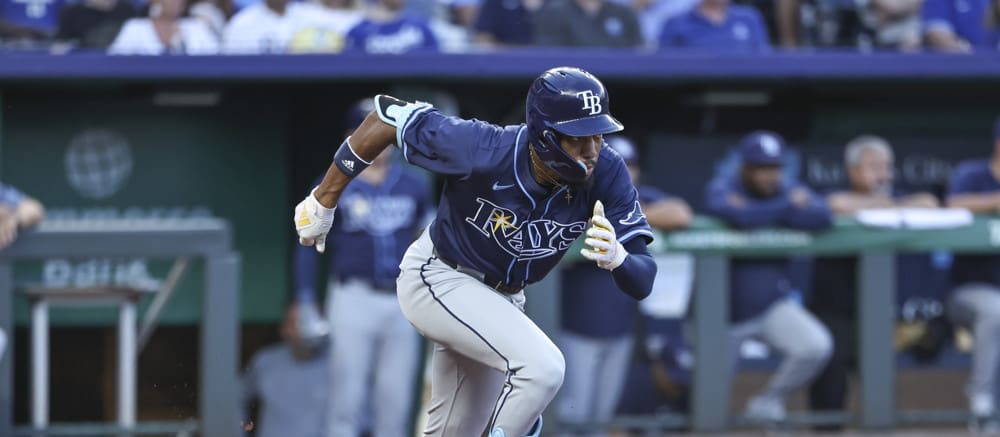
It's important that managers look for value in the categories where their stars may not be contributing. For example, MLB projections predict Aaron Judge will steal just nine bases. If you bid on and win him, you're in a great spot in the other four batting categories, but could look for cheap basestealers like Tampa Bay's Chandler Simpson or St. Louis' Victor Scott II, both of whom can be had for cheap.
It's also important to build flexibility and depth on positions where you don't have stars because it's more likely that you'll be rotating those players in and out throughout the year (as opposed to your stars, who will be starters every day).
"You'll need better depth/flexibility at the positions you didn't pay for stars at," Anderson said. "So if you buy a star shortstop and a couple star outfielders, you'll want to prioritize depth at first base, third base and second base with your 'scrubs.'"
Budget Management, Roster Flexibility in Stars & Scrubs Build
Grabbing one of the top names on the board is great, but it also means you'll need to budget the rest of your draft accordingly. This means not getting into bidding wars on too many other players, but instead finding value on players who go below their expected auction value and nabbing cheap players who can produce in unique spots.
Roster flexibility is also key here, so finding utility players who can fill into multiple spots will allow you to target a wider range of players down the stretch so you aren't stuck with non-contributors by the end of the draft. Grabbing a star right at the beginning of the draft is great, but it means having a strict focus on the rest of your build as the draft goes on.
When to Pivot Toward a More Balanced Auction Approach
The biggest names typically go off the board first in an auction draft, so you'll know right away if you've grabbed one of the big names and are going with the stars-and-scrubs approach. That could depend on the final auction price of early stars. Don't be dead-set on going with this approach if it's simply going to cost too much.
"If the stars are all going for more than they should, you can pivot to a more balanced auction approach, as that will clearly be the optimal build at that point," Anderson said. "It only makes sense to do stars and scrubs if the stars are being sold for less than their auction values per auction value calculators and custom auction value generators. If there's inflation with the stars, there will be values with everyone else."
Prior to the draft, managers can and should run fantasy baseball mock drafts to see what building the rest of your roster looks like after grabbing one of the big names. If you're happy with the results and feel there's enough $1-2 talent remaining at the end of drafts to justify the big name, then go with it.
If you feel too much talent is going off the board and you're left with not enough money, you'll want to avoid this strategy. You just need to subscribe to RotoWire to be prepared. RotoWire's team of experts will help you with rankings, analysis, sleepers and strategy to get you ready, regardless of which approach you take.