2026 World Cup Group J Preview: Argentina, Algeria, Austria and Jordan Lineups, Odds, Predictions and Tactics
Group J is one of the most fascinating draws of the tournament. You have the defending champions dealing with a Lionel Messi question the whole sport is watching, an Algerian side making its first World Cup appearance since 2014 armed with genuine attacking weapons, an Austrian team back on the world stage after 28 years and built around one of football's most demanding coaches, and a Jordanian side making its first-ever World Cup appearance off the back of the most remarkable qualifying campaign in the country's history.
For Argentina, this looks like a manageable path on paper. But football is played on grass, not paper, and this group has plenty of moving parts.
This is the full tactical guide to Group J, including playing style, attacking and defensive structure, key adjustments, projected starting lineups, set-piece takers and the latest odds for Argentina, Algeria, Austria and Jordan.
Argentina's path is one of 12 previewed in our complete World Cup group preview hub.
World Cup Group J Schedule
ARGENTINA | 2026 World Cup Tactical Analysis and Predicted Lineup
How Argentina Will Play at the 2026 World Cup
The elephant in the room with Argentina is still Lionel Messi. As recently as last September, he said the most logical outcome was that he would not play at this World Cup. Coach Lionel Scaloni has insisted no decision has been made. The La Bombonera crowd answered on March 27 by filling the stadium with banners reading "The Best of the Century" and chanting his name for 90 minutes. Messi came off the bench in the second half against Mauritania and had one clear chance, which was saved. The team scored two without him and conceded one with him on the field. Emiliano Martinez was unusually blunt afterward, calling it one of the worst friendlies Argentina had played. Manager Scaloni echoed that the core of the squad is in place but acknowledged the result would be taken into account.
Strip away the Messi noise and what you have is a defending world champion with extraordinary depth and tactical intelligence. Under coach Scaloni, Argentina operate from a fluid 4-3-3 or 4-4-2 hybrid that prioritizes collective pressing, rapid transitions and the ability to switch between controlling tempo and hitting teams on the counter. The system worked perfectly in Qatar in 2022, and the core of that squad is still here: Emiliano Martinez in goal, Nahuel Molina at right-back, Cristian Romero and Nicolas Otamendi in defense, Alexis Mac Allister and Enzo Fernandez in the midfield engine room, and Rodrigo De Paul providing the grit and work rate that hold it all together.
Against Mauritania, the best football came in the first half without Messi. Fernandez converted a Molina cross in the 17th minute, then Nico Paz curled a free kick through the wall for the second. Paz, specifically, has been one of the stories of Argentina's March window, justifying his selection and giving head coach Scaloni a genuine set-piece option when Messi is being managed carefully.
Argentina's Attacking Style at the 2026 World Cup
Argentina's attack is built around aggressive ball-winning, fluid movement and the individual gravity of elite forwards who can change the shape of a game in an instant.
Key attacking themes include:
Lautaro Martinez as the primary striker, in the form of his career in Serie A, bringing movement, link-up play and clinical finishing in the box. He missed the March window through injury and will be closely monitored ahead of June.
Julian Alvarez providing the relentless pressing and intelligent movement that create space for others, capable of playing as either a striker or an attacking midfielder.
Rodrigo De Paul as the engine of the pressing structure, covering enormous ground and winning second balls in areas that allow Argentina to sustain pressure.
Lionel Messi as the wildcard: if he plays, the team's attacking structure shifts entirely around him, with players bursting beyond him to exploit the spaces his positioning and vision create.
Argentina are most dangerous when they win the ball quickly in the opponent's half and attack before the defensive shape is set. They are less comfortable when forced to play through a deep, compact defensive block that takes away the transition game. Algeria and Austria will both look to compress the space Argentina want to exploit.
Several Argentina players are among the frontrunners in the 2026 World Cup Golden Boot odds.
Argentina's Defensive Setup
Emiliano Martinez is arguably the best goalkeeper at this tournament based on his Qatar 2022 performances and the Golden Glove he won there. In front of him, Romero provides the aggressive, combative presence manager Scaloni has built his defensive identity around. Otamendi is the experienced foil alongside him.
The full-backs are critical to Argentina's system: Molina attacking from the right is a constant threat, while Tagliafico provides balance and solidity on the left. The one injury concern worth watching is Lisandro Martinez, who is absent with a calf injury, meaning the coach is managing his center-back depth heading into the tournament. Marcos Senesi has been deputizing during the March window as a depth option.
Key Tactical Adjustments Argentina Need to Make
Resolve the Lionel Messi question and build clarity around the tactical structure that will be used at the tournament, with or without him.
Find the right solution at center-back with Lisandro Martinez absent, as Senesi is unproven at this level.
Ensure Lautaro Martinez is fit and in form by June, as his combination with the midfield is central to how Argentina create their best chances.
Argentina 2026 World Cup Predicted Lineup
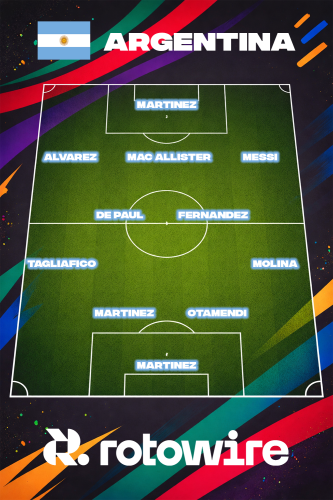
Fernandez, De Paul; Messi, Mac Allister, Alvarez; L. Martinez.
For more updates, see the latest projected World Cup lineups on RotoWire.
Argentina Set Piece Takers for the 2026 World Cup
Corners: Lionel Messi, Rodrigo De Paul, Alexis Mac Allister, Julian Alvarez
Direct free kicks: Lionel Messi, Nico Paz
Penalties: Lionel Messi, Lautaro Martinez, Julian Alvarez
Why This Argentina Lineup Works
This lineup reflects the best available combination based on the March 2026 window and coach Scaloni's established preferences. Fernandez and Mac Allister anchor the midfield with quality and intelligence, De Paul provides the pressing intensity and work rate that make the system function, and the front three have the speed and movement to punish defensive errors at any level. When Messi is managing his minutes carefully, Paz has shown he can handle the creative responsibility. Argentina are a well-constructed team regardless of what the superstar decides to do this summer.
ALGERIA | 2026 World Cup Tactical Analysis and Predicted Lineup
How Algeria Will Play at the 2026 World Cup
The last time Algeria played a World Cup match was in 2014, when they stunned South Korea and nearly knocked out Germany before losing 2-1 in extra time in Belo Horizonte. Twelve years later, they are back, having won CAF Group G convincingly with eight wins from 10 games and a seven-point cushion over Uganda. Under coach Vladimir Petkovic, who previously led Switzerland to the Euro 2020 quarterfinals and the Round of 16 at the 2018 World Cup, the Fennecs play an intense, attack-minded game built around the combination play of Riyad Mahrez, Mohammed Amoura, Amine Gouiri and Houssem Aouar.
The game on March 27 in Genoa gave the football world a sharp reminder of what Algeria are capable of. They beat Guatemala 7-0, with Amoura opening in the first minute, Mahrez converting a penalty, Abada adding the third before halftime, then Aouar, Gouiri twice, Ghedjemis and Benbouali completing the rout in the second half. The result came against limited opposition, but the fluency and goal hunger were genuine. Manager Petkovic kept his composure afterward, noting that a much sterner test awaited on March 31 against Uruguay in Turin. Algeria lined up in a 4-4-2 against Guatemala with Amoura and Gouiri as the forward partnership, Mahrez wide right and Aouar operating from the left side of midfield.
Algeria faced Uruguay in Turin on March 31. The match ended in a 0-0 draw, and Algeria lined up in a 3-4-2-1, highlighting the fact they can opt for several different structures depending on the opponent.
Algeria's Attacking Style at the 2026 World Cup
Algeria's attack combines veteran leadership, pace and technical quality, giving them multiple ways to threaten opponents in the final third.
Key attacking themes include:
Riyad Mahrez as captain, with 107 caps and the experience of Premier League and Champions League campaigns with Manchester City. At 35 years old, he is the veteran voice and the player who can still produce the moment of individual brilliance that decides a match.
Mohammed Amoura as the tournament's most dangerous Algerian attacker on current form, with 10 qualifying goals, explosive pace and the ability to finish from a variety of positions.
Amine Gouiri providing intelligent movement and technical quality in the final third, either as a second striker or off the right.
Houssem Aouar offering creative midfield quality and the ability to arrive late in scoring positions, as his goal against Guatemala demonstrated.
Algeria are at their best when the wide attackers can run at defenders in space, the midfield can sustain possession under pressure, and Amoura's directness unsettles the defensive line before the more technical players exploit the gaps. The concern is how they respond when the press is broken early and they are forced to defend compactly against teams with Argentina's quality in transition.
Algeria's Defensive Setup
Head coach Petkovic uses a back four built on discipline and aerial strength. Ramy Bensebaini, at left center-back, brings Bundesliga experience from Borussia Dortmund and has been a consistent presence throughout the qualifying campaign. Rayan Ait-Nouri, at left-back, has developed into one of the more dangerous attacking full-backs in the squad after his move to Manchester City.
The goalkeeper position is occupied by Luca Zidane, who, despite a difficult season in the second tier of Spanish football, has retained the starting spot. Ismail Bennacer was absent through the March window with injury, which is a real concern because his midfield energy and defensive awareness are difficult to replace. Algeria's defensive record in qualifying was solid, but the results against elite opposition will be far more revealing.
Key Tactical Adjustments Algeria Need to Make
Assess Bennacer's injury timeline carefully and find a way to compensate for his absence if he is not ready by June, as his defensive midfield work is central to protecting the back four.
Show against Uruguay in Turin that the pressing structure works against a top-ranked South American side, not just against AFCON opponents and Guatemala.
Manage Mahrez's fitness and minutes carefully across three group matches, given the physical demands of his position at 35 years old.
Algeria 2026 World Cup Predicted Lineup
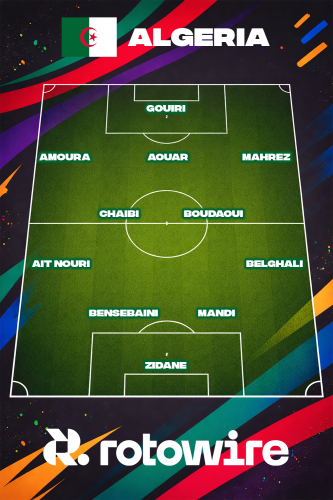
Boudaoui, Chaibi; Mahrez, Aouar, Amoura; Gouiri.
Algeria Set Piece Takers for the 2026 World Cup
Corners: Riyad Mahrez, Houssem Aouar, Amine Gouiri, Ismael Bennacer
Direct free kicks: Riyad Mahrez, Houssem Aouar
Penalties: Riyad Mahrez, Mohammed Amoura
Why This Algeria Lineup Works
This lineup puts Algeria's most dangerous attacking combination on the pitch, with Amoura and Gouiri as the forward partnership supported by Mahrez and Aouar from wide areas. The defensive midfield pairing of Boudaoui and Bennacer provides cover and press resistance, while Bensebaini and Ait-Nouri give the back four quality in both directions. Against Jordan, this lineup should be too much. Against Austria and Argentina, the test will be whether the collective can match its individual quality under sustained pressure.
AUSTRIA | 2026 World Cup Tactical Analysis and Predicted Lineup
How Austria Will Play at the 2026 World Cup
Coach Ralf Rangnick is one of the most influential tactical minds in modern football, and the Austrian national team job has given him the chance to prove that the pressing, high-intensity philosophy he spent decades developing at club level can work on international football's biggest stage. Austria qualified by topping their UEFA group with six wins and a draw, scoring 22 goals and conceding just four, including a 10-0 demolition of San Marino. They are back at the World Cup for the first time since 1998, and their first-round opponents would have done well to pay close attention to March 27.
Austria beat Ghana 5-1 in Vienna in what was their last major tune-up before the squad announcement. Marcel Sabitzer converted a penalty in the 12th minute, and the tone was set. Michael Gregoritsch added a second early in the second half, Stefan Posch scored from a corner, Carney Chukwuemeka grabbed a fourth on his debut, and Nicolas Seiwald completed the rout in stoppage time. The lineup was a 4-2-3-1 with Schlager in goal rather than Pentz, which suggests manager Rangnick is still finalizing his first-choice goalkeeper. The outfield structure was exactly what you would expect: aggressive pressing, quick transitions and the relentless work rate across all positions that defines Rangnick's system.
The key tactical development during the March window was the eligibility clearance for Carney Chukwuemeka, the Borussia Dortmund winger born in Austria who had previously represented England at youth level, and Paul Wanner, the PSV Eindhoven midfielder who had played in German youth football. Both were formally cleared by FIFA in March, and Chukwuemeka delivered on debut with a goal against Ghana.
Austria's Attacking Style at the 2026 World Cup
Austria's attacking structure is defined by a mix of central creativity, veteran presence, midfield intensity and new wide dynamism.
Key attacking themes include:
Marcel Sabitzer as the heart of the team, playing as the number 10 behind the striker and delivering both the creative spark and the goal threat coach Rangnick demands from his playmaker.
Marko Arnautovic as the central striker at 37 years old, Austria's all-time leading scorer with 47 goals in 130 appearances. Age is a legitimate question, but so are his presence, his hold-up play and his ability to win aerial duels and bring others into the game.
Konrad Laimer as the versatile Bayern Munich player who can operate in both defense and midfield, whose energy and pressing intensity allow Austria's system to keep the opposition pinned back for extended stretches.
Carney Chukwuemeka providing direct running and technical quality from wide areas, something Austria had not previously had in quite the same combination before his clearance came through.
Austria's pressing game is built to force turnovers in the opponent's half and convert them quickly before the defensive shape can reset. Head coach Rangnick has rotated personnel extensively across this squad, and almost every position has been used by multiple players, which means the system is understood by the whole team rather than being dependent on any one individual.
Austria's Defensive Setup
The preferred shape is a 4-2-3-1 with a defensive pivot pairing protecting the back four. Nicolas Seiwald, Xaver Schlager and Florian Grillitsch shared that responsibility during the March window.
The center-back options are strong: Kevin Danso from Tottenham brings Premier League experience, while Marco Friedl and Philipp Lienhart provide options from Bundesliga. David Alaba, when fit, offers the kind of versatility the coach values enormously as a third center-back option, though the Real Madrid defender has managed injury concerns throughout the latter part of his career. Patrick Pentz and Alexander Schlager remain in competition for the goalkeeper spot, with coach Rangnick yet to fully commit to one or the other.
Key Tactical Adjustments Austria Need to Make
Settle the goalkeeper question before the squad is finalized, as uncertainty between Pentz and Schlager has been a persistent theme.
Find a way to keep Arnautovic effective for 90 minutes in the North American heat, or build a rotation that protects him without sacrificing the attacking threat.
Prioritize maximum points against Algeria and Jordan, where Austria's system gives them a clear advantage.
Austria 2026 World Cup Predicted Lineup
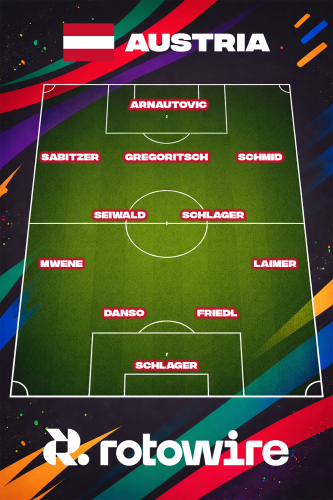
Schmid, Gregoritsch, Sabitzer; Arnautovic.
Austria Set Piece Takers for the 2026 World Cup
Corners: Marcel Sabitzer, Nicolas Seiwald
Direct free kicks: Marcel Sabitzer, Marko Arnautovic, David Alaba
Penalties: Marcel Sabitzer, Marko Arnautovic
Why This Austria Lineup Works
This lineup reflects coach Rangnick's preferred 4-2-3-1 with the full strength of the squad available. Sabitzer operates as the creative hub in the number 10 role, Arnautovic leads the line with experience and physical presence, and the midfield double pivot of Seiwald and Schlager gives Austria the structural balance to press high without leaving themselves exposed. In a group where second place is genuinely contested between Austria and Algeria, this lineup has the quality to deliver the points needed.
JORDAN | 2026 World Cup Tactical Analysis and Predicted Lineup
How Jordan Will Play at the 2026 World Cup
Jordan's qualification for the 2026 World Cup is the kind of story football was built on. A nation of 11 million people, ranked 63rd in the world, making its first-ever appearance at the tournament after nine previous attempts. They finished second in AFC Group B in the third round of qualifying, went unbeaten in eight of 10 matches and confirmed their place with a 3-0 win over Oman in early June 2025. Under coach Jamal Sellami, the Moroccan who won the 2018 African Nations Championship with Morocco and signed a three-year contract after his predecessor left for family reasons, Jordan reached the Arab Cup final in December 2025 and have lost only twice in 12 matches during his tenure.
The tactical foundation is a disciplined, compact defensive structure, typically a 4-5-1 or 3-4-3 that can shift depending on the opponent, built around defending deep, winning the ball and releasing Moussa Al Tamari on the counter. Al Tamari is the player everyone in Group J needs to account for. The Rennes forward, who became the first Jordanian to play in Ligue 1, scored and assisted in Jordan's historic 2-0 win over South Korea in the 2024 Asian Cup semifinal. He can play on either wing, he can finish, and he is the one player most capable of producing a moment that would haunt Argentina or Austria. Jordan faced Costa Rica and Nigeria during the March friendly window, drawing both matches 2-2.
Jordan's Attacking Style at the 2026 World Cup
Jordan's attacking identity is built around speed, chemistry and clear role definition, with Sellami relying on a handful of complementary profiles to make the most of transitions and moments in the final third.
Key attacking themes include:
Moussa Al Tamari as the primary attacking weapon, the only player in the squad competing in one of Europe's top five leagues, and the player manager Sellami's system is designed to release into space on the counter.
Ali Iyad Ali Al Olwan and Mohannad Mahmoud Saleh Abu Taha as supporting attacking options from wide areas, both capable of direct running and creating space for the central combination.
Set pieces as a genuine weapon: Jordan have shown they can be dangerous from dead-ball situations across qualification and in the Arab Cup.
Jordan's ceiling at this World Cup is probably one shock result, and every group has one. Saudi Arabia beat Argentina in 2022, and Jordan will try to do the same.
Jordan's Defensive Setup
Coach Sellami's system prioritizes keeping the team compact and difficult to break down. The back line is built on experience from the Jordanian Pro League, with Yazeed Mo'ien Hasan Abulaila as the first-choice goalkeeper, having been reliable throughout the qualifying campaign. Yazan Al-Arab brings solidity at center-back alongside Abdallah Mousa Musallam Nasib, and the central midfield protection in front of them is designed to cut off supply lines before they reach the defensive line.
The challenge is sustaining that defensive discipline for 90 minutes against the attacking depth of Argentina and the press-driven intensity of Austria, both of whom will try to force turnovers high up the pitch and exploit any hesitation in Jordan's structure.
Key Tactical Adjustments Jordan Need to Make
Survive the early onslaught from Argentina and Austria, as the first 20 minutes of each match will likely determine whether Jordan can stay in the game long enough to use their counterattacking plan.
Protect Al Tamari from unnecessary physical wear, as his fitness and freshness across three group matches will define how effective their best attacking outlet can be.
Get a result against Algeria in the final group match, as that is realistically their best opportunity to take something from the group stage.
Jordan 2026 World Cup Predicted Lineup
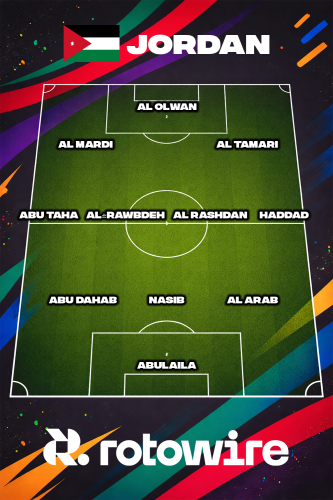
Haddad, Al Rashdan, Al-Rawabdeh, Abu Taha; Al Tamari, Al Olwan, Al Mardi.
Jordan Set Piece Takers for the 2026 World Cup
Corners: Moussa Al Tamari, Mohannad Mahmoud Saleh Abu Taha
Direct free kicks: Moussa Al Tamari
Penalties: Moussa Al Tamari
Why This Jordan Lineup Works
This lineup reflects Jordan's functional strength: a goalkeeper and back line built for organization and resilience, a midfield layer that protects and transitions quickly, and Moussa Al Tamari as the direct attacking outlet who can punish any defensive lapse. For a first World Cup, coherence and belief matter as much as talent, and manager Sellami has built both into this squad.
2026 World Cup Group J Odds
Argentina are priced as heavy favorites across all books, implying roughly a 75 percent chance to win the group. That pricing reflects squad depth, past editions and their arrival as the defending champions.
Austria are consistently positioned as the second favorite to qualify from Group J, with roughly a 20 percent implied probability to win the group.
Algeria and Jordan are priced as clear outsiders, with similar implied probabilities to win the group.
For full tournament winner odds across all 48 teams, see our 2026 World Cup winner odds page.
Visit RotoWire for exclusive sports betting picks and our daily World Cup recaps. Remember that betting apps vary in terms of odds, so we have an easy-to-use odds page that allows you to shop for the best lines at DraftKings, FanDuel, BetMGM and PointsBet. Claim over a thousand dollars in bonuses by signing up at the best sports betting sites using the best sportsbook promos.
Who Will Qualify from World Cup Group J?
For predicted formations and set-piece assignments across every group, see our full 2026 World Cup previews.
Argentina should win this group. The defending champions, with a squad that contains multiple Champions League and A-level performers across every position and an institutional understanding of how to win major tournaments, should not drop points against Jordan and should be too strong for Algeria and Austria over three matches. The one genuine variable is Lionel Messi's participation and how coach Scaloni manages the squad if Lautaro Martinez is not fully fit by June.
Second place is where this group gets genuinely interesting. Austria's qualifying record was better than Algeria's, and manager Rangnick's system is built for exactly the kind of compact, high-intensity matches that tournament football demands. Algeria's attacking firepower, particularly the combination of Mohamed Amoura, Riyad Mahrez and Amine Gouiri, is more individually gifted than anything Austria have in their front line. The group-deciding factor between them is likely the direct clash: Algeria vs. Austria.
If Algeria win that match, the second-place spot is theirs. If Austria draw or win it, their superior tactical structure and European pedigree should be enough to hold on to second. Either way, the real show in Group J is watching how Jordan handle their first-ever World Cup match on June 17 against Austria, and whether the shock nobody saw coming lands on Argentina or Austria in the matches that follow.
Group J Summary
| Argentina | Algeria | Austria | Jordan | |
|---|---|---|---|---|
| Predicted formation | 4-2-3-1 | 4-4-2 | 4-2-3-1 | 3-4-3 / 4-5-1 |
| Playing style | High press, rapid transitions, possession-based, counter-attack threat | Attack-minded combination play, wide runners, set-piece threat | Gegenpressing, high-intensity pressing, quick transitions, squad rotation | Compact defensive block, disciplined low block, direct counter-attack through Al Tamari |
| Corners/FK takers | Messi, De Paul, Mac Allister, Alvarez | Mahrez, Aouar, Gouiri, Bennacer | Sabitzer, Seiwald | Al Tamari, Taha |
| Penalty takers | Messi, Martinez, Alvarez | Mahrez, Amoura | Sabitzer, Arnautovic | Al Tamari |
2026 World Cup Group Previews Menu
Click each group for full tactical breakdowns, predicted lineups, betting odds and predictions.
Group A: Mexico, South Africa, South Korea, Czechia
Group B: Canada, Bosnia and Herzegovina, Qatar, Switzerland
Group C: Brazil, Morocco, Haiti, Scotland
Group D: United States, Paraguay, Australia, Turkiye
Group E: Germany, Curacao, Ivory Coast, Ecuador
Group F: Netherlands, Japan, Sweden, Tunisia
Group G: Belgium, Egypt, Iran, New Zealand
Group H: Spain, Cape Verde, Saudi Arabia, Uruguay
Group I: France, Senegal, Iraq, Norway
Group J: Argentina, Algeria, Austria, Jordan
Group K: Portugal, Colombia, DR Congo, Uzbekistan
Group L: England, Croatia, Ghana, Panama