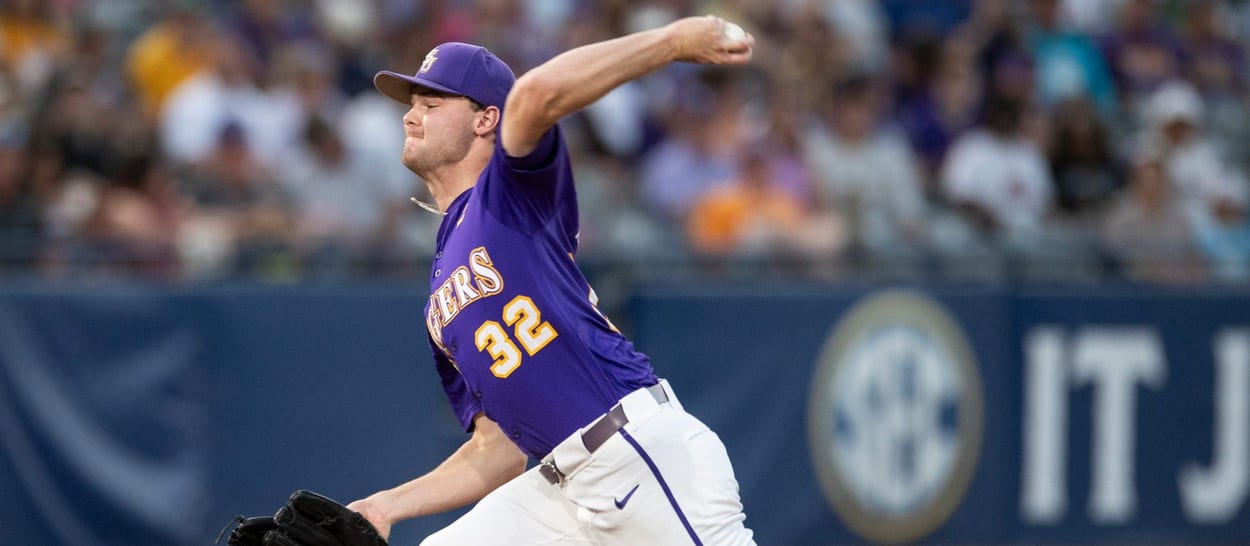


Three months into the MLB season, organizations continue turning to their farm systems for reinforcements, whether to fill holes, cover injuries or provide a spark. Cooper Ingle (Guardians) and Cameron Cauley (Rangers) are among the latest prospects to reach The Show. As always, here are 10 prospects to consider stashing in 2026 redraft leagues.
Thanks for reading, and feel free to reach out in the comments or on X (@jerschneid14) with any questions or thoughts!
Stats updated through the morning of June 30. For more prospect coverage, check out our Top 400 MLB Prospects as well as our Top 20 prospects for each team.
 Kade Anderson, SP, Mariners (#5, #2 P, #1 SEA)
Anderson's five-start scoreless streak was finally snapped Friday, as he allowed two runs over five innings, though he still piled up nine strikeouts. Even with the blemish, the southpaw has been nothing short of dominant this season, leading all qualified Texas League pitchers with a 1.22 ERA, 0.71 WHIP and 99:10 K:BB across 66.2 innings (13 starts) for Double-A Arkansas. The 21-year-old's fastball sits in the low-to-mid 90s, but it plays up thanks to a deceptive delivery and his ability to command the pitch. Anderson's well-rounded arsenal and elite production should alleviate concerns about his modest velocity, as he has arguably been the best pitcher in affiliated baseball this season. In addition to the traditional numbers, he ranks in the 97th percentile or better in strikeout rate (41.4 percent), walk rate (4.2 percent), whiff rate
Three months into the MLB season, organizations continue turning to their farm systems for reinforcements, whether to fill holes, cover injuries or provide a spark. Cooper Ingle (Guardians) and Cameron Cauley (Rangers) are among the latest prospects to reach The Show. As always, here are 10 prospects to consider stashing in 2026 redraft leagues.
Thanks for reading, and feel free to reach out in the comments or on X (@jerschneid14) with any questions or thoughts!
Stats updated through the morning of June 30. For more prospect coverage, check out our Top 400 MLB Prospects as well as our Top 20 prospects for each team.
Kade Anderson, SP, Mariners (#5, #2 P, #1 SEA)
Anderson's five-start scoreless streak was finally snapped Friday, as he allowed two runs over five innings, though he still piled up nine strikeouts. Even with the blemish, the southpaw has been nothing short of dominant this season, leading all qualified Texas League pitchers with a 1.22 ERA, 0.71 WHIP and 99:10 K:BB across 66.2 innings (13 starts) for Double-A Arkansas. The 21-year-old's fastball sits in the low-to-mid 90s, but it plays up thanks to a deceptive delivery and his ability to command the pitch. Anderson's well-rounded arsenal and elite production should alleviate concerns about his modest velocity, as he has arguably been the best pitcher in affiliated baseball this season. In addition to the traditional numbers, he ranks in the 97th percentile or better in strikeout rate (41.4 percent), walk rate (4.2 percent), whiff rate (38.6 percent), strike rate (69.2 percent), zone-contact rate (69.7 percent) and swinging-strike rate (19.3 percent), cementing his case as one of the game's premier pitching prospects.
Anderson is the lone pitcher featured on this week's list, with other candidates sidelined by injuries or hampered by inconsistent performances, but his obstacle is a path to a rotation spot in Seattle rather than his readiness. The Mariners have bounced between a six-man rotation and a piggyback setup with little consistency, making it difficult to project when an opening might arise. Bryan Woo (4.26 ERA) has endured a disappointing campaign, Emerson Hancock (3.47 ERA) has cooled off after a strong start and Luis Castillo (4.93 ERA) remains the most vulnerable member of the rotation despite showing some improvement in June. Castillo is owed significant money, but if his lack of consistency remains an issue, a club with postseason aspirations will have a difficult time justifying regular starts for him over an MLB-ready arm like Anderson. Seattle could ease Anderson into the majors in a multi-inning relief role, which would naturally limit his immediate fantasy value, but that possibility remains entirely speculative. Whenever the opportunity comes, Anderson has little left to prove in the minors and is too talented not to stash.
 Kaelen Culpepper, SS, Twins (#43, #19 SS, #2 MIN)
Culpepper returned from a two-week absence due to a left hip strain Sunday, going 0-for-4 against a Hunter Greene-led Louisville team. The hitless performance is of little concern; what matters is simply that Culpepper has returned to action, as the shortstop is slashing .269/.372/.490 with 14 homers, 11 doubles, a triple, 43 RBI, 53 runs and 15 stolen bases across 62 games with Triple-A St. Paul. The 23-year-old doesn't necessarily excel in one particular area, but he's an incredibly well-rounded player with a knack for making solid contact (49.3 percent hard-hit rate, 88th percentile), avoiding strikeouts (17.4 percent strikeout rate, 81st percentile) and providing value on the bases (84th percentile sprint speed).
The Twins are below .500 and could ultimately become sellers at the trade deadline, though they remain within striking distance in a weak AL Central. Ryan Kreidler (.876 OPS) has seemingly edged ahead of Tristan Gray (.644 OPS) in the shortstop pecking order, though neither has much of a track record of sustained success in the majors nor figures to be a long-term obstacle for Culpepper. Following his hip injury, Minnesota will likely want to see Culpepper get back into a rhythm in Triple-A, but it shouldn't be long before he earns a promotion and receives significant runway to regular playing time.
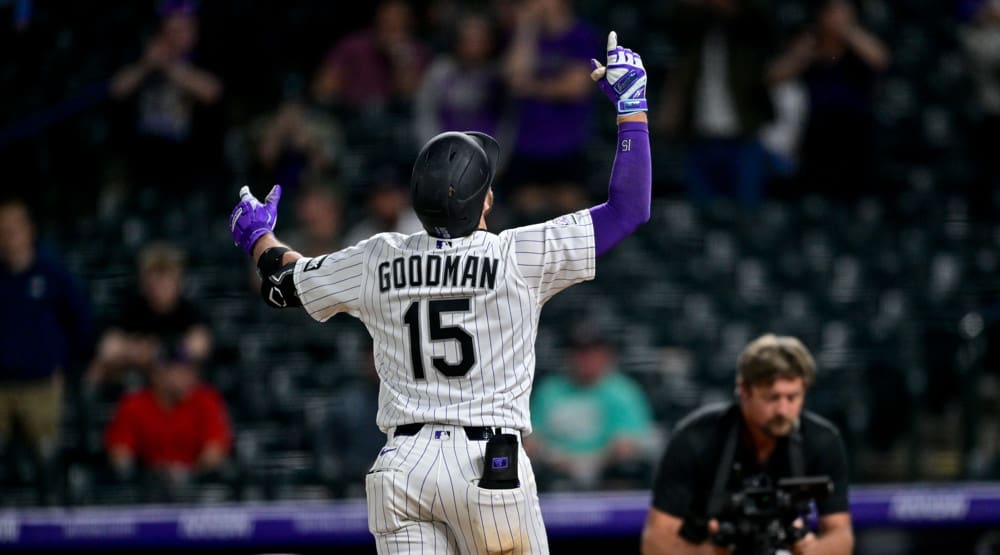
 Charlie Condon, 1B, Rockies (#109, #7 1B, #3 COL)
Condon keeps mashing, going 10-for-20 (.500) with three homers, nine RBI and eight runs in five games this past week. His rough stretch from mid-April to mid-May feels like ancient history, as the slugger is now slashing .280/.411/.564 with 17 homers, 14 doubles, five triples, 55 RBI, 66 runs and five stolen bases across 70 games with Triple-A Albuquerque. The 23-year-old's immense raw power has translated into significant production, as his nine homers in June have been accompanied by 93rd percentile marks in barrel rate (13.3 percent) and hard-hit rate (51.7 percent) through 22 appearances this month. His season-long plate discipline has been incredibly impressive, with an 18.0 percent chase rate (100th percentile) and 15.0 percent walk rate (83rd percentile). A 23.2 percent strikeout rate (25th percentile) and 28.5 percent whiff rate (17th percentile) still leave room for improvement, but Condon has made meaningful strides in alleviating concerns about his contact ability.
The Rockies are far from thriving as they dwell in the basement of the NL West, but their position-player group is getting healthier and no obvious everyday lineup opening currently exists. Mickey Moniak (.861 OPS), Jake McCarthy (.842 OPS), Troy Johnston (.813 OPS), Cole Carrigg (.875 OPS) and Tyler Freeman (.724 OPS) are all competing for outfield at-bats, not to mention the impending return of Brenton Doyle (oblique) and Triple-A teammate Zac Veen, who is also crushing it in Albuquerque. That said, most of those players are left-handed hitters, while Condon bats from the right side and has split time between right field and first base, where he could situationally spell the left-handed-hitting TJ Rumfield (.860 OPS). Carving out regular at-bats may be a bit tricky at this exact moment, but given Condon's surge and Colorado's lack of postseason aspirations, a promotion by the end of July or shortly after the trade deadline feels both reasonable and likely.
 Joshua Baez, OF, Cardinals (#36, #13 OF, #2 STL)
Baez went just 3-for-21 (.143) in five games this past week, though he still managed to leave the yard once. The hulking outfielder leads the International League and is tied with Manuel Pena for the most homers in affiliated baseball with 26. Along with the long balls, Baez is hitting .265/.332/.601 with 14 doubles, three triples, 65 RBI, 58 runs and 13 stolen bases across 72 games with Triple-A Memphis. The 23-year-old possesses tantalizing upside, backed by an elite batted-ball profile highlighted by a 19.1 percent barrel rate (97th percentile) and 56.1 percent hard-hit rate (92nd percentile), while also bringing legitimate speed (96th percentile). The biggest concern with Baez remains the swing-and-miss, as he's striking out at a 30.5 percent clip (sixth percentile) while posting a 34.4 percent whiff rate (third percentile) and 74.8 percent zone-contact rate (eighth percentile). That level of swing-and-miss doesn't disqualify Baez from becoming a productive big leaguer, but continued improvement will be necessary for him to maximize his immense tools.
Whiff concerns aside, a big obstacle to a promotion is the fact that the Cardinals' outfield is currently healthy. Jordan Walker (.859 OPS) is entrenched in right field, while Lars Nootbaar (.866 OPS) has been excellent primarily in left field since making his season debut in early June. Nathan Church (.693 OPS) has been serviceable in center field, but he appears to be the most logical candidate to lose playing time if Baez is promoted. Everyday at-bats would be ideal for Baez's development, but St. Louis' No. 2 prospect has demolished left-handed pitching (1.042 OPS) and could initially carve out a role by spelling Nootbaar or Church against southpaws. Baez is far from a flawless product, and the crowded outfield situation at Busch Stadium is worth monitoring, but the Cardinals can only keep him in Triple-A for so long if he continues to deliver fireworks from the batter's box.
 Luis Lara, OF, Brewers (#52, #17 OF, #3 MIL)
Lara appears to be breaking out of a rut, going 10-for-21 (.476) across six games this past week, highlighted by a five-hit effort last Tuesday. On the year, the switch hitter is slashing .326/.438/.457 with seven homers, 10 doubles, two triples, 36 RBI, 62 runs and 20 stolen bases across 73 games with Triple-A Nashville. Power isn't a major part of the 21-year-old's game, as he hasn't homered since May 6 and has just seven extra-base hits since then. That said, Lara's process at the plate is extremely encouraging, highlighted by a 90.9 percent zone-contact rate (86th percentile) and 15.8 percent walk rate (86th percentile) while limiting his strikeout rate to 13.4 percent (92nd percentile) and whiff rate to 15.2 percent (86th percentile). Pair that with 84th percentile speed, an aggressive approach on the bases and well-regarded defense in center field, and Lara offers an intriguing contact-speed profile.
The Brewers remain atop the NL Central, but the major-league roster isn't without flaws. Center fielder Garrett Mitchell (.757 OPS) has cooled off to close June and has struggled against left-handed pitching, while right fielder Sal Frelick (.647 OPS) has shown signs of life recently but has largely disappointed in 2026. Blake Perkins has occasionally spelled both against southpaws, though his .701 OPS versus lefties and .514 OPS overall don't inspire much confidence. Lara owns a 1.032 OPS against left-handed pitching and could immediately slot into a short-side platoon role, with an opportunity to earn more consistent playing time if he performs. With service time and a 40-man roster spot no longer concerns after Milwaukee signed Lara to a seven-year extension June 9, it shouldn't be much longer before Lara joins the crew.
 Hector Rodriguez, OF, Reds (#91, #26 OF, #3 CIN)
Back on the main list for the first time since late April, Rodriguez has posted a 1.073 OPS with eight homers in 23 games during June. Overall, the 22-year-old is slashing .288/.367/.536 with 18 homers, 14 doubles, four triples, 51 RBI, 60 runs and six stolen bases across 78 games with Triple-A Louisville. Rodriguez has enjoyed a breakout campaign in the power department, backed by a 9.0 percent barrel rate (69th percentile) and 107.3 mph 90th percentile exit velocity (89th percentile). He tends to chase too often, as demonstrated by a 35.3 percent chase rate (sixth percentile), but his 23.1 percent whiff rate (50th percentile) and 18.8 percent strikeout rate (67th percentile) are respectable. Rodriguez doesn't possess one truly elite tool, but his well-rounded offensive profile and current production have put him firmly on the prospect radar.
The Reds benefited from a monster 30-game stretch from left fielder JJ Bleday (.858 OPS), but he has cooled off considerably in June. Right field has primarily been patrolled by Noelvi Marte (.623 OPS), who has shown some improvement in 20 games since being recalled, and Spencer Steer (.734 OPS), who also sees time at first and second base. Rodriguez has exclusively played the corner outfield spots over the past two minor-league seasons, so center field isn't a realistic direct avenue to playing time, though Dane Myers (shoulder) hitting the injured list could open up a roster spot. For a mediocre Reds club sitting at the bottom of a competitive NL Central, rewarding Rodriguez with a promotion around the trade deadline, if not sooner, could provide a needed spark for an offense that ranks 29th in baseball with a 90 wRC+.
 Max Clark, OF, Tigers (#34, #11 OF, #1 DET)
Clark continues to show some flashes but remains a work in progress, posting a .271/.361/.435 slash line with four homers, two doubles, 11 RBI, 16 runs and five stolen bases across 20 games in June. Overall, the center fielder is slashing .265/.347/.394 with six homers, 15 doubles, two triples, 32 RBI, 49 runs and 17 stolen bases across 70 games with Triple-A Toledo. There are somewhat encouraging power indicators, including a 104.7 mph 90th percentile exit velocity (56th percentile) and 111.3 mph max exit velocity (56th percentile), though a 3.4 percent barrel rate (14th percentile) and an astronomical 32.9 percent infield flyball rate are key data points that help explain his offensive production. What the 21-year-old hasn't struggled with is making contact, evidenced by a 13.9 percent whiff rate (94th percentile), 91.4 percent zone-contact rate (89th percentile), 15.0 percent strikeout rate (83rd percentile) and 20.8 percent chase rate (89th percentile). The offensive production has been inconsistent, but Clark's combination of contact skills, speed and defense keeps him in high regard in the world of prospects.
Center field remains a weak spot for the Tigers, as James Outman (.542 OPS) hasn't provided much since being claimed June 11. Matt Vierling (.593 OPS) has held his own against left-handed pitching but isn't the caliber of an everyday player, despite Detroit's willingness to keep him in the lineup. Clark still has room to develop offensively and isn't exactly forcing the Tigers' hand, but he's widely viewed as the franchise's long-term answer in center field and could potentially already be an upgrade over the club's current options even if the power takes more time to develop. The ups and downs of Clark's 2026 campaign make it difficult to pinpoint when a promotion will come, but his opportunity and long-term upside make the No. 3 overall pick in the 2023 MLB Draft a stash candidate to consider.
Walker Jenkins, OF, Twins (#35, #12 OF, #1 MIN)
Jenkins makes his first appearance on the list this season after returning from the injured list this past week following a Grade 2 AC joint sprain in his left shoulder. The oft-injured outfielder has appeared in 29 games with Triple-A St. Paul this season, slashing .257/.386/.400 with two homers, seven doubles, a triple, 10 RBI, 16 runs and five stolen bases. At just 21 years old, Jenkins already possesses an advanced approach at the plate, making in-zone contact at a 91.9 percent clip (96th percentile) with a 16.0 percent strikeout rate (82nd percentile), 15.8 percent walk rate (87th percentile) and 21.3 percent chase rate (87th percentile). His raw strength is evident with a 51.8 percent hard-hit rate (93rd percentile) and 92.7 mph average exit velocity (96th percentile), though he has struggled to consistently turn that into extra-base damage, largely due to a 46.4 percent groundball rate. Minnesota's top prospect has all the ingredients to develop into a standout major-league hitter, but health remains the biggest question mark for a player who has yet to appear in more than 84 games during a minor-league season.
Byron Buxton (.898 OPS) is the star in center field, though he was held out of Monday's contest due to a right hip impingement. Early indications suggest the issue isn't serious, but any extended absence would create an obvious opening. With Trevor Larnach (.809 OPS) producing in left field, right field remains the least settled spot, as Luke Keaschall (.647 OPS) has recently shifted over from second base while Austin Martin (.673 OPS) and Kyler Fedko (.154 OPS) haven't provided much of a case for everyday playing time. Given Jenkins' lengthy injury history and the fact that he has yet to truly dominate Triple-A, the Twins are likely to proceed cautiously. There's a very real chance he spends the remainder of the 2026 season with St. Paul, so his stash appeal isn't rooted in an imminent promotion. Rather, it's tied to the possibility that his talent forces Minnesota's hand if everything begins to click over the second half.
Max Anderson, 2B, Tigers (#243, #9 2B, #5 DET)
Another new addition to the list, Anderson isn't a highly-touted prospect, but his production this season has firmly put him on the radar for a big-league call-up. In 44 games with Triple-A Toledo, the 24-year-old is slashing .308/.350/.522 with nine homers, 10 doubles, a triple, 31 RBI, 31 runs and a stolen base. The infielder is an aggressive hitter with a 56.1 percent swing rate (96th percentile), but that approach hasn't translated into elevated strikeout totals, with just a 12.7 percent strikeout rate (93rd percentile). Anderson's 34.6 percent hard-hit rate (25th percentile) is down from 48.6 percent (90th percentile) last year, though he has still barreled the ball at a respectable 6.9 percent clip (62nd percentile). The right-handed hitter has thrived against left-handed pitching, posting a 1.172 OPS in opposite-handed matchups this season.
With Gleyber Torres (oblique) sidelined, the Tigers have primarily turned to Hao-Yu Lee (.682 OPS) at the keystone, and he has looked much improved since being recalled June 13. Anderson, while not regarded as a standout defender, has experience at both second and third base, so a potential path to playing time could come at the hot corner with young star Kevin McGonigle (.819 OPS) sliding over to shortstop in place of Zach McKinstry (.580 OPS). Anderson's upside isn't immense, but he has produced in Triple-A and profiles as a logical candidate to join Detroit's infield mix should the club look to shake things up.
 Seaver King, SS, Nationals (#99, #29 SS, #4 WSH)
King didn't do much this past week, going 4-for-19 (.211) with four walks across five appearances. Since being promoted to Triple-A Rochester on May 18, the 23-year-old is slashing .278/.343/.452 with five homers, five doubles, a triple, 24 RBI, 16 runs and four stolen bases in 31 games. The production hasn't quite matched the .989 OPS he posted in 35 games at Double-A Harrisburg, but there's still plenty to like under the hood. King pairs loud contact, evidenced by an 8.2 percent barrel rate (71st percentile) and 49.0 percent hard-hit rate (88th percentile), with solid bat-to-ball skills, posting an 87.2 percent zone-contact rate (80th percentile) and 20.7 percent strikeout rate (63rd percentile). The biggest hurdle in his offensive profile is a tendency to get on top of the baseball. His 49.0 percent groundball rate at Triple-A is up from 40.6 percent at Double-A earlier this season, and the 2024 first-round pick ran rates north of 52.0 percent in previous years. There's legitimate power potential in King's bat, but consistently getting the ball in the air will be key to unlocking it.
Shortstop is blocked by CJ Abrams (.864 OPS), making second base the most likely path for King to break into Washington's lineup. Nasim Nunez (.592 OPS) has handled most of the work at the keystone, providing value on the bases and defensively but offering little impact at the plate. Nunez is only 25 and has clear situational value, though he doesn't project as a significant long-term obstacle for King. While King still has areas to refine in Triple-A, particularly elevating the baseball more consistently and drawing more walks, he doesn't appear far from being ready for a major-league opportunity. The Nationals won't rush their No. 4 prospect, but a 2026 debut appears well within the realm of possibility.
Honorable Mentions/Other Names to Consider
 Ralphy Velazquez, 1B, Guardians (#7, #1 1B, #1 CLE)
Yohandy Morales, 1B, Nationals (#240, #9 1B, #10 WSH)
 Jaxon Wiggins, SP, Cubs (#164, #48 P, #6 CHC)
 River Ryan, SP, Dodgers (#74, #16 P, #6 LAD)
 Karson Milbrandt, SP, Marlins (#44, #4 P, #1 MIA)
 Ty Johnson, SP, Rays (#114, #32 P, #9 TB)