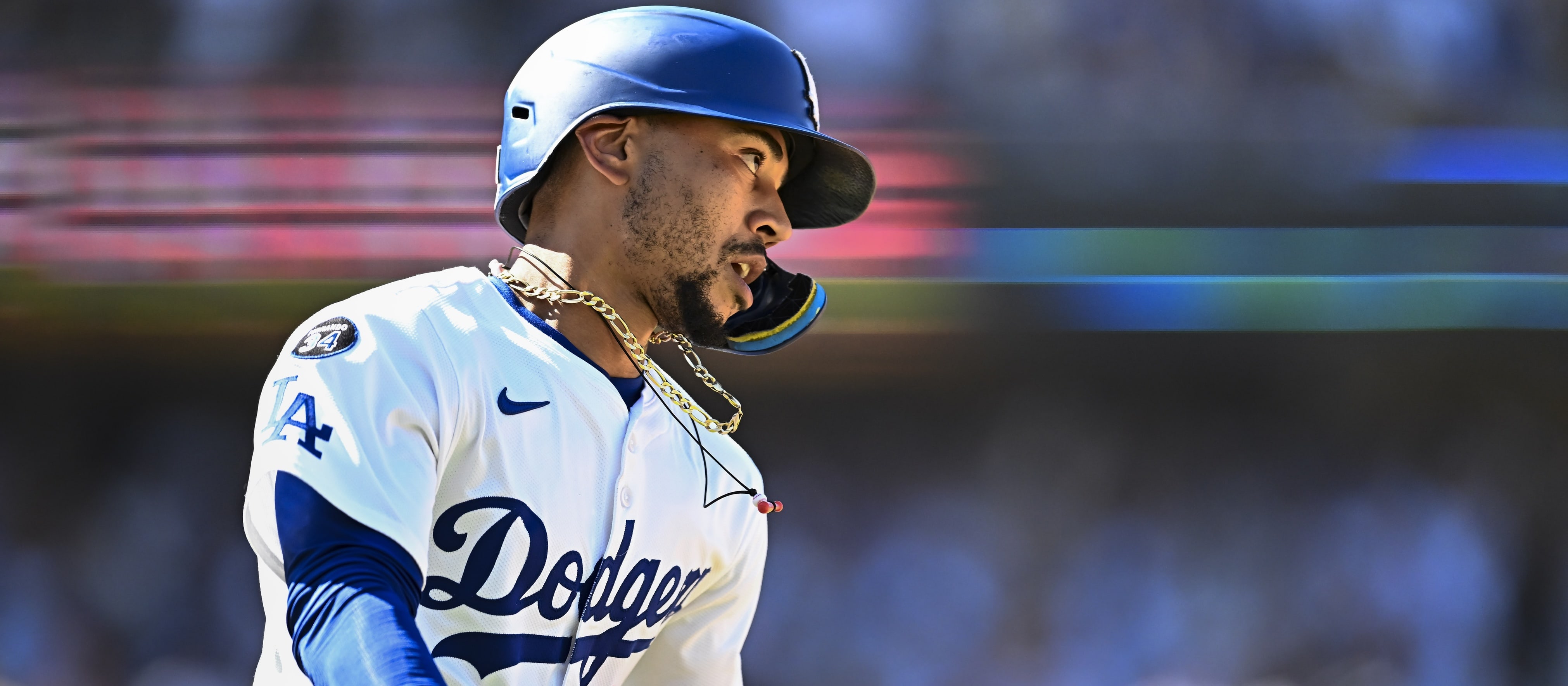


The Dodgers shortstop will miss multiple weeks after suffering an oblique strain over the weekend. As medical reporting has improved, oblique injuries have become more commonplace on MLB injury reports with the injury becoming a far too familiar problem for fantasy managers. And though listing the ailment as an oblique strain instead of a rib or midsection strain does help provide better perspective for the injury, oblique strains remain a complex problem.
To start, the obliques are not an isolated muscle but instead two pairs of muscles. The obliques sit on each side of the rib cage that are then divided into two groups, the internal and external obliques. Each group works with the opposite group that sits on the opposite side of the body to complete trunk rotation. For example, the right internal obliques contract in conjunction with the left external obliques whenever a player swings a bat or throws a ball.
MLB injury reports rarely include the exact group strained, creating a degree of variability in analysis, particularly for return to play (RTP) timelines. Furthermore, the degree or grade of the strain can also influence RTP windows, making it difficult to make a precise estimate of time lost. However, examining basic RTP windows for all nondescript injuries does at least provide enough context to allow fantasy managers to make immediate roster decisions. The average time lost for oblique strains in baseball is roughly 38 days. The window is about one week lower (32 days) for a
The Dodgers shortstop will miss multiple weeks after suffering an oblique strain over the weekend. As medical reporting has improved, oblique injuries have become more commonplace on MLB injury reports with the injury becoming a far too familiar problem for fantasy managers. And though listing the ailment as an oblique strain instead of a rib or midsection strain does help provide better perspective for the injury, oblique strains remain a complex problem.
To start, the obliques are not an isolated muscle but instead two pairs of muscles. The obliques sit on each side of the rib cage that are then divided into two groups, the internal and external obliques. Each group works with the opposite group that sits on the opposite side of the body to complete trunk rotation. For example, the right internal obliques contract in conjunction with the left external obliques whenever a player swings a bat or throws a ball.
MLB injury reports rarely include the exact group strained, creating a degree of variability in analysis, particularly for return to play (RTP) timelines. Furthermore, the degree or grade of the strain can also influence RTP windows, making it difficult to make a precise estimate of time lost. However, examining basic RTP windows for all nondescript injuries does at least provide enough context to allow fantasy managers to make immediate roster decisions. The average time lost for oblique strains in baseball is roughly 38 days. The window is about one week lower (32 days) for a position players like Betts, while pitchers tend to miss closer to 47 days. As a result, those invested in Betts should prepare to be without his services for four to six weeks. Hyeseong Kim was recalled from Triple-A Oklahoma City and is expected to split time at shortstop with veteran Miguel Rojas.
The Mets outfielder was diagnosed with a low-grade calf strain. Strains are assigned grades based on the amount of damage sustained by the muscle tissue or tendon. A Grade I strain is marked by overstretching and/or microtearing of a small number of microfibers that make up the involved muscle. While the injury is considered mild, the healing process remains a delicate and necessary process to ensure the injury does not become something more severe. Soto did not play over the weekend, and the team is optimistic he can avoid the injured list. However, a brief stint on the IL may prove as the best course of action to prevent a reocurrence or secondary injury. Consider Soto day-to-day for now, but don't be surprised if he misses 10 to 14 days.
Check Swings
Hunter Brown: A strained throwing shoulder has landed Brown on the 15-day IL. The exact muscle involved has not be revealed, leaving a possible return date open-ended. This marks the first IL stint of Brown's career, and I expect the Astros will handle his recovery conservatively. As a result, it would be best for fantasy managers to prepare as though he will miss more than the minimum amount of time. Perhaps more information will trickle to provide more insight, but for now exhibit patience.
Cade Horton: I'm less optimistic for the Cubs young right-hander. Horton left his last start prematurely after reporting discomfort in his wrist and forearm. He was placed on the IL over the weekend with what is being described as a right forearm strain. The Cubs will continue to evaluate the injury, taking a close look at his previously repaired ulnar collateral ligament (UCL). The UCL and the flexor bundle serve as stabilizers of the medial elbow and attach at the same location. As a result, the two structures work synergistically and can be overloaded if its counterpart is weakened or damaged. For example, if the flexor bundle is strained, the integrity of the UCL may be compromised as it assumes additional stress with activities like throwing. Likewise, a mild sprain of the UCL makes the flexor bundle susceptible to fatigue or more severe injuries like strains. Look for Chicago to do its due diligence here, and those invested in Horton should not expect him back soon.
Alejandro Kirk: The Jays catcher suffered a more straightforward injury when he dislocated and fractured the thumb of his glove hand. The impact of a stray foul tip forced one of the joints of the thumb out of alignment, breaking a bone in the process. Kirk now heads to meet with a hand specialist to determine if surgery is needed to fix the injury. The doctor's findings will dictate Kirk's exact recovery window, but he is likely to miss at least four weeks. Tyler Heineman will take over in Toronto, though rookie Brandon Valenzuela could also see time behind the plate.
Jordan Lawlar: The Diamondbacks infielder-turned-outfielder suffered a fractured right wrist after being hit by a pitch on Thursday. The injury was not seen on initial X-rays but later confirmed with a CT scan. While it appears he will avoid surgery, the team expects him to miss six to eight weeks.
Mike Trout: The former MVP is day-to-day after he too was struck by a pitch on his left hand. Initial X-rays were negative, though, as we saw with Lawlar, additional testing may be needed to ensure there is no break. Keep an eye on his availability over the next few days, and don't be surprised if he sits a game or two.
Zack Wheeler: Wheeler continues to work his way back from undergoing decompression surgery to address venous thoracic outlet syndrome (TOS). He looked sharp in his first appearance, striking out three while surrendering two hits, a walk and zero runs over three innings of work with Triple-A Lehigh Valley. His second start didn't go quite as well, as he gave up five runs on four hits and two walks in the same timeframe. He struck out just one batter. Wheeler is expected to pitch at least two more rehab appearances before the Phillies reassess and determine his next steps. A return in mid-April remains a possibility, but anyone rostering Wheeler should understand they are playing the long game here. Expect some early struggles as he rounds back into form.
Stay up to date on who is in and who is out with RotoWire's MLB Injury Report!