It's too early to definitively declare breakouts and busts roughly four weeks into the season, but it's still an interesting exercise to identify some players trending toward those classifications. In this week's Barometer, I'll identify players that were drafted inside the top 100 of Main Event ADP that have earned the least amount of fantasy value as "Fallers". To identify risers, I'll identify players drafted outside the top 200 ADP that have returned the most value. To make the determination, I used RotoWire's earned auction values.
There are a few housekeeping notes before we jump into the individual player analysis. Any player who has already been placed on the injured list was not considered, because an already small sample would only be smaller. I also considered several names as fallers that do not appear later in the article. Francisco Lindor and Bo Bichette stand out as returning negative value at a high ADP, but the Mets' lineup has struggled as a whole. With Juan Soto expected back on Wednesday, it seems worthwhile to let the situation play out further before making a preliminary call on their fantasy outlook.
Risers
Otto Lopez  – ADP 231.9, $23 earned
Everything has gone right for Lopez early this season. He has a .205 ISO, nearly 100 points above his career average. He's also done a better job converting his speed into stolen base production, already swiping four bags. Another minor upgrade for him this season has been his defensive positioning at shortstop,
It's too early to definitively declare breakouts and busts roughly four weeks into the season, but it's still an interesting exercise to identify some players trending toward those classifications. In this week's Barometer, I'll identify players that were drafted inside the top 100 of Main Event ADP that have earned the least amount of fantasy value as "Fallers". To identify risers, I'll identify players drafted outside the top 200 ADP that have returned the most value. To make the determination, I used RotoWire's earned auction values.
There are a few housekeeping notes before we jump into the individual player analysis. Any player who has already been placed on the injured list was not considered, because an already small sample would only be smaller. I also considered several names as fallers that do not appear later in the article. Francisco Lindor and Bo Bichette stand out as returning negative value at a high ADP, but the Mets' lineup has struggled as a whole. With Juan Soto expected back on Wednesday, it seems worthwhile to let the situation play out further before making a preliminary call on their fantasy outlook.
Risers
Otto Lopez – ADP 231.9, $23 earned
Everything has gone right for Lopez early this season. He has a .205 ISO, nearly 100 points above his career average. He's also done a better job converting his speed into stolen base production, already swiping four bags. Another minor upgrade for him this season has been his defensive positioning at shortstop, giving him eligibility at both second base and shortstop.
The reason for Lopez's power surge is apparent thanks to a 13.0 percent barrel rate, though it's unclear exactly what has led to that. He continues to maintain a groundball-heavy (48 percent) profile and has gotten less aggressive at the plate as measured by overall swing rate and zone swing rate. The two things he has managed to do are seemingly related; his fast-swing rate has ticked up to 24.4 percent from a career average of 18.8 and a 22.0 percent mark in 2025. In addition, his pulled air rate has increased to a still modest 15.2 percent clip, up from 11.0 percent in 2025.
While the barrel rate in particular looks unlikely to be legitimate, a modest increase in skills combined with a volume-heavy approach should lead to significant fantasy returns. Lopez has rested only once so far this season, and he's consistently maintained a contact-heavy profile. The end result should be a lot of balls in play and a lot of chances for positive outcomes to occur while hitting in the heart of the Marlins' lineup.
Jose Soriano  - ADP 324.97, $57 earned
I've resisted addressing Soriano in the Barometer because it's clear that regression will hit at some point. However, his results have become too impressive to ignore. Currently benefitting from a.149 BABIP and 100 percent strand rate, the question will be how close his numbers return to those he posted in 2024 and 2025.
On a positive note, Soriano has made legitimate changes to his profile, and his skills have undergone an expected shift. For example, he has reduced his sinker usage from 49 percent all the way down to 31 percent. In turn, his swinging strike rate has taken a modest jump to 12.8 percent. His 32.5 percent strikeout rate still outpaces reasonable expectations, but there is reason to believe there will be positive change from 2025.
A point worth monitoring going forward is Soriano's groundball rate. He hasn't lost a notable amount of groundballs due to his shift in pitch mix, so he's getting both more swing and miss while not being more homer-prone. Obviously, that's an ideal combination, but one that could change as the season progresses. Overall, Soriano looks to have made legitimate improvement, but there will still likely be some bumpy patches coming up.
Honorable Mention: Emerson Hancock (ADP 470.38, $20 earned) has made a very similar change, flipping his sinker and fastball usage. The results have taken a step forward, if to a less spectacular extent than for Soriano. Hancock's swinging strike rate has improved to 10.9 percent and his K-BB% spiked to a very strong rate 22.9 percent clip. However, he's also benefitted from similar good luck and has a far worse home run problem as compared to Soriano.
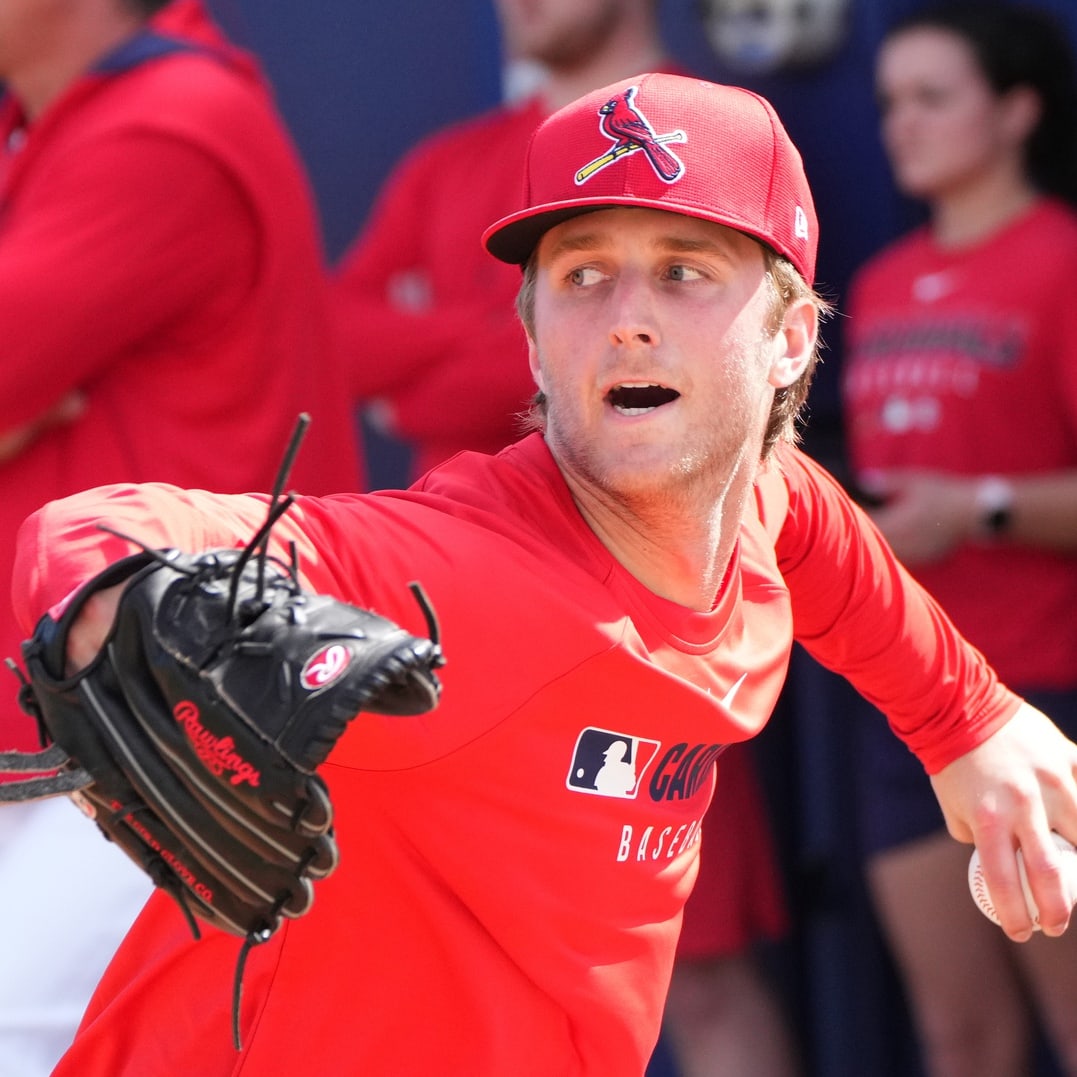
Riley O'Brien  - ADP 280.33, $40 earned
Injuries and poor performance have changed the closer landscape considerably early in the season, making pop-up closers with a strong role and skills particularly valuable. O'Brien fits the mold in both ways. The Cardinals' bullpen was hardly clear entering the season, with JoJo Romero and Matt Svanson both looking like potential closer candidates. O'Brien also dealt with a calf injury in spring.
However, since the calendar flipped to the regular season, O'Brien has emphatically shown that he is deserving of being the closer for the Cardinals. He has yet to be charged with an earned run — he allowed an inherited runner to score Sunday to blow a save — and has also not issued a walk while striking out 15 across 13.1 innings. The result has been that O'Brien is also the only Cardinals' pitcher to log a save in non extra-inning games since Opening Day, and only Mason Miller has accrued more value early this season among relief pitchers. That number is inflated a bit by O'Brien's three wins, but he looks to have a secure role and has provided some stability to a category and position that has lacked it in the first four weeks.
Ramon Laureano  – ADP 218, $22 earned
Laureano hasn't gotten any respect from the drafting public for his last two seasons of production, but he's begun 2026 in strong form once again. He's been very aggressive at the plate, logging a 40 percent first-pitch swing rate. Eight of his 77 at-bats have ended on the first pitch, and he's logged five hits in that sample, including one double and one home run. There's precedent for this approach being effective for Laureano. His first-pitch swing rate first jumped in 2024, when he spiked his career-high rate in a season from 23.8 percent to 36.2. That was also the first season he had a wRC+ of more than 100 since the 2021 campaign.
While his aggression at the plate isn't particularly new, Laureano's role with the Padres is. He's led off 13 of 15 games since April 5 (through Tuesday) and has already set a career in plate appearances from the leadoff spot. Laureano has scored nine runs and stolen two bases since taking over the role, meaning he should have a very well-rounded profile for the foreseeable future.
Fallers
Salvador Perez  – 89.62 ADP, $-8
Perez has held off Father Time for several seasons, but his run has come to a crashing halt early in 2026. He has gotten the most out of his power potential throughout his career based on a high flyball rate and the ability to pull the ball in the air. His flyball rate currently sits at a career-high 48.5 percent, but his pulled air rate sits at 15.2 percent — 8.8 percentage points off of his career average and the lowest of his career by nearly four percentage points. Without power, Perez offers very little for fantasy purposes. He has infamously surpassed 60 runs scored only once in his career. While he's avoided a rock-bottom batting average in the past, an inflated flyball rate with lesser contact also suggests he's at risk in that category.
Several Royals are underperforming a month into the season, so it's possible we'll see Perez bounce back as the lineup improves. On the other hand, there have been some odd occurrences for Perez himself. He was given two games off over the weekend and took to X to voice his displeasure, stating he felt that he didn't need any days off. Manager Matt Quatraro also noted that Perez has been dealing with a hip issue, another potential reason for the slow start. Overall, there are too many negative signs to be optimistic that Perez can return to his typical level of production.
Rafael Devers  – 56.61 ADP, $-3 earned
Devers hasn't had a strong start to his first full season in San Francisco, but the larger reason for concern is his entire sample in the Bay Area. Through Monday night, he had appeared in 112 games and recorded 489 plate appearances with the team. In that span, he's posted a .233/.331/.429 line with 22 home runs, 59 RBI and 59 runs scored. So far this season, his barrel rate, average exit velocity and max exit velocity have all fallen significantly compared to any other year of his career. Each indicates that his quality of contact and bat speed has declined, also confirmed by just a 14.4 fast-swing percentage. Much like the discussion of Austin Riley last week, both the results and underlying skills profile suggest that Devers has passed the peak of his fantasy value.
Pete Alonso  – 25.93 ADP, $-1 earned
Alonso has benefitted from a solid lineup around him in Baltimore to return at least some fantasy value in terms of counting stats. Needless to say, Alonso wasn't a mid-to-late second-round pick during draft season because drafters thought he'd provide modest counting stats with little power, and his skills also paint a very concerning picture. The lowest max exit velocity of Alonso's career was 115.7 mph, which came in 2023, but this season he has yet to hit a ball at least 110 mph. Similarly, his barrel rate is just 7.0 percent, and his strikeout rate has ballooned to 27.6 percent. In the simplest terms, his entire skills profile has declined.
A deeper dive suggests that Alonso is perhaps taking some time to adjust to his new team. He's been uncharacteristically passive at the plate, posting the lowest zone swing rate and overall swing rate of his career. There are concerning signs, but I'd be willing to be patient with Alonso in the hopes that his performance picks up as his comfort level in Baltimore increases.
Roman Anthony  – 54.17 ADP, $-5 earned
Unlike the other players on the "Fallers" list, there is reason for optimism for Anthony. His power production (one home run, .104 ISO) has been abysmal, but the indicators of quality contact are still present. For example, he has an 11.3 percent barrel rate, paired with a 112.3 mph max exit velocity. It's a bit early to be relying heavily on expected stats, but Anthony's paint a picture that patience is the prudent move. His xwOBA is 31 points superior to his wOBA, his xSLG is 71 points superior to his actual slugging percentage, and his xBA is 29 points superior to his actual batting average. Anthony has to be a faller based on the parameters of this exercise, but having patience is the right call in his case.