Early in the season I used the RotoWire earned auction values to identify hot and slow starters. With May now behind us and two full months of baseball in the books, it seems like a good time to revisit that exercise with the goal of identifying some of the most surprising top earners at positions and also some of the surprise laggers. In addition to identifying what has gone right or wrong for each player, I'll also seek to identify what expectations should be moving forward.
Risers
Jonathan Aranda  - $21 Earned Auction Value
Aranda was in the midst of a breakout in 2025, but he was ultimately robbed of a complete season when he fractured his wrist in July. The good news is that he's managed to pick up exactly where last season ended, and it appears that he's prepared to deliver a full breakout season in 2026. Aranda has always made excellent quality of contact, boasting double-digit barrel rates each of the last three seasons. The change this year is that he's optimized that contact.
The simplest change in his profile is that Aranda is lifting the ball more frequently to make better use of his quality of contact. In fact, he's hitting more fly balls (37.1 percent) than ground balls (35.1 percent) for the first time in his career. There are more important shifts, however. Aranda has the lowest pull rate of his career by 11 percentage points (30.5 percent), yet he still has a 20.5 percent
Early in the season I used the RotoWire earned auction values to identify hot and slow starters. With May now behind us and two full months of baseball in the books, it seems like a good time to revisit that exercise with the goal of identifying some of the most surprising top earners at positions and also some of the surprise laggers. In addition to identifying what has gone right or wrong for each player, I'll also seek to identify what expectations should be moving forward.
Risers
Jonathan Aranda - $21 Earned Auction Value
Aranda was in the midst of a breakout in 2025, but he was ultimately robbed of a complete season when he fractured his wrist in July. The good news is that he's managed to pick up exactly where last season ended, and it appears that he's prepared to deliver a full breakout season in 2026. Aranda has always made excellent quality of contact, boasting double-digit barrel rates each of the last three seasons. The change this year is that he's optimized that contact.
The simplest change in his profile is that Aranda is lifting the ball more frequently to make better use of his quality of contact. In fact, he's hitting more fly balls (37.1 percent) than ground balls (35.1 percent) for the first time in his career. There are more important shifts, however. Aranda has the lowest pull rate of his career by 11 percentage points (30.5 percent), yet he still has a 20.5 percent pulled air rate. That combination has allowed him to optimize his batted ball profile from every perspective, hitting for plenty of power while also maintaining a strong average by utilizing the full field.
The Rays are responding to Aranda's production. With the team known for its mixing and matching of lineups, Aranda had limited opportunity against left-handed pitching to begin his career. So far in 2026, he's started all but two games against left-handed pitchers. That sets him up for career-best counting stats in addition to his improved power production.
Braxton Ashcraft  - $19 Earned Auction Value
Ashcraft is a natural player to follow Aranda on this list because he, too, has built off a partial breakout in 2025. He's roughly equaled his sample from last season with 74.2 innings so far in 2026, and across 144.1 total innings in the majors he has a 2.77 ERA, 1.13 WHIP and 21.5 K-BB percentage. Ashcraft's peripheral skills suggest that he's earned what he's accomplished so far this season, meaning he's established himself as a reliable fantasy contributor even if there is likely to be some pullback on that success level.
The downside is that buying Ashcraft in any league context is tricky. In dynasty leagues or longer-term leagues, trading for him now would certainly be buying at the top of his value. The same would be true in redraft leagues, though that's even less advisable with Ashcraft almost certainly in line to have his innings limited. Speculation is that Ashcraft will be held to around 155 to 160 innings, and Carmen Mlodzinski is now a natural piggyback option/spot starter to help manage Ashcraft's innings.
For up-to-the-minute updates on injuries, lineups, roster changes and more, head to RotoWire's Fantasy Baseball News & Latest MLB Updates or follow @RotoWireMLB on X.
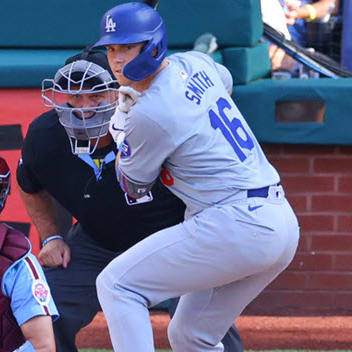
Casey Schmitt  - $19 Earned Auction Value
Schmitt has been productive all season, but he was particularly impressive in May. He hit .288 with eight home runs, 15 runs scored and 19 RBI across 26 games and 104 at-bats. Overall, he's performed as a top-five second baseman in 2026. Schmitt has gotten to that production by selling out for power but without sacrificing his contact rate. His ability to maintain both of those skills will dictate whether he can maintain anything resembling this level of production for the next several months.
Some of the more sustainable gains in Schmitt's profile appear to be his bat speed and fast swing rate (72.2 mph and 26.2 percent, respectively). Schmitt has also optimized his swing for power production, pulling 28.7 percent of his fly balls.
That leads into some of the more questionable portions of Schmitt's profile. His fly ball rate has spiked to 53.4 percent, third-highest among all qualified hitters. For now, Schmitt has managed to modify his skills profile to that significant degree without sacrificing batting average, something that looks unsustainable. However, projections tab him for around 25 home runs and 10 stolen bases while approaching 80 RBI, a fairly enticing stat line for a fantasy second baseman.
Jake Bauers  - $19 Earned Auction Value
This article – and many around the fantasy industry – is often full of Statcast metrics and other advanced stats, but sometimes the simplest explanation is best. That looks to be the case for Bauers. Similar to Aranda, quality of contact has never been Bauers' problem, but his volume and utility for fantasy managers have always been limited because he's never been given the chance to regularly face lefties.
Entering 2026, Bauers' highest career total came in 2019, when he had 128 plate appearances against lefties. Since, he's had no more than 70, but that will almost certainly change in the current campaign, as Bauers already has amassed 50 plate appearances against southpaws.
Bauers' situation hasn't been perfect. He's still only started in six of Milwaukee's 16 games without the handedness advantage, though he's started five times in his last nine chances. That's an exceptionally small sample, but Bauers has held his own in the sample we do have, hitting .255 with a .191 ISO while striking out at only an 18 percent clip.
Bauers has most commonly hit fifth in Milwaukee's order and is establishing himself a key part of its lineup and offensive production, so there's reason to believe that he'll remain a useful fantasy option for the rest of the season.
Kyle Harrison - $24 Earned Auction Value
Harrison is overdue for inclusion on the "Risers" list, but it's a been a bit tricky to pinpoint exactly why he's having a breakout. There's no "smoking gun" that seems to have changed regarding his skills, but it has become clear that he's more easily and regularly fooling opposing hitters.
The answer looks to be a change in arm slot, as he's gone from his release point being at 27 degrees in 2025 to 33 degrees in 2026. The result has been more extreme movement on his fastball and changeup, a combination that has also improved the outcomes of his slurve. To simplify things, it appears that he's learned how to utilize and sequence his raw stuff, which led to considerable prospect pedigree, to get batters out. The Brewers track record also lends some credence to Harrison's breakout. Milwaukee has now gotten excellent results from high-pedigree, post-hype prospects in consecutive years, with Harrison following Quinn Priester's lead from 2025.
Fallers
Vinnie Pasquantino  - $-2 Earned Auction Value
A quick glance at Pasquantino's skills suggests he's simply gotten unlucky two months into the season. His strikeout rate is slightly elevated but still sits at a plenty palatable 18.1 percent rate. He also has the benefit of only a .238 BABIP, which goes a long way to explaining his very disappointing .214 batting average.
However, a deeper dive provides reason for concern. Pasquantino has never possessed elite bat speed, but his 69.9 mph average bat speed is down two ticks from his career average, and his 6.8 fast swing percentage is one-third of his career rate. The effect on his power production has been predictable. His hard-hit rate has plummeted (34.5 percent) as has his ISO .132 (career .182).
At the end of April, Pasquantino disclosed that he had been dealing with a back injury for quite some time. That would provide a clear explanation for his struggles, but the timing of this injury also raises questions and concerns. Pasquantino performed reasonably well in April, only to fall off in May. That suggests that either the back injury is worsening and a trip to the IL or continued poor production is on the way, or the back injury isn't the reason for his struggles. Either path suggests that the Pasquantino will likely struggle to produce at the level of preseason expectations.
Masyn Winn  - $-1 Earned Auction Value
It's one thing for Winn's power not to have developed as hoped, but his inclusion on this list has very little to do with his lack of homers. The bigger problem is that the rest of his tools have failed to show up, and there's very little production to pair with that lack of power.
Winn is settling into more or less a .250 hitter – his exact average 1,535 plate appearances into his career. His highly praised athleticism also hasn't led to stolen bases, as he has only five this season with a career-high of 11. Yet, the most concerning factor of all is how the Cardinals have treated him. In 2024, Winn occupied the leadoff spot for 470 of his 637 plate appearances. Last season, 319 of his 537 plate appearances came from either the first or second spot in the order. This year, he's hit higher than fifth for only 48 of his 229 plate appearances. Winn has clearly been deprioritized in the lineup as his sample of struggles in the majors has grown. He's still only 24 so it's too early to give up on him entirely, but dreams of Winn hitting his upside in the short term have greatly diminished.
Matt Chapman - $-5 Earned Auction Value
Chapman is another example of the "old-school" metrics doing a good job of explaining what has gone wrong. In short, he's hitting into a lot of easy outs, and he's not doing damage when he is getting hits. To dig into that a bit further, Chapman's quality of contact has plummeted. His groundball rate has spiked to a career-high 47.3 percent clip, while his infield fly ball has similarly risen to 21.9 percent.
His Quality of Contact metrics on Statcast reflect the same problem. Chapman has topped pitches at a career-high 33.7 percent rate. The end result has been a .100 ISO and very disappointing overall production from what was supposed to be a reliable option at third base.
Bubba Chandler - $-11 Earned Auction Value
It doesn't take a pitching genius to see that things have gone horribly wrong for Chandler this year. The reason why is similarly no secret. Chandler has an untenable 6.00 BB/9 and 14.7 BB percentage. The predictable result is a 1.51 WHIP and has also led to short outings. Chandler has completed more than 5.0 innings only twice in his 12 starts and has earned only two wins as a result. While Chandler's pedigree appears to be earning him a longer leash – the Pirates had every reason to push him out of the rotation when Jared Jones returned – the team's patience likely will end at some point. Chandler is nearly unusable in redraft formats and there isn't much reason for short-term optimism, but the good news is that it does create a buying window for Chandler in dynasty or keeper formats.