

We are now three and a half weeks into a season which thus far is behaving like none of the starts of the past 10 full seasons. Coming into play on April 20, this is where the numbers rank for certain metrics compared to other seasons using the March/April time filter on the FanGraphs Splits Leaderboard:
- Batting Average: 8th
- Strikeout Rate: 5th
- Walk Rate: 1st
- Slugging Percentage: 9th
- OPS: 7th
- wOBA: 1st
- HR/FB: 9th
- ERA: 6th
- FIP: 7th
- LOB%: 8th
- K-BB%: t-9th
- HR/Contact: 7th
- SB%: 4th
One would expect that with the low batting average, lower home run rates and the decline in successful stolen base attempts, we would see lower ERAs, yet that is not happening. The 4.09 league-wide ERA to date is only lower than the 4.36 one the league saw through April of 2023 in the first season of the new stolen base rules, as the league succeeded on 79.3 percent of stolen base attempts. This season, that rate has fallen to 77.9 percent thus far and is the lowest of the four seasons since the rule changes. That could potentially be a by-product of the ABS challenge system as catchers do not have to focus so intently on framing every pitch and can now go ahead and focus on catching and throwing.
However, the other byproduct of the ABS challenge system appears to be an increase in the league-wide walk rate, as the decline of pseudo-strikes has lead to an early spike in walks like
We are now three and a half weeks into a season which thus far is behaving like none of the starts of the past 10 full seasons. Coming into play on April 20, this is where the numbers rank for certain metrics compared to other seasons using the March/April time filter on the FanGraphs Splits Leaderboard:
- Batting Average: 8th
- Strikeout Rate: 5th
- Walk Rate: 1st
- Slugging Percentage: 9th
- OPS: 7th
- wOBA: 1st
- HR/FB: 9th
- ERA: 6th
- FIP: 7th
- LOB%: 8th
- K-BB%: t-9th
- HR/Contact: 7th
- SB%: 4th
One would expect that with the low batting average, lower home run rates and the decline in successful stolen base attempts, we would see lower ERAs, yet that is not happening. The 4.09 league-wide ERA to date is only lower than the 4.36 one the league saw through April of 2023 in the first season of the new stolen base rules, as the league succeeded on 79.3 percent of stolen base attempts. This season, that rate has fallen to 77.9 percent thus far and is the lowest of the four seasons since the rule changes. That could potentially be a by-product of the ABS challenge system as catchers do not have to focus so intently on framing every pitch and can now go ahead and focus on catching and throwing.
However, the other byproduct of the ABS challenge system appears to be an increase in the league-wide walk rate, as the decline of pseudo-strikes has lead to an early spike in walks like we have not seen in quite some time. The last time the league had a walk rate this high through April was all the way back in 2009 when pitchers had a similar 9.8 percent walk rate but an abysmal 7.8 percent K-BB%, because the prevalence of strikeouts to offset the free passes was not what it's been in recent seasons. It's not worth the mental exercise to compare 2026 to 2008 because the game is too different from how it looked 18 years ago. That season, the league was hitting .263 through April and striking out 17.7 percent of the time, while this season the league is hitting .238 and striking out 22.5 percent of the time.
I did go back to the 2016 data to see how March/April walk rates and ERA changed the rest of the season and found some interesting results:
YEAR | EARLY BB% | ROS BB% | DIFF | EARLY ERA | ROS ERA | DIFF |
|---|---|---|---|---|---|---|
2016 | 8.6% | 8.1% | -6% | 3.98 | 4.23 | 6.3% |
2017 | 8.7% | 8.5% | -2% | 4.09 | 4.11 | 0.5% |
2018 | 9.0% | 8.4% | -7% | 4.12 | 4.16 | 1.0% |
2019 | 9.2% | 8.4% | -9% | 4.35 | 4.54 | 4.4% |
2021 | 8.8% | 8.7% | -1% | 3.99 | 4.32 | 8.3% |
2022 | 8.9% | 8.1% | -9% | 3.72 | 4.01 | 7.8% |
2023 | 8.8% | 8.5% | -3% | 4.36 | 4.33 | -0.7% |
2024 | 8.7% | 8.1% | -7% | 4.00 | 4.10 | 2.5% |
2025 | 9.0% | 8.3% | -8% | 4.03 | 4.19 | 4.0% |
AVG | 8.9% | 8.3% | -6% | 4.07 | 4.22 | 3.8% |
If we apply that average difference to the early 2026 walk rate, we should expect a 9.2 percent walk rate the rest of this season. The highest post-April league-wide walk rate we have seen since 2009 is 8.7 percent, so we are very likely heading into unchartered waters with how much walks impact pitcher ERAs. The recent previous high for post-April walk rates is a tie between the 2009 and 2021 seasons, as both seasons had an 8.7 percent walk rate from May 1 through the end of the season. The 2009 season was weird in that the league ERA actually fell 6.6 percent from 4.58 to 4.28, but we saw the opposite in 2021 when the league ERA went from 3.99 early on to 4.02 after May 1 as the weather warmed. Since the 2014 season, only the 2023 season has seen a decline in league-wide ERA from early games compared to all games after April, but we have otherwise seen a 3.8 percent change in league-wide ERA each season, with the aforementioned 2009 and 2021 seasons as the outliers.
If we apply the 3.8 percent average difference to the 4.12 ERA the league had at the start of play on April 20, that would lead us to expect a 4.28 ERA the rest of the season. If we applied the 8.3 percent high-end change we saw in 2021, that would push the ERA up to 4.46. I am more inclinded to lean into the latter number becuase it involves the highest post-April walk rate in the data set and yet is still nearly six percent lower than the projected 9.2 percent walk rate. We know we will see more home runs the rest of the season as the weather warms up, and if these walks aren't going to return to previous levels — and the data tells us things are likely to remain above 9.0 percent this season — there could be some rough times ahead for certain pitchers who are surviving with good ERAs and high walk rates because the ball is not yet leaving the yard:
| PITCHER | BB% | ERA | HR/9 |
|---|---|---|---|
| Jack Flaherty | 19% | 3.47 | 0.4 |
| Gavin Williams | 15% | 2.12 | 1.2 |
| Dylan Cease | 13% | 2.10 | 0.0 |
| Michael King | 13% | 2.28 | 0.3 |
| Jose Soriano | 11% | 0.28 | 0.3 |
| Edward Cabrera | 12% | 2.38 | 0.0 |
Jack Flaherty is helping deeper leagues with a 3.47 ERA and a 22 percent strikeout rate, but zero wins and a 1.59 WHIP are already doing enough damage to fantasy managers. Flaherty has never had a HR/9 rate below 1.00, so I would not wait until the homers arrive to move along from this potential mess.
Gavin Williams is contributing across all four starting pitching categories at the moment despite his unsightly walk rate because of a huge spike in his strikeout rate. He's struck out 34.8 percent of the batters he's faced, helping him strand the 14.8 percent of batters he's walked. His home run rate thus far is right in line with his career rate, so I'm not as worried about him as I am about others here, but I'm still puzzled by the big jump in strikeouts despite no change to his velocity or repertoire from last season.
Dylan Cease has a career HR/9 rate of 1.1, but some of that is front-loaded with his early years in Chicago. More recently, he's been right at 1.0, but he's yet to allow a home run this season across five starts. He, too, is striking out more hitters than ever before, but his walk rate is currently at its highest point since the Covid season. ERA correction is coming for him, and it wouldn't surprise me to see him have an ERA north of 3.50 the rest of the season.
Michael King has allowed just one home run across his five starts, which has kept his ERA in check despite the struggles with walks. Unlike Cease and Williams, he has not been stranding guys with strikeouts, so something needs to change for him in short order or he could be challenging a 4.00 ERA the rest of the season.
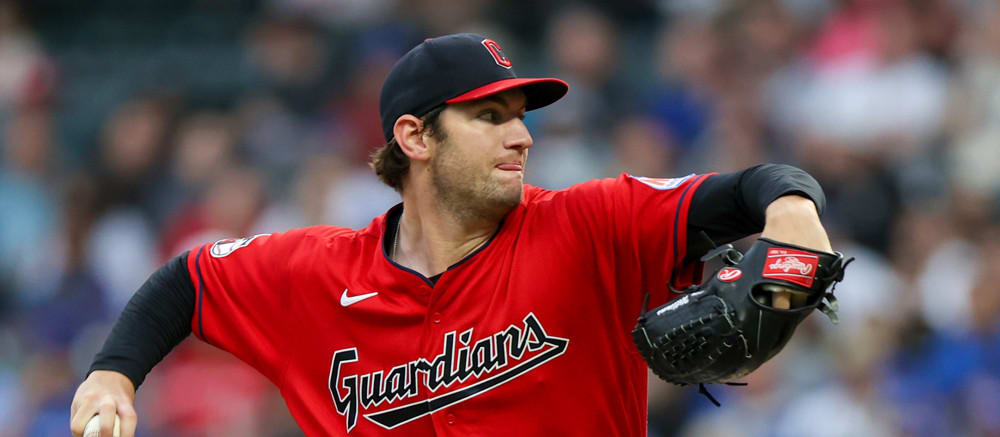
Edward Cabrera has yet to allow a home run over four starts with his new team, but his strikeouts are down and his walks are up. This looks treacherous moving forward unless he can recover his disappearing strikeout rate, as it's fallen seven full percentage points from last season thus far.
Finally, I don't need to tell you that you cannot expect to see Jose Soriano pitch like Bob Gibson the rest of the season, but at least he's always been one of the tougher pitchers to elevate for home runs. His current walk rate is identical to where it was last year, so it's at least an easy baseline to look at once his insane .149 BABIP and 100 percent LOB% normalize.
These were just some of the names that jumped off the qualified leaderboard, but there will be others as we move forward, because a higher walk rate appears to be a by-product of the new ABS environment and something we will have to adjust to as we try to protect our team ERAs moving forward as the weather warms up and the ball begins to travel again. We had an early warning of such times a week ago Monday when the league took advantage of unusually warm temperatures and bad pitching matchups to put up 37 homers and 144 runs were scored across 20 contests. That day has been the outlier this early season, but there will be more like it in the coming weeks, so plan accordingly with your staffs and matchups.