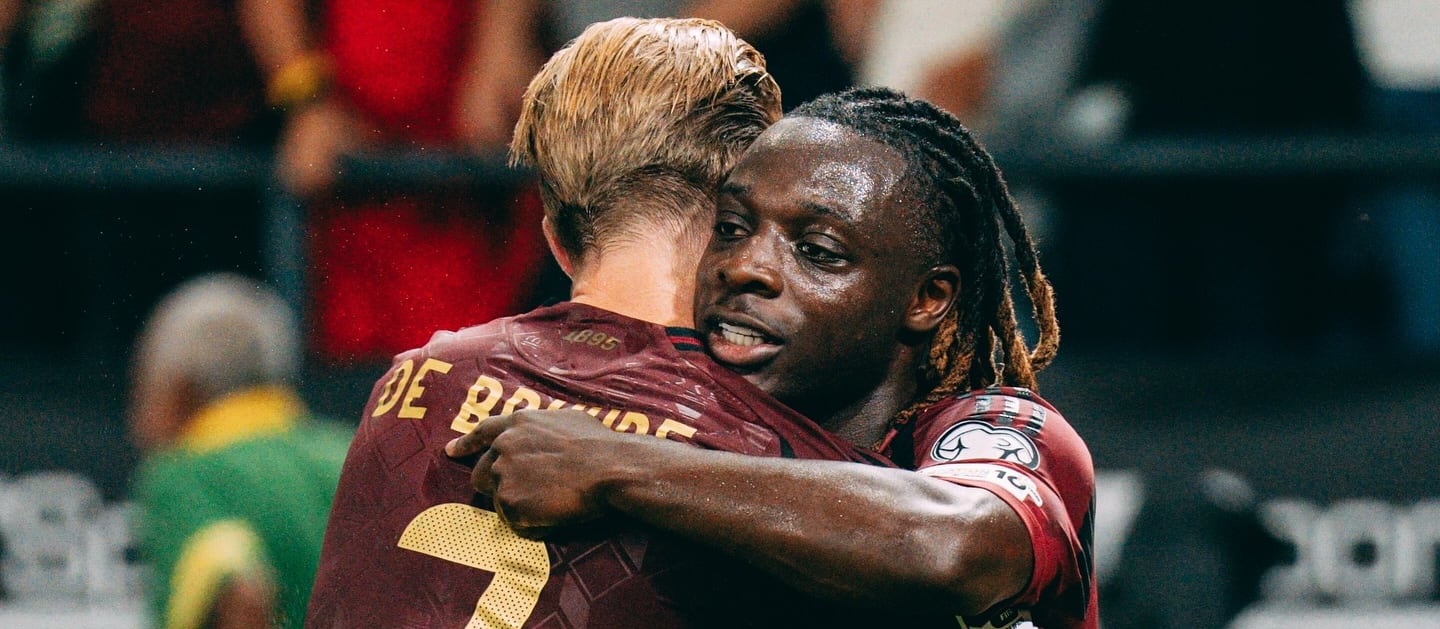


2026 World Cup Group G Preview: Belgium, Egypt, Iran and New Zealand Lineups, Odds, Predictions and Tactics
Group G at the 2026 FIFA World Cup brings together a transitioning European powerhouse, a North African side with one of the most dangerous attacking partnerships in the tournament, a disciplined and experienced Asian qualifier making its fourth consecutive appearance and a plucky Oceanian side returning to the biggest stage after 16 years of absence.
This is the complete tactical guide to Group G: playing style, attacking and defensive structure, key adjustments needed, predicted starting lineups, set-piece takers and the latest betting odds for Belgium, Egypt, Iran and New Zealand.
Compare Group G to the rest of the draw in our complete 2026 World Cup group previews.
World Cup Group G Schedule
BELGIUM | 2026 World Cup Tactical Analysis and Predicted Lineup
How Belgium Will Play at the 2026 World Cup
The question hanging over Belgium for the last decade of when will the Golden Generation finally deliver is now essentially closed. That generation did not win the trophy. What Belgium bring to 2026 instead is something genuinely interesting: a squad in the middle of a handover, with Kevin De Bruyne and Romelu Lukaku still present in their final acts and a wave of young attackers in Jeremy Doku, Lois Openda and Charles De Ketelaere who are among the most exciting players in European football right now.
Coach Rudi Garcia, appointed in January 2025, has built on that transition with energy and pragmatism. He's switched comfortably between a 4-3-3 and a 4-2-3-1 depending on the opponent, but the identity stays consistent: wide pace, De Bruyne controlling the tempo from a slightly advanced midfield position, and a pressing structure that tries to win the ball high and convert quickly. Their March 2026 friendly against the United States, a 5-2 win without Thibaut Courtois or Lukaku, showed just how much firepower they carry even without their biggest names available.
Belgium's Attacking Style at the 2026 World Cup
Belgium's attack is built around young talents and veteran De Bruyne as the playmaker. The key attacking themes are:
- Jeremy Doku as the primary wide threat, with pace and one-on-one ability that is genuinely elite. He was outstanding during qualifying with five goals and two assists.
- Kevin De Bruyne as the creative engine, still capable at 34 of finding passes others cannot see and dangerous from set pieces.
- Romelu Lukaku and Charles De Ketelaere as the focal points depending on the opponent, combining Belgium's all-time top scorer with the next generation of Red Devils quality.
- Lois Openda as the high-energy alternative striker if coach Rudi Garcia opts for a more pressing-oriented system.
Belgium are at their most dangerous on the counterattack and in transition. The width Doku provides on the left, combined with De Bruyne's range of passing from central areas, creates consistent problems for defensive structures. The March 2026 friendly against the USA, where both ran the show in a comfortable victory, reinforced the sense that this team can hurt anyone when the combination clicks.
Belgium's attacking depth also features multiple candidates in the 2026 World Cup Golden Boot odds.
Belgium's Defensive Setup
This is where the concerns live. Belgium's defense is in a genuine rebuild. The era of Jan Vertonghen and Vincent Kompany is long gone, and what has replaced it in Arthur Theate, Zeno Koen Debast and Koni De Winter is younger, less experienced, and at this stage less reliable under sustained pressure.
Courtois remains one of the best goalkeepers in world football, and his presence behind the back line is worth points on its own. But the defensive line is at risk of conceding whenever full-backs push forward and pace is run at them in behind. Amadou Onana at the base of midfield goes a long way toward compensating for that, but Belgium cannot carry individual defensive errors across a tournament.
Key Tactical Adjustments Belgium Need to Make
- Manage the fitness of Lukaku and De Bruyne carefully across three group matches
- Improve defensive compactness when the full-backs push into attacking positions
- Avoid switching off after early goals, as the tendency to let leads slip seen during qualifying must be eliminated
Belgium 2026 World Cup Predicted Lineup
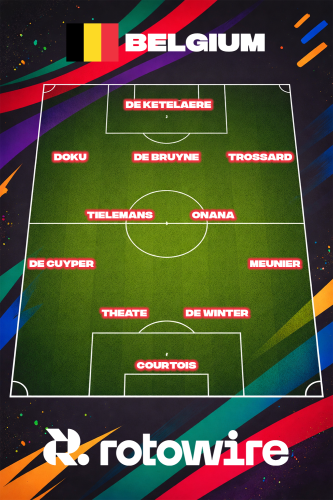
Onana, Tielemans; Trossard, De Bruyne, Doku; De Ketelaere.
For more updates, see the latest projected World Cup lineups on RotoWire.
Belgium Set Piece Takers
Corners: Kevin De Bruyne, Youri Tielemans, Leandro Trossard
Direct free kicks: Kevin De Bruyne, Jeremy Doku
Penalties: Kevin De Bruyne, Youri Tielemans, Romelu Lukaku
Why This Belgium Lineup Works
This lineup gets the best of both worlds, combining the experience and creative control of Kevin De Bruyne and Romelu Lukaku with the pace and directness of Jeremy Doku and Lois Openda. Amadou Onana and Youri Tielemans cover the defensive midfield space that Belgium need protected when the full-backs push. If the key players are fit and firing, this is a Belgium side capable of advancing well beyond the group stage.
EGYPT | 2026 World Cup Tactical Analysis and Predicted Lineup
How Egypt Will Play at the 2026 World Cup
Egypt return to the World Cup for only the fourth time in their history and their first appearance since 2018, under coach Hossam Hassan, who has made his own piece of football history in the process. Hassan, Egypt's all-time leading scorer with 69 international goals, became the first person to take Egypt to a World Cup as both a player in 1990 and as head coach.
The qualifying campaign was everything you would want: unbeaten across 10 matches, only two goals conceded, and a group won five points clear of Burkina Faso. The structure is built on a compact, disciplined 4-2-3-1 or 3-4-1-2 depending on the opponent, with the emphasis on defensive organization first and releasing Mohamed Salah and Omar Marmoush into the spaces their quality can exploit.
Egypt's Attacking Style at the 2026 World Cup
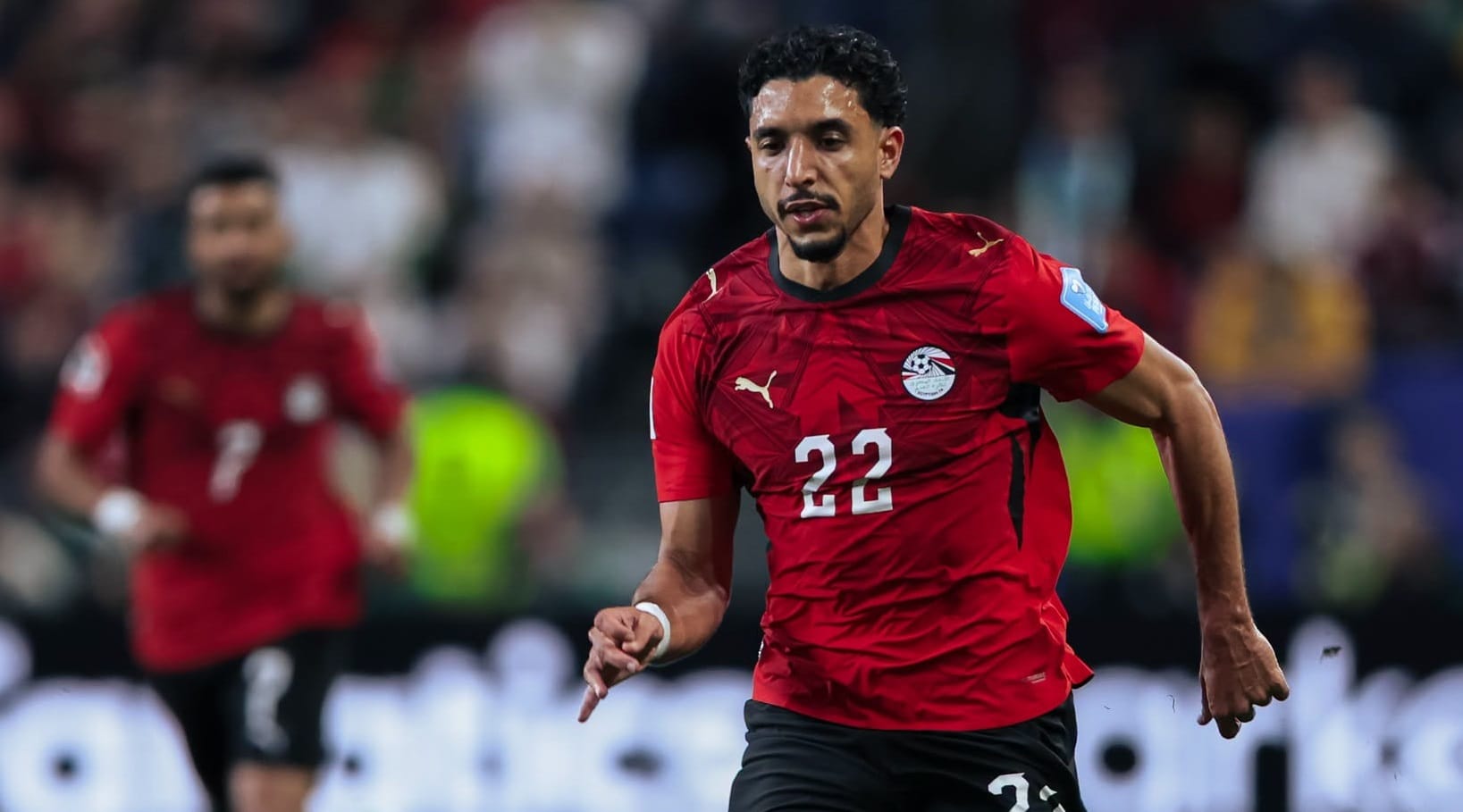
Egypt's attack has several options but relies mainly on the duo composed of Salah and Marmoush.
The key attacking themes are:
- Mohamed Salah as the captain and talisman, with nine qualifying goals and 67 international goals in total. He is one of the most dangerous wide forwards in world football when on form, and this World Cup represents the defining chapter of his international career.
- Omar Marmoush as the complementary attacking threat alongside Salah. The Manchester City forward brings creativity, pressing intensity and the ability to score in tight spaces.
- Trezeguet as additional advanced option with tournament experience and double-figure international goal tally.
- Direct wide running to stretch defenses before finding Salah and Marmoush in the positions where they do their best damage.
Egypt's attacking game is built around a genuine one-two punch at the top of the pitch. When Salah and Marmoush are both on form simultaneously, this team is capable of hurting any opponent in the group. The depth behind that pairing also gives coach Hossam Hassan the flexibility to change the tempo and profile of the attack from the bench.
Egypt's Defensive Setup
Egypt's defensive record across CAF qualifying was outstanding, with seven clean sheets and only two goals conceded in 10 matches. The structure under Hassan is compact and disciplined, with the midfield sitting narrow and the center-backs, Yasser Ahmed Ibrahim El Hanafi, Mohamed Abdelmonem or Ramy Rabia, providing experienced leadership to protect central areas aggressively.
The full-backs pick their moments to advance rather than pushing forward indiscriminately. The team is comfortable defending for stretches, trusting in their shape and letting Salah's quality provide the escape route when it is needed. The primary challenge at this World Cup is dealing with the significant step up in quality from CAF qualifying to European and South American opposition.
Key Tactical Adjustments Egypt Need to Make
- Develop reliable attacking output from players beyond Mohamed Salah and Omar Marmoush to avoid becoming too predictable
- Maintain the defensive compactness that worked so well in qualifying against more technical European opposition
- Convert chances efficiently, as Egypt have never won a match in World Cup history and the margin for error at this level is thin
Egypt 2026 World Cup Predicted Lineup
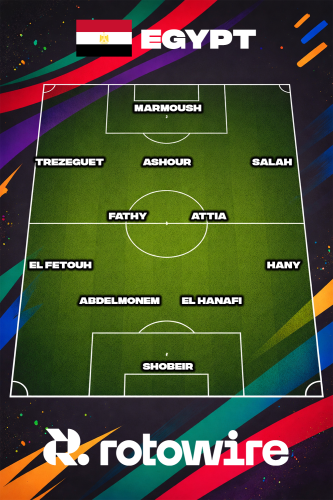
Attia, Fathy; Salah, Ashour, Trezeguet; Marmoush.
Egypt Set Piece Takers for the 2026 World Cup
Corners: Mohamed Salah, Omar Marmoush, Zizo
Direct free kicks: Mohamed Salah
Penalties: Mohamed Salah, Omar Marmoush
Why This Egypt Lineup Works
The lineup is built around Salah at the peak of his influence for the national team, with Marmoush as the ideal complement in attack. Everything around that pairing is designed to protect the defensive structure and feed the moments where they can be decisive. Egypt have never won a World Cup match in their history, and with Salah at 34 years old and in the final chapter of his international career, the motivation to finally change that record has never been stronger.
IRAN | 2026 World Cup Tactical Analysis and Predicted Lineup
How Iran Will Play at the 2026 World Cup
Iran arrive at the 2026 World Cup as one of Asia's most experienced qualifiers, making their fourth consecutive appearance at the tournament under coach Amir Ghalenoei. The qualifying campaign was genuinely impressive: Iran lost only one of 16 AFC matches, finished eight points clear of third-placed UAE in their group, and Medhi Taremi recorded 10 goals in 15 qualifying games as one of the campaign's most productive strikers in the entire Asian confederation. Ranked in the top 25 in the world by FIFA, this is a side that should not be underestimated by any opponent in the group.
The squad announcement, however, has been overshadowed by the most significant selection story in Iranian football in years. Sardar Azmoun was not named in the 30-man preliminary squad, with Iranian state media reporting he was left out due to injury, though it was reported that Azmoun had been expelled from the national team due to political reasons. Manager Ghalenoei did not explain the reason for the omission publicly. Whatever the official version, Azmoun is not going to make it to the World Cup, which means Iran will rely even more heavily on Taremi.
The political context surrounding Iran's participation extends beyond the squad. Iran's participation in the tournament has been in question since the United States and Israel attacked Iran in late February, and the Football Federation president was refused entry to Canada for the FIFA Congress in Vancouver in April. Iran are preparing in Turkey ahead of the tournament, with coach Ghalenoei confirming the squad will play friendlies in Antalya before heading to the United States.
The coach's approach is pragmatic and results-first. He preaches discipline and is widely regarded as a pragmatist whose attritional framework is all about securing results by any means. This team lacks speed and is overly reliant on a resolute defensive structure, concede first and it is in trouble, because there is a dearth of creativity in the Iranian roster. However, it is tough to beat in tight contests, with counter-attacking efficiency as its key weapon. The system is a 4-3-3 or 4-2-3-1 that prioritizes defensive organization and controlled transitions over extended possession, with # Saeid Ezatolahi sitting as the anchor, Saman Ghoddos and Mohammad Mohebi providing the midfield box, and Taremi as the lone striker.
Iran's Attacking Style at the 2026 World Cup
Iran's attack is significantly more limited without Azmoun, and that limitation now appears permanent rather than temporary. Key attacking themes include:
Mehdi Taremi as the captain and sole reliable attacking reference point, with 56 international goals and European club experience at Porto and Inter Milan, now at Olympiacos. He is the team's most dangerous presence in and around the box and coach Ghalenoei has stuck with Taremi despite slumps in form and he has consistently delivered for the national team when it matters.
Saman Ghoddos as the primary creative option in the attacking midfield, whose importance has increased tenfold after Azmoun's exclusion. He is now the player who must bridge the gap between the defensive structure and Taremi in a way the squad was not originally built to require from a single player.
Mehdi Ghayedi and Amirhossein Hosseinzadeh as the wide attacking options, providing the width and directness that Iran need to stretch opponents in transition and create the space Taremi relies on inside the box.
Iran's attack is built on making the most of transition moments rather than dominating territory. Without Azmoun, the secondary goal threat that gave the system its balance is absent, and the burden on Taremi to convert the limited chances this system creates is greater than at any previous tournament.
Iran's Defensive Setup
Manager Ghalenoei is loyal to an experienced group of players, with the average age of Iran's qualifying squad over 30 years old, one of the oldest teams at this summer's tournament. Shoja Khalilzadeh and Ali Nemati pair at centre-back, with Khalilzadeh providing the positional experience that anchors the defensive structure.
Arya Yousefi and Milad Mohammadi cover the full-back positions, with Ramin Rezaeian and Ehsan Hajsafi as alternatives. Alireza Beiranvand in goal, with over 80 international caps, brings the tournament experience of two previous World Cups and the reliability that Iran have built their defensive identity around. The defensive structure is resilient in tight contests, but going a goal down against Belgium or Egypt would require a shift in approach that this squad is not naturally built to execute.
Key Tactical Adjustments Iran Need to Make
Accept that Azmoun's absence is permanent and build the attacking structure around Ghoddos as the creative enabler rather than continuing to treat Taremi as one of two equal threats.
Win the New Zealand match, the presence of New Zealand in Group G gives Iran a great chance of securing a victory that may be enough to reach the knockout stages for the very first time in their history.
Manage the background noise of the political situation and the diplomatic difficulties surrounding the squad's travel and preparation, which represent a distraction no other team in the tournament is facing.
Iran 2026 World Cup Predicted Lineup
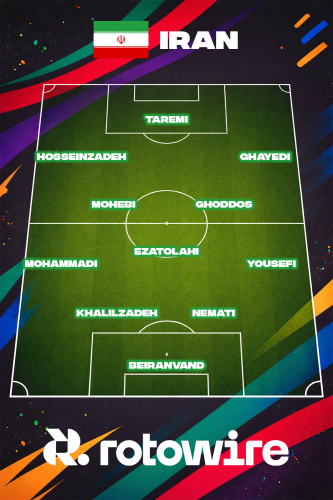
Ezatolahi, Ghoddos, Mohebi; Ghayedi, Taremi, Hosseinzadeh.
Iran Set Piece Takers for the 2026 World Cup
Corners: Saman Ghoddos, Amirhossein Hosseinzadeh, Omid Noorafkan, Mehdi Ghayedi
Direct free kicks: Mehdi Taremi, Saman Ghoddos
Penalties: Mehdi Taremi, Amirhossein Hosseinzadeh
Why This Iran Lineup Works
This lineup places the team's most experienced players in the positions that matter most for a pragmatic counter-attacking system. Beiranvand provides the goalkeeping reliability Iran have built their defensive identity around. Ezatolahi anchors the midfield with the positional discipline that protects the back four. Ghoddos, in his elevated role following Azmoun's departure, carries the creative burden of connecting the defensive structure to Taremi. And Taremi leads the attack with the experience of a player who has scored at every level of the game and who understands better than anyone in this squad what is required to win a match on limited resources. Iran has qualified for three of the previous four World Cups and has never progressed from the group stage. The 2026 tournament, against Belgium, Egypt and New Zealand, gives them the most realistic opportunity in their history to change that.
NEW ZEALAND | 2026 World Cup Tactical Analysis and Predicted Lineup
How New Zealand Will Play at the 2026 World Cup
The All Whites are back at the World Cup for the first time since 2010, and their route was dominant by any measure. New Zealand won all five of their OFC qualifying matches, beat Fiji 7-0 in the semi-final and New Caledonia 3-0 in the final, conceding just one goal across the entire campaign. Under coach Darren Bazeley, who has been in charge since 2023, the team has found consistency and a clear identity built around physicality, organization and the unrivalled individual quality of Chris Wood.
The March 2026 FIFA Series at Eden Park provided New Zealand with their last home matches before the World Cup and delivered a mixed but ultimately encouraging picture. Without captain Chris Wood, sidelined with a knee injury along with Liberato Cacace, Michael Boxall, Matthew Garbett and Sarpreet Singh, the All Whites lost 2-0 to Finland on March 27.
Bazeley admitted his side were "off the pace" and out of sorts in the first half, highlighted by a set-piece vulnerability that will need to be addressed before June. Three days later, however, the same depleted squad produced a remarkable 4-1 win over Chile, with Kosta Barbarouses, Elijah Henry Just, Jesse Randall and Ben Waine all scoring in front of their home crowd. The turnaround between the two results shows both the best and worst of this team. Capable of real quality but also of switching off when intensity drops.
The 2010 squad drew all three group stage games, including a famous point against defending champions Italy. This edition of the All Whites will carry the same competitive spirit into what is almost certainly a harder group. The tactical setup leans on a 4-4-2 or 4-2-3-1, with a compact defensive block and direct service into Wood as the primary route forward.
New Zealand's Attacking Style at the 2026 World Cup
New Zealand's attack still has Wood as the main focal point but the squad has quality depth that shows they can contribute during the striker's absence.
Key attacking themes include:
- Chris Wood as the undisputed focal point. Nottingham Forest's 20-goal Premier League season in 2024/25 confirms he is operating at the peak of his powers, and he remains by far New Zealand's most productive attacker. By the time the World Cup starts, he will also be his country's most-capped player and record scorer.
- Elijah Henry Just providing energy, goals and directness. His goal in the 4-1 win over Chile during the March FIFA Series showed exactly why he is a crucial piece of this team's attacking structure.
- Marko Stamenic, Sarpreet Singh and the midfield unit competing for second balls and providing service to Wood quickly after winning possession.
- Benjamin Old providing attacking width from the left flank.
New Zealand's attacking game is not subtle. Wood is the target, the team builds around him and the goal is to deliver the ball into his area as efficiently as possible. The 4-1 win over Chile without several first-choice players, including Wood himself, showed there is genuine attacking depth in this squad when the intensity is right.
New Zealand's Defensive Setup
Defensively, the All Whites are organized and physically competitive but limited by the overall quality ceiling of the squad. Coach Darren Bazeley has kept his selections consistent over the past year, building cohesion and familiarity across the back line. Tyler Bindon, on loan at Sheffield United from Nottingham Forest, is the standout defensive talent in the squad. Benjamin Old or Bill Tuiloma at left-back offer attacking width while staying disciplined in transition.
In goal, Maxime Teremoana Crocombe has been playing regularly in the Championship for Millwall and arrives at the tournament in good form. The Finland defeat, however, exposed the set-piece defensive fragility in stark fashion, a detail that manager Bazeley will have drilled in training before the squad reconvenes. New Zealand's biggest challenge is absorbing the quality of Belgium and Egypt for 90 minutes without conceding too many goals. Their chance of advancing will likely hinge entirely on the Iran game.
Key Tactical Adjustments New Zealand Need to Make
- Fix the set-piece defensive organization exposed by Finland's first goal during the March break, a lapse that cannot be repeated against Belgium or Egypt
- Maintain the attacking intensity shown against Chile in the March FIFA Series, where the team scored four without their first-choice striker and captain Chris Wood
- Treat the Iran game as the group decider and approach it with full intensity from the first minute
New Zealand 2026 World Cup Predicted Lineup
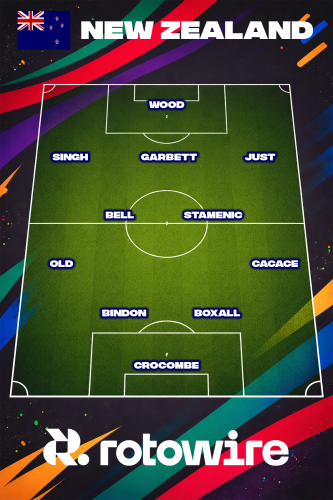
Stamenic, Bell; Just, Garbett, Singh; Wood.
New Zealand Set Piece Takers for the 2026 World Cup
Corners: Marko Stamenic, Elijah Henry Just, Sarpreet Singh
Direct free kicks: Marko Stamenic, Elijah Henry Just
Penalties: Chris Wood
Why This New Zealand Lineup Works
This lineup maximizes what New Zealand do best. Wood leads the line, the midfield is built to win second balls and deliver quickly, and the defensive structure stays compact. The March FIFA Series confirmed that Elijah Henry Just, Ben Waine and Kosta Barbarouses can all contribute goals when given the opportunity, which gives coach Darren Bazeley genuine attacking options across the group stage. All the key absentees from the March window, Wood, Cacace, Boxall, Garbett and Singh, are expected back before the squad deadline.
2026 World Cup Group G Odds
All 12 groups are covered with odds and tactical analysis in our World Cup group preview hub.
Belgium are priced as heavy favorites across all books, implying roughly a 70-percent chance to win the group. That pricing reflects squad depth, past editions and the attacking quality of Kevin De Bruyne, Jeremy Doku and Romelu Lukaku, the kind of front line that makes Group G a formality on paper.
Egypt are consistently positioned as second favorite to qualify from Group G, with their attacking duo Salah-Marmoush earning respect from oddsmakers.
Iran and New Zealand are priced as clear outsiders, with similar implied probabilities to win the group.
Visit RotoWire for exclusive sports betting picks and our daily World Cup recaps. Remember that betting apps vary in terms of odds, so we have an easy-to-use odds page that allows you to shop for the best lines at DraftKings, FanDuel, BetMGM and PointsBet. Claim over a thousand dollars in bonuses by signing up at the best sports betting sites using the best sportsbook promos.
Who Will Qualify from World Cup Group G?
Belgium should top this group. Their attacking quality in Kevin De Bruyne, Jeremy Doku, Romelu Lukaku and Lois Openda is simply too much for any of the other three teams to handle consistently, and Thibaut Courtois provides the kind of last-line security that covers for the defensive fragility behind him. The more interesting question is second place.
Egypt carry the individual quality of Mohamed Salah and Omar Marmoush plus a genuinely disciplined defensive structure. If both attackers are on form, the Pharaohs are well-equipped to earn a historic first World Cup win and fight for second place.
Iran have the tactical maturity and Mehdi Taremi's quality to compete for that same spot, though the March friendlies raised fresh questions about their attacking depth without Sardar Azmoun and their ability to win games they are expected to win. The Iran vs. Egypt match is set up to be the decisive game in the group, a genuine final for the second qualifying position.
New Zealand's path to the knockout stages is narrow but not impossible. They need to beat or draw with Iran, keep the scoreline manageable against Belgium and Egypt, and hope goal difference breaks in their favor. The March FIFA Series gave real encouragement. A 4-1 win over Chile without Chris Wood or most of their first-choice players shows the attacking potential when the group is right, but the defensive lapses from set pieces seen against Finland cannot follow them into the summer. Wood alone gives them a chance in every single match they play.
Across all three matchdays, the decisive factors look clear: Belgium's attacking combinations, Egypt's Salah-Marmoush partnership, Iran's defensive organization and counter-attacking efficiency, and how long New Zealand can maintain their shape under sustained pressure from superior technical opposition.
Group G Summary
| Belgium | Egypt | Iran | New Zealand | |
|---|---|---|---|---|
| Predicted formation | 4-2-3-1 | 4-2-3-1 / 3-4-1-2 | 4-3-3 | 4-2-3-1 |
| Playing style | Wide pace, De Bruyne creativity, high-tempo transitions, generational changeover | Compact structure, Salah and Marmoush attack, direct transitions, disciplined defensive block | Pragmatic, low-to-mid block, counter-attacking, Taremi as focal point | Physical, organized, direct service to Wood, set-piece threat |
| Corners/FK takers | De Bruyne, Tielemans, Trossard | Salah, Marmoush, Zizo | Ghoddos, Hosseinzadeh, Noorafkan, Ghayedi | Stamenic, Just, Singh |
| Penalty takers | De Bruyne, Tielemans, Lukaku | Salah, Marmoush | Taremi, Hosseinzadeh | Wood |
2026 World Cup Group Previews Menu
Click each group for full tactical breakdowns, predicted lineups, betting odds and predictions.
Group A: Mexico, South Africa, South Korea, Czechia
Group B: Canada, Bosnia and Herzegovina, Qatar, Switzerland
Group C: Brazil, Morocco, Haiti, Scotland
Group D: United States, Paraguay, Australia, Turkiye
Group E: Germany, Curacao, Ivory Coast, Ecuador
Group F: Netherlands, Japan, Sweden, Tunisia
Group G: Belgium, Egypt, Iran, New Zealand
Group H: Spain, Cape Verde, Saudi Arabia, Uruguay
Group I: France, Senegal, Iraq, Norway
Group J: Argentina, Algeria, Austria, Jordan
Group K: Portugal, Colombia, DR Congo, Uzbekistan
Group L: England, Croatia, Ghana, Panama