After Selection Sunday, we know where each of the 68 teams in the 2026 NCAA Men's Basketball Tournament are headed for the first weekend. So, in search of a possible college basketball betting edge, RotoWire.com is breaking down numbers on which squads got the best (or worst) breaks for travel to first- and second-round March Madness sites.
To see which teams will have the longest (and shortest) NCAA Tournament travel distance to their respective contests as the Men's NCAA Tournament gets underway this week, check out our deep dive below:

| # | Team | Venue | Distance |
|---|---|---|---|
| 1 | (5) St. Johns | San Diego, CA — Viejas Arena | 2,432 mi |
| 2 | (16) LIU | San Diego, CA — Viejas Arena | 2,423 mi |
| 3 | (7) UCLA | Philadelphia, PA — Xfinity Mobile Arena | 2,398 mi |
| 4 | (8) Villanova | San Diego, CA — Viejas Arena | 2,352 mi |
| 5 | (12) High Point | Portland, OR — Moda Center | 2,300 mi |
| 6 | (14) Kennesaw State | Portland, OR — Moda Center | 2,153 mi |
| 7 | (11) NC State | Portland, OR — Moda Center | 1,977 mi |
| 8 | (11) Texas | Portland, OR — Moda Center | 1,977 mi |
| 9 | (10) Santa Clara | St. Louis, MO — Enterprise Center | 1,722 mi |
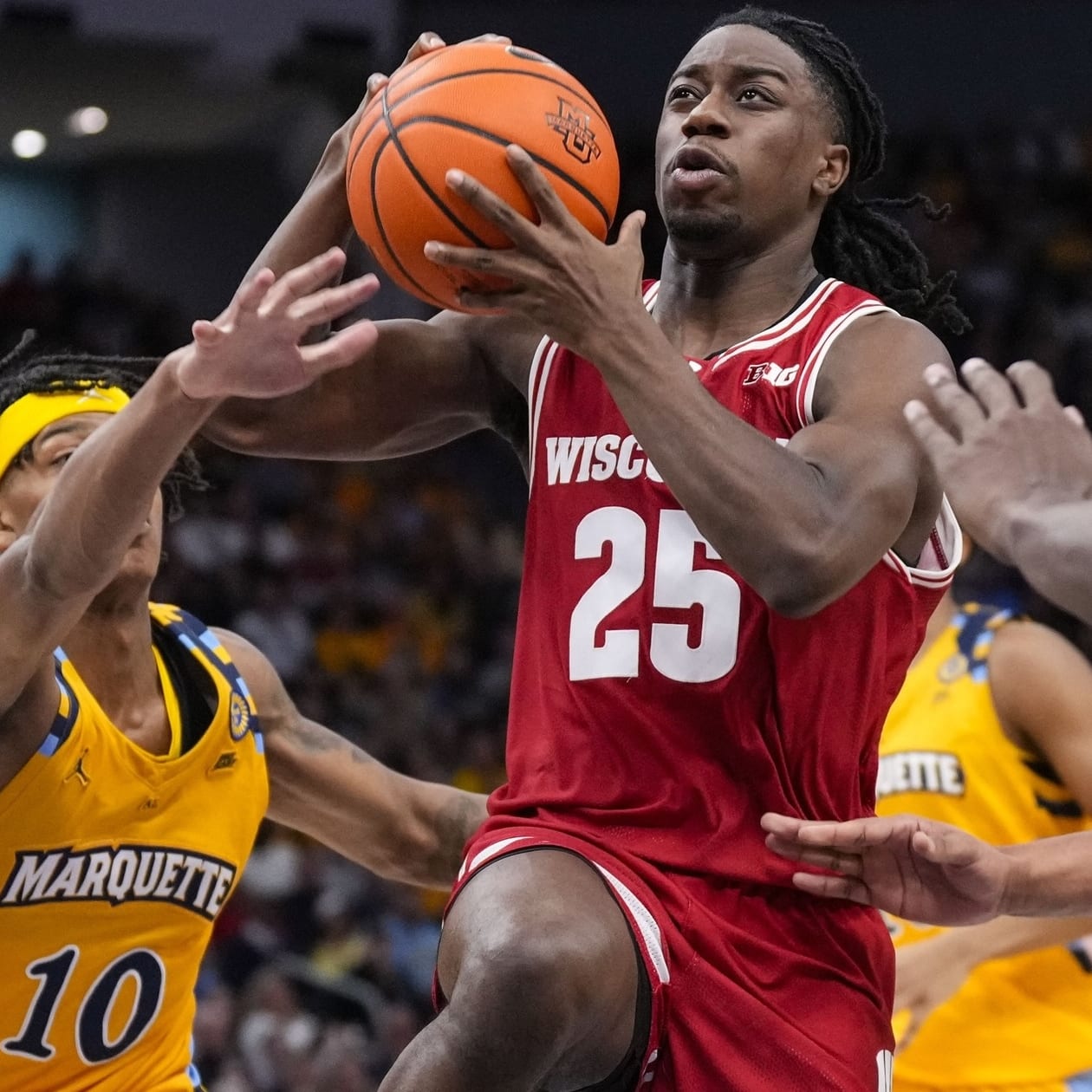
| 10 | (5) Wisconsin | Portland, OR — Moda Center | 1,641 mi |
| 11 | (4) Arkansas | Portland, OR — Moda Center | 1,616 mi |
| 12 | (12) Northern Iowa | San Diego, CA — Viejas Arena | 1,498 mi |
| 13 | (7) Saint Marys | Oklahoma City, OK — Paycom Center | 1,369 mi |
| 14 | (4) Kansas | San Diego, CA — Viejas Arena | 1,290 mi |
| 15 | (15) Idaho | Oklahoma City, OK — Paycom Center | 1,273 mi |
| 16 | (5) Texas Tech | Tampa, FL — Benchmark Intl Arena | 1,213 mi |
| 17 | (9) Iowa | Tampa, FL — Benchmark Intl Arena | 1,077 mi |
| 18 | (7) Miami | St. Louis, MO — Enterprise Center | 1,062 mi |
| 19 | (11) South Florida | Buffalo, NY — KeyBank Center | 1,043 mi |
| 20 | (13) Hofstra | Tampa, FL — Benchmark Intl Arena | 1,015 mi |
| # | Team | Venue | Distance |
|---|---|---|---|
| 1 | (13) California Baptist | San Diego, CA — Viejas Arena | 82 mi |
| 2 | (10) Missouri | St. Louis, MO — Enterprise Center | 117 mi |
| 3 | (1) Florida | Tampa, FL — Benchmark Intl Arena | 118 mi |
| 4 | (2) UConn | Philadelphia, PA — Xfinity Mobile Arena | 201 mi |
| 5 | (6) North Carolina | Greenville, SC — Bon Secours Wellness Arena | 202 mi |
| 6 | (1) Duke | Greenville, SC — Bon Secours Wellness Arena | 211 mi |
| 7 | (2) Purdue | St. Louis, MO — Enterprise Center | 214 mi |
| 8 | (3) Virginia | Philadelphia, PA — Xfinity Mobile Arena | 221 mi |
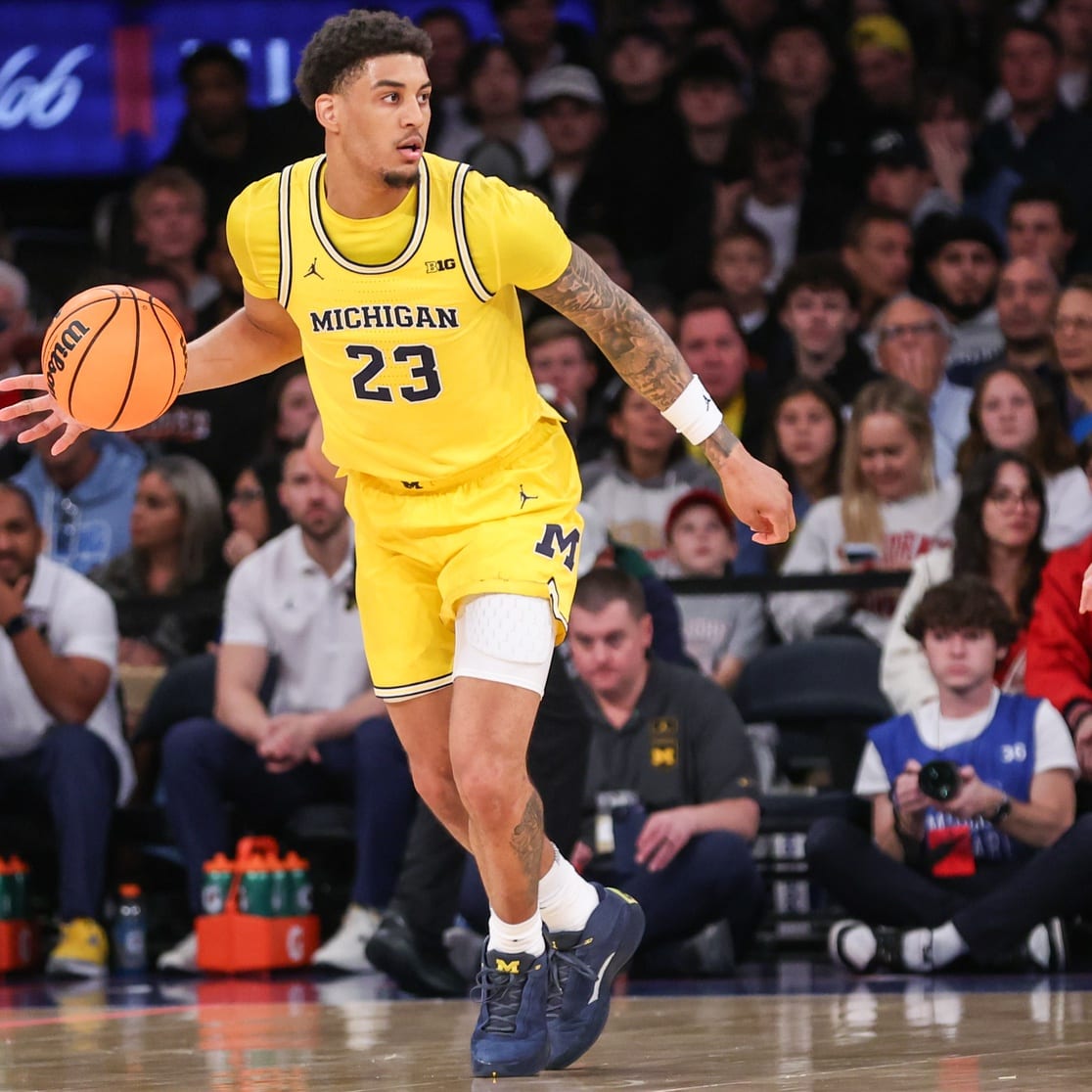
| 9 | (1) Michigan | Buffalo, NY — KeyBank Center | 251 mi |
| 10 | (15) Tennessee State | St. Louis, MO — Enterprise Center | 251 mi |
| 11 | (3) Michigan State | Buffalo, NY — KeyBank Center | 284 mi |
| 12 | (3) Gonzaga | Portland, OR — Moda Center | 290 mi |
| 13 | (2) Iowa State | St. Louis, MO — Enterprise Center | 297 mi |
| 14 | (7) Kentucky | St. Louis, MO — Enterprise Center | 311 mi |
| 15 | (11) VCU | Greenville, SC — Bon Secours Wellness Arena | 333 mi |
| 16 | (10) Texas A&M | Oklahoma City, OK — Paycom Center | 342 mi |
| 17 | (16) Howard | Buffalo, NY — KeyBank Center | 350 mi |
| 18 | (16) UMBC | Buffalo, NY — KeyBank Center | 350 mi |
| 19 | (8) Ohio State | Greenville, SC — Bon Secours Wellness Arena | 358 mi |
| 20 | (1) Arizona | San Diego, CA — Viejas Arena | 359 mi |
This research comes from RotoWire.com, where you will find the best college basketball betting promos as one of the biggest sports betting events in America gets underway.
Which Teams Will Travel The Furthest in 2026?
This year, the teams with the most NCAA Tournament team travel miles on the men's side are those that are heading to Southern California to play their first-round games in San Diego. No team is flying further than Rick Pitino's St. John's Red Storm, who will venture some 2,432 miles to take on 12th seed Northern Iowa in San Diego.
In total, Pitino and the Johnnies will look to improve the Big East Tournament champ's all-time record in the Big Dance to 29-33 when they square off against Northern Iowa out of the Missouri Valley Conference. At Hard Rock Bet Sportsbook, St. John's has +900 odds to win the East Region and reach the Final Four for the first time since 1985.
With a win over the Panthers, St. John's would earn the program's second straight first-round victory, after last year's 83-53 rout of 15th seeded Omaha. That was the NYC school's program's first victory in the Big Dance since 2000.
Five other teams in this year's field will have to travel more than 2,000 miles for their first-round games, for sportsbook apps customers who want to factor in jet lag when they analyze matchups.
Long Island is going to San Diego to play top seeded Arizona, while UCLA will journey 2,398 miles the other direction to take on UCF in Philadelphia.
The other members of the "2,000 Mile Club" this year are Villanova (traveling 2,352 miles from Philly to San Diego to face Utah State), High Point (2,300 miles from North Carolina to Portland) and Kennesaw State (2,153 miles from Georgia to Portland).
In a twist, the lone team in Division I outside the Lower 48 (Hawai'i) is not the one traveling the furthest this year. As reported by the Las Vegas Review-Journal, the Rainbow Warriors stayed in Nevada after winning the Big West Tournament there, instead of returning to Honolulu. That knocks their commute from 2,594 miles down to a manageable 760 miles from Vegas to Portland.
All told, we'll have to wait to see how each team's trips impact March Madness college basketball odds betting edges. But we can bet that jet lag will play a role in the early parts of each contest for teams making long trips.
Which Teams Have The Shortest March Madness Trips in 2026?
The WAC Tournament champions from California Baptist got a gift from the NCAA Tournament selection committee: A drive that won't even take a full tank of gas.
The Lancers only traverse 82 miles down Interstate 15 from the school's Riverside campus to San Diego's Viejas Arena. The first-time tournament team drew fourth-seeded Kansas in the first round of the East Region. Customers using the BetMGM bonus code can get +125 odds on the Jayhawks winning their first two games in San Diego and reaching the Sweet 16.
After Cal Baptist, the next closest first round draw is the 117-mile journey that the Missouri Tigers will take across I-70 to play Miami (FL) in the opening round. Then we have the South Region's top seed, the Florida Gators, driving 118 miles down I-75 from their Gainesville campus to Tampa for their opener against either Lehigh or Prairie View A&M.
No other team in this year's field has a first-round journey that's less than 200 miles. But UConn (201 miles from Storrs to Philadelphia) and North Carolina (202 miles from Chapel Hill to Greensville) are close.
Eight other teams have journeys less than 300 miles one way from their respective campuses. That list ranges from Duke's 211-mile jaunt from Durham to Greensville to Iowa State's 297-mile trek from Ames to St. Louis. Iowa State has +320 odds at FanDuel Sportsbook to reach the Final Four for the first time since 1944.
All of those teams traveling 300 miles or less enjoy close to a home-court advantage in the first two rounds, potentially helping them either avoid an upset (in the case of high seeds such as Duke and Florida) or spring one (in Cal Baptist's case).
All 32 Games Ranked by Travel Edge
Travel edge = mileage difference between opponents. Larger gaps may indicate fatigue or familiarity advantages worth monitoring against the spread.
Big 12 champion Arizona enjoys the biggest edge when it comes to the difference that two first-round foes must face. The Wildcats have 2,064 fewer miles to trek than their opponent; Arizona's Tucson campus is a spritely 359 miles from San Diego, compared with the Sharks' 2,423-mile odyssey from NYC.
Unsurprisingly, oddsmakers see Arizona winning the team's opener with ease. The bet365 sportsbook lists the Wildcats as a 31.5-point favorite.
St. John's has a much longer distance to travel than first-round foe Northern Iowa at Viejas Arena, but the Big East Tourney champs still come in as a 9.5-point favorite at bet365, perhaps reinforcing the belief that talent trumps travel distance.
One upset pick that appears to illustrate this year's March Madness betting edges concerning travel is the 8/9 clash between Villanova and Utah State (not that a No. 9 seed beating an 8 is a huge upset). The Aggies are a two-point favorite at bet365 over the Big East program, and USU is 1,668 miles closer to its destination.
The Cal Baptist Lancers, with that short trip to San Diego, have a travel edge of 1,208 miles compared to Kansas. That could benefit the WAC champs as they look to spring the upset (BetRivers Sportsbook lists KU as a 14.5-point favorite).
Which First Four Teams Have A Travel Edge?
The First Four contests in Dayton, Ohio, to be held tonight and Wednesday, feature one team that is practically at home.
The Miami RedHawks (31-1), the MAC regular-season champions, are just 41.6 miles from Dayton. That ranks well ahead of the next closest school, North Carolina State, which went 385 miles to play in the Buckeye State.
Throw in the two teams from Texas, the SMU Mustangs (861 miles from Dallas) and the Longhorns (944 miles from Austin) and you have this year's at-large pool covered. The Longhorns face the Wolfpack tonight (9:15 p.m. Eastern, truTV); at Caesars Sportsbook, N.C. State is a one-point favorite as of Tuesday morning, with a -120 moneyline on Will Wade's bunch from Raleigh.
As for the four No. 16 seeds vying for a spot in the 64-team main field, the UMBC Retrievers have the shortest trip. Their campus in Catonsville, Maryland, is 335 miles from Dayton, ranking just ahead of Howard's campus in the Nation's Capital (372 miles). Lehigh's Pennsylvania campus is roughly 410 miles from Dayton and Prairie View A&M has the longest trip to Dayton of any First Four team, at 960 miles.
When it comes to stacking up First Four betting odds, it appears that oddsmakers from DraftKings Sportsbook aren't worried about jet lag, as the RedHawks are listed as a 6.5-point underdog against the Mustangs.
The Battle for the Beltway between UMBC and Howard shows the Retrievers as a 2.5-point favorite on DraftKings. Patriot League champion Lehigh is a 2.5-point favorite over SWAC tournament winner Prairie View A&M.
Also See: March Madness 2026 Bracket AI Simulated Projections
Which 2026 NCAA Tournament Venues Have Most, Least Travel?
When it comes to 2026 NCAA Tournament venue travel, no one tops Portland's Moda Center, which sees two teams travel 2,000 miles or more (and another that'll journey 1,977 miles), with a total of 11,403 miles when you add up the eight squads that will head to Oregon this year.
San Diego will see 11,120 miles of travel from the eight teams playing at Viejas Arena.
Conversely, the regional that sees the least amount of travel for the eight teams playing there is Greensville, South Carolina. That site has a total mileage amount of 3,703 miles, much less than the next closest city, St. Louis, which has a total figure of 4,543 miles. That is followed by Buffalo (4,655 miles), Oklahoma City (5,525), Philadelphia (5,698) and Tampa (6,093).
All told, we'll have to wait a few weeks to see which team cuts down the nets in Indianapolis and pay off their backers at sports betting sites. But the distance data above can help us glean which ones will be in the best position to put some quality work in during the opening round of the Big Dance.
Methodology Note: Distances are calculated using the haversine formula from each team's campus coordinates to the venue coordinates (straight-line miles). First Four play-in teams (marked with *) calculate from Dayton, Ohio (UD Arena) rather than campus, since that's their actual departure point. "Travel edge" is the mileage differential between opponents — a contextual data point, not a predictive model.