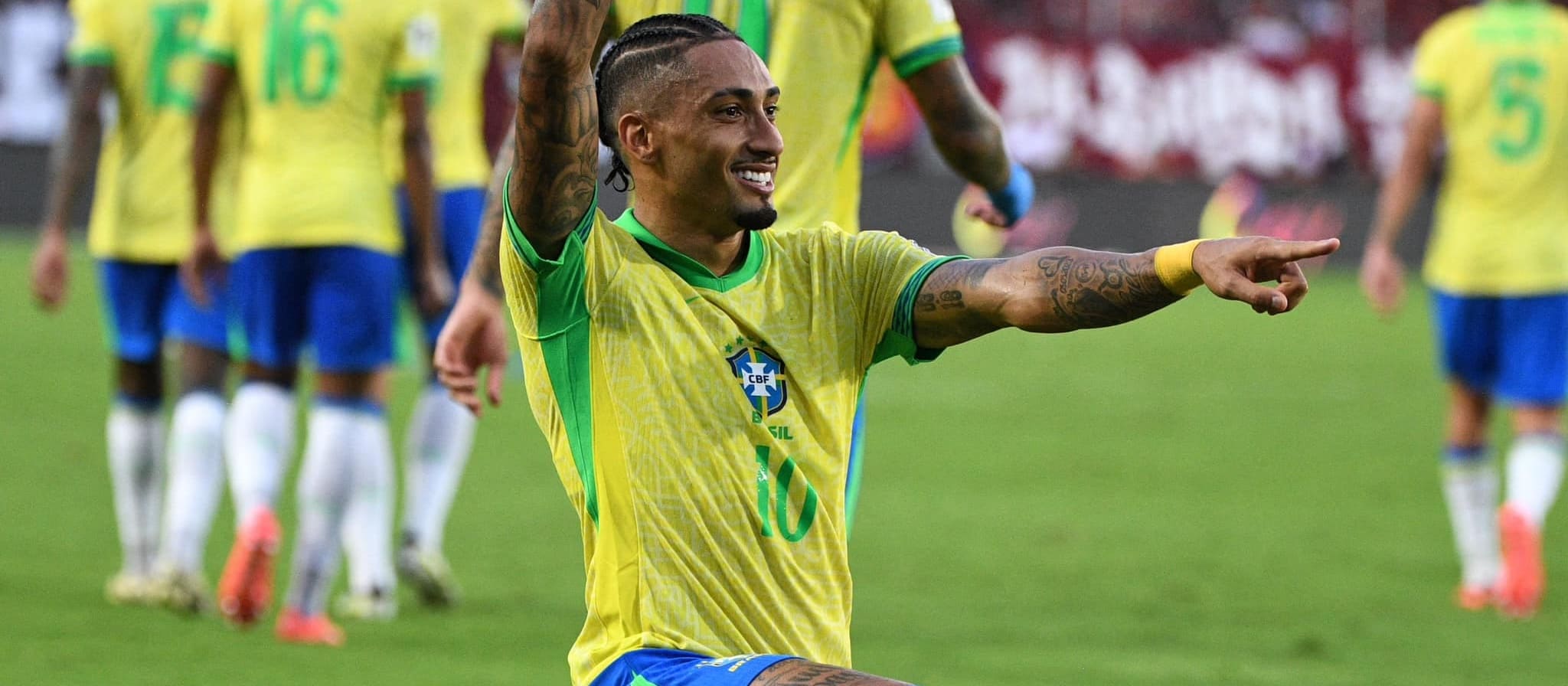


World Cup 2026 Group C Preview: Brazil, Morocco, Scotland, Haiti Lineups, Odds and Tactics
The complete tactical guide to 2026 World Cup Group C. This preview covers playing style, attacking and defensive structure, key tactical adjustments, predicted starting lineups, set-piece takers and the latest betting odds for Brazil, Morocco, Haiti and Scotland.
Read our full preview of all 12 World Cup groups for odds, lineups and tactical analysis.
World Cup Group C Schedule
BRAZIL | 2026 World Cup Tactical Analysis and Predicted Lineup
How Brazil Will Play at the 2026 World Cup
Brazil arrive at the 2026 World Cup under Carlo Ancelotti with a more measured and balanced profile than the purely improvisational sides of previous cycles. The official squad announcement on May 18 in Rio de Janeiro confirmed the direction he has been building toward and generated two of the tournament's most talked-about selection decisions before a ball has been kicked. Neymar is back. Joao Pedro is not.
Joao Pedro scored 20 goals and registered five assists across 46 appearances in his debut season at Chelsea, and had featured in three of coach Ancelotti's five Brazil squads over the past year. None of it proved enough. The Italian admitted it was a difficult call, but backed Igor Thiago, Matheus Cunha, Endrick and Neymar over the Chelsea forward. Pedro responded on Instagram with a measured statement: "I tried to give my best at all times. Unfortunately, it wasn't possible to fulfill this dream. Joys and frustrations are part of football."
The Neymar decision is the squad's defining storyline. Manager Ancelotti confirmed he spent the entire year analysing Neymar before concluding that "in this last period he had continuity and was in good physical condition." The star has played 10 of Santos' last 13 matches and returns to the national team after more than two years away. Ancelotti confirmed after the announcement that Neymar "will be important" for Brazil at the tournament. The irony noted by Brazilian media is that Joao Pedro had publicly stated weeks earlier that Neymar "represents what Messi is to Argentina" for Brazil and deserved to be at the World Cup. In the end, Neymar's inclusion came at the direct expense of his most vocal supporter.
Among the other notable absences: Rodrygo (knee) and Estevao (hamstring) were ruled out through long-term injuries, while Thiago Silva, who had just won the Primeira Liga, was also left out. Ancelotti's preferred shape remains a 4-3-3 or 4-2-3-1, using patient buildup play to release the front three into high-value attacking zones rather than forcing early vertical passes, although the selection opens door to a 4-4-2.
Brazil's Attacking Style at the 2026 World Cup
Brazil's attack still runs through individual quality, but the structure around it is cleaner than in recent cycles. The key attacking themes include:
Left zone isolation for Vinicius Junior, who enters this tournament in a better form than the first part of the 2025/26 season.
Right zone delivery and combination play through Raphinha, one of the most consistent players in Europe across the past two seasons.
A fluid central striking role contested between Matheus Cunha, Endrick and Neymar, with Igor Thiago and Bournemouth teenager Rayan as depth options.
Gabriel Martinelli providing the wide pressing intensity and goal threat that gives manager Ancelotti a reliable alternative.
The Joao Pedro omission means Brazil's central striker profile is less defined than it appeared heading into the announcement. Cunha, Endrick and Neymar all offer different things in that role, and the competition between them for starting minutes in the group stage against Morocco, Scotland and Haiti gives coach Ancelotti a genuine selection dilemma that he did not have when Pedro was the established option.
Brazil's attacking depth also features multiple candidates in the 2026 World Cup Golden Boot odds.
Brazil's Defensive Setup
Defensively, this Brazil squad is better structured than many recent World Cup editions. The defensive group includes Marquinhos, Gabriel, Wesley, Alex Sandro and Danilo, giving coach Ancelotti genuine depth and positional flexibility at the back. Caio Henrique (calf) couldn't recover in time from his injury and let the left-back role free, likely for Alex Sandro to take it.
The center-back pool, with Marquinhos leading and Gabriel alongside him, gives Brazil reliable aerial authority and composure in possession. The key defensive risk remains protecting the space behind advanced full-backs and ahead of the center-backs when both wingers push high, a structural vulnerability manager Ancelotti has been working to address since taking the job.
Key Tactical Adjustments Brazil Need to Make
Settle the attacking organization debate quickly, Cunha, Endrick and Neymar all offer different profiles, and using the group stage to rotate between them could either find the answer or waste three matches looking for it.
Manage Neymar's minutes carefully, giving him the platform to produce without burdening a 34-year-old with the physical demands of three group-stage games.
Maintain defensive compactness behind the attacking full-backs, as the space those players leave when the wingers push high is where Brazil have historically been most exposed.
Brazil Predicted Lineup for 2026 World Cup
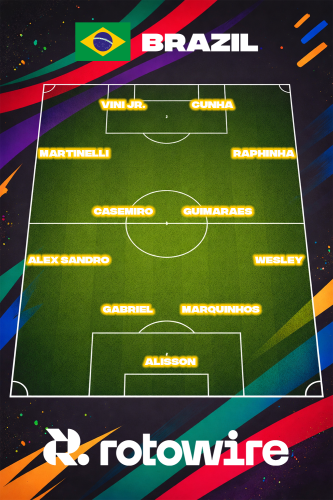
For more updates, see the latest projected World Cup lineups on RotoWire.
Brazil Set Piece Takers
Corners: Raphinha, Bruno Guimaraes, Vinicius Junior, Matheus Cunha, Neymar, Lucas Paqueta
Direct free kicks: Raphinha, Neymar
Penalties: Raphinha, Igor Thiago, Lucas Paqueta, Neymar
Why This Brazil Lineup Works
This starting XI gives Brazil the best balance for tournament football. It keeps elite one-on-one quality on both wings, preserves midfield security through Casemiro and Bruno Guimaraes, and puts experienced defenders behind the ball in Marquinhos and Gabriel. Cunha through the middle gives the attack its most consistent mobile central option from the current squad. Neymar's impact, when it comes, is best delivered from the bench in the group stage, where his creativity and set-piece quality can change a tight match in 30 minutes rather than being managed across 90. Brazil have not won the World Cup since 2002. This squad, with manager Ancelotti's structure and Vinicius Junior at his peak, gives them one of the best chance in over two decades.
MOROCCO | 2026 World Cup Tactical Analysis and Predicted Lineup
How Morocco Will Play at the 2026 World Cup
Morocco arrive at the 2026 World Cup as one of the most structurally difficult teams in Group C. Under new head coach Mohamed Ouahbi, the core technical spine remains intact while several positions have been refreshed. Morocco can operate in a 4-1-4-1 or 4-3-3, but the team identity is consistent regardless of shape: compact and disciplined without the ball, fast and direct the moment space opens up.
Morocco's Attacking Style at the 2026 World Cup
Morocco's most dangerous attacking moments come from dynamic wide progression and half-space combinations. Key attacking themes include:
- Achraf Hakimi driving forward aggressively on the right side
- Brahim Diaz operating as the primary creator between the lines
- Secondary runners targeting the far post and box rather than a fixed striker
This Morocco side is a genuine transition threat. They don't rely on possession dominance to create chances since they are equally comfortable attacking after defensive recoveries, flooding wide zones, and using full-back positioning to generate overloads. The current squad has enough pace and technical quality to hurt any opponent in open-field situations.
Morocco's Defensive Setup
Morocco defend from a compact, narrow base, with tight midfield spacing and disciplined back-line distances. Their strongest collective asset is how effectively the shape closes central areas before pushing outward pressure. The full-backs can be aggressive, but the team's real defensive value comes from synchronized positional movement rather than intense pressing. They are particularly effective against possession-heavy opponents who leave space in behind.
Key Tactical Adjustments Morocco Need to Make
- Build tactical continuity quickly under new coach Mohamed Ouahbi
- Avoid becoming too dependent on transitions against opponents who sit deep
- Establish a clear striker hierarchy for games that require sustained possession play
Morocco Predicted Lineup for 2026 World Cup
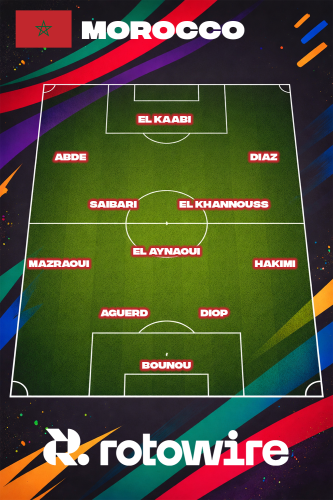
El Aynaoui, Saibari, El Khannouss; Diaz, El Kaabi, Abde.
Morocco Set Piece Takers for 2026 World Cup
Corners: Achraf Hakimi, Ez Abde, Brahim Diaz
Direct free kicks: Achraf Hakimi, Brahim Diaz
Penalties: Brahim Diaz
Why This Morocco Lineup Works
This setup gives Morocco the best combination of control and attacking threat. Hakimi and Mazraoui provide progressive carrying from full-back, Diaz provides final-third invention, and the midfield trio defends space without sacrificing ball-carrying quality. Morocco also enter the tournament with a significant confidence boost after being officially recognized as AFCON champions in March 2026, even if that title decision remains contested.
HAITI | 2026 World Cup Tactical Analysis and Predicted Lineup
How Haiti Will Play at the 2026 World Cup
Haiti are the clear underdogs in 2026 World Cup Group C, but they aren't simply arriving to absorb pressure. Under head coach Sebastien Migne, Haiti have developed a competitive structure built on defensive organization, athletic transition play, and a squad strengthened by diaspora talent. Their base shape is expected to be a 4-2-3-1 or 4-4-2 out of possession, with the emphasis on defensive compactness and direct forward progression after winning the ball back.
Haiti's Attacking Style at the 2026 World Cup
Haiti's attacking game is built on moments of quality rather than sustained territorial control. Key themes include:
- Fast vertical releases immediately after turnovers
- Direct wide running to stretch defensive structures
- Heavy reliance on a small group of decisive attacking players
The addition of Wilson Isidor brings another high-athleticism transition weapon to the front line. Combined with Jean-Ricner Bellegarde and experienced attackers such as Duckens Nazon and Louicius Deedson, Haiti carry genuine pace and directness to punish teams that lose their shape.
Haiti's Defensive Setup
Defensively, Haiti's primary objective is to keep the game narrow and force opponents toward crossing volume rather than clean central entries. A compact medium block is the most realistic approach across the group, pressing high for extended periods against Brazil or Morocco is not sustainable. Their biggest defensive challenge is surviving repeated attacking waves without being pinned too deep, especially against opponents who recycle possession quickly.
Key Tactical Adjustments Haiti Need to Make
- Improve ball retention after winning possession in their own half
- Reduce first-pass turnovers when transitioning forward
- Stay compact and disciplined when protecting the box against elite wide players
Haiti Predicted Lineup for 2026 World Cup
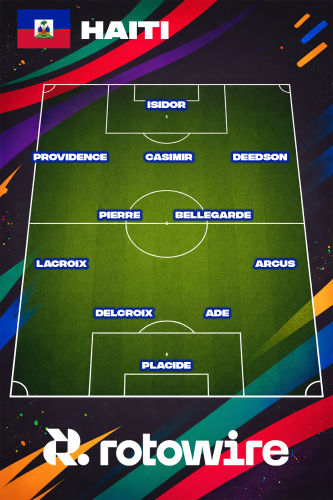
Bellegarde, Pierre; Deedson, Casimir, Providence; Isidor.
Haiti Set Piece Takers for 2026 World Cup
Corners: Jean-Ricner Bellegarde, Louicius Deedson, Josue Casimir
Direct free kicks: Jean-Ricner Bellegarde
Penalties: Duckens Nazon, Wilson Isidor
Why This Haiti Lineup Works
This starting XI maximizes Haiti's athleticism, defensive resilience and transition threat. It places the squad's strongest ball progressors around a front line capable of attacking space at pace. In tournament football, that is Haiti's clearest route to causing an upset. This is only Haiti's second ever World Cup appearance and their first since 1974. Game-state discipline matters as much as raw talent.
SCOTLAND | 2026 World Cup Tactical Analysis and Predicted Lineup
How Scotland Will Play at the 2026 World Cup
Scotland return to the World Cup under coach Steve Clarke with a well-established tactical identity: structural discipline, full-back and wing-back-driven width, and a consistent emphasis on team shape over individual possession. The March 2026 Scotland squad confirms that the core still runs through Andrew Robertson, Scott McTominay, John McGinn, Billy Gilmour and the center-back unit. Clarke's preferred system has recently shifted toward a 4-2-3-1, though the 3-4-2-1 remains an option.
Scotland's Attacking Style at the 2026 World Cup
Scotland's attack is built on timing, territory and set-piece quality rather than technical flair. Key attacking themes include:
- Andrew Robertson delivering dangerous balls from the left flank
- Scott McTominay and John McGinn attacking second balls and making late box entries
- Direct service into a central forward pairing or lone striker
Scotland are especially dangerous when matches become physical or open and disjointed because their midfield runners attack loose structures efficiently. They don't need significant possession shares to generate pressure since overloads, diagonal deliveries, and attacking restarts are their primary mechanisms.
Scotland's Defensive Setup
Scotland are compact and pragmatic defensively. The back line prioritizes box protection, while the midfield unit maintains tight enough distances to contest second phases consistently. They are comfortable defending for extended stretches provided the shape holds. The primary vulnerability comes when high-quality technical opponents bypass the first line of pressure. Against Brazil and Morocco in particular, protecting the space around the full-back zones in transition will be decisive.
Key Tactical Adjustments Scotland Need to Make
- Sharpen final-third efficiency against quicker defensive lines
- Maintain tight midfield distances when fullbacks push forward
- Avoid becoming overly reliant on crosses when chasing a game
Scotland Predicted Lineup for 2026 World Cup
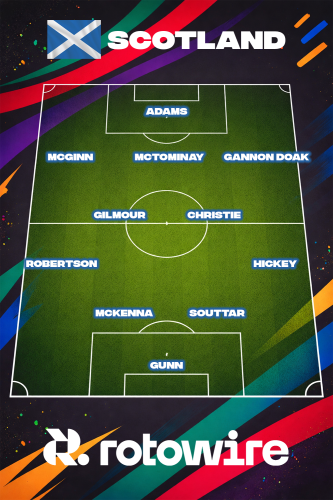
Christie, Gilmour; Gannon Doak, McTominay, McGinn; Adams.
Scotland Set Piece Takers for 2026 World Cup
Corners: John McGinn, Lewis Ferguson
Direct free kicks: John McGinn, Lewis Ferguson
Penalties: John McGinn
Why This Scotland Lineup Works
This lineup reflects Scotland's best tournament logic: defensive structure, aggressive wide service, and midfield runners who attack second phases. It also aligns directly with the latest Clarke squad, with John McGinn and Scott McTominay back involved and Billy Gilmour available again.
2026 World Cup Group C Odds
Brazil are priced as heavy favorites across all books, implying roughly a 70–80 percent probability of winning the group. Morocco sit clearly in second position, while Scotland are viewed as a competitive but inconsistent challenger.
Visit RotoWire all World Cup for exclusive sports betting picks and our daily World Cup recaps. Remember that betting apps vary in terms of odds, so we have an easy-to-use odds page that allows you to shop for the best lines at DraftKings, FanDuel, BetMGM and PointsBet. Claim over a thousand dollars in bonuses by signing up at the best sports betting sites using the best sportsbook promos.
2026 World Cup Group C Conclusion: Who Goes Through?
Group C at the 2026 World Cup features a clear favorite but almost no stylistic redundancy. Brazil bring the highest ceiling and the deepest attacking talent pool in the group. Morocco are tactically mature enough to challenge for first place if they defend transitions effectively and maintain attacking output under a new coach. Scotland have the structural and physical qualities to make every match uncomfortable. Haiti are the tournament underdogs, but their transition speed and defensive organization give them a genuine spoiler profile.
The decisive tactical themes across the group look consistent: wide area control, set-piece execution and transition defense. Brazil should top Group C on talent alone, but second place is genuinely open. Morocco enter as slight favorites for that spot, though Scotland have the tactical structure to push the race into a marginal decision. Haiti's ability to steal points through disciplined game-state management could yet be the variable that decides who advances.
Brazil's path through the group stage is one of 12 previews in our World Cup group-by-group breakdown.
Group C Summary
| Brazil | Morocco | Haiti | Scotland | |
| Predicted formation | 4-2-3-1 | 4-3-3 | 4-2-3-1 | 4-2-3-1 |
| Playing style | Controlled possession, wide isolation, elite individual attack | Compact structure, rapid transitions, full-back-driven progression | Compact block, direct transitions, underdog disruption | Structured, physical, wing service, second-ball pressure |
| Corners/FK takers | Raphinha, Neymar, Guimaraes, Vinicius, Cunha, Paqueta | Hakimi, Abde, Diaz | Bellegarde, Deedson, Casimir | McGinn, Ferguson |
| Penalty takers | Raphinha, Thiago, Paqueta, Neymar | Diaz | Nazon, Isidor | McGinn |
2026 World Cup Group Previews Menu
Click each group for full tactical breakdowns, predicted lineups, betting odds and predictions.
Group A: Mexico, South Africa, South Korea, Czechia
Group B: Canada, Bosnia and Herzegovina, Qatar, Switzerland
Group C: Brazil, Morocco, Haiti, Scotland
Group D: United States, Paraguay, Australia, Turkiye
Group E: Germany, Curacao, Ivory Coast, Ecuador
Group F: Netherlands, Japan, Sweden, Tunisia
Group G: Belgium, Egypt, Iran, New Zealand
Group H: Spain, Cape Verde, Saudi Arabia, Uruguay
Group I: France, Senegal, Iraq, Norway
Group J: Argentina, Algeria, Austria, Jordan
Group K: Portugal, Colombia, DR Congo, Uzbekistan
Group L: England, Croatia, Ghana, Panama