With large tournaments dominating the landscape, NFL best ball strategy has become kind of like DFS in that game theory and stratagem are arguably just as important as drafting the best values relative to ADP. One of the biggest game-theory challenges is that teams advancing through the playoffs in Weeks 15–16 often feature many of the same players, which can set up a Week 17 final with hundreds of similar-looking squads. Reaching the final is great, but it's even better if we get there with some player combinations that aren't on many of the other teams.
The best way to do this, without the benefit of a time machine, is to draft combinations of players that aren't often taken together in the field at large. That's easier said than done, but I do have a handful of suggestions for how to accomplish it, albeit without any means to backtest the efficacy. Just keep in mind that I'm typically only using one or two of these strategies in each draft, not going overboard and obsessing about differentiation at the expense of value and upside. The basic stuff like stacking and positional balance still form the core of best ball draft strategy.
1. Take the ADP Steals When Available (Early Rounds)
This opportunity won't present itself in most drafts, but we should jump when it does. For example, let's say Ladd McConkey falls to the 3/4 turn, giving us a chance to pair him with Jahmyr Gibbs. We should probably do
With large tournaments dominating the landscape, NFL best ball strategy has become kind of like DFS in that game theory and stratagem are arguably just as important as drafting the best values relative to ADP. One of the biggest game-theory challenges is that teams advancing through the playoffs in Weeks 15–16 often feature many of the same players, which can set up a Week 17 final with hundreds of similar-looking squads. Reaching the final is great, but it's even better if we get there with some player combinations that aren't on many of the other teams.
The best way to do this, without the benefit of a time machine, is to draft combinations of players that aren't often taken together in the field at large. That's easier said than done, but I do have a handful of suggestions for how to accomplish it, albeit without any means to backtest the efficacy. Just keep in mind that I'm typically only using one or two of these strategies in each draft, not going overboard and obsessing about differentiation at the expense of value and upside. The basic stuff like stacking and positional balance still form the core of best ball draft strategy.
1. Take the ADP Steals When Available (Early Rounds)
This opportunity won't present itself in most drafts, but we should jump when it does. For example, let's say Ladd McConkey falls to the 3/4 turn, giving us a chance to pair him with Jahmyr Gibbs. We should probably do it, even if we don't like McConkey, because it'll be valuable from a game-theory standpoint if we make it deep into the playoffs with one of the very few teams that has this duo. Gibbs usually goes 1.01, while McConkey has a mid-R3 ADP and rarely lasts beyond 3.10. In probably 99 percent of drafts, the person who took Gibbs won't have the opportunity to get McConkey. If we happen to land among that 1 percent, we should accept the gift as an easy way to differentiate.
This isn't as much of a consideration after the first few rounds, as there's less adherence to ADP, and ADPs tend to change more over time once we're past the top few tiers. If Player X has an ADP at the 5-6 turn and Player Y is at the 6-7 turn, it's fair to say that they won't end up on the same team often in drafts taking place today. But we aren't just facing the teams drafted right now; we're up against all the squads drafted over a period of months. Player X and Player Y may have been closer together or further apart in ADP when people were drafting for the same contest last month. And their ADPs may continue fluctuating this summer, often because of unrelated developments that push other players up/down the rankings.
Check out our fantasy football ADP report for a comprehensive tool with live-updated ADP data for multiple league formats and sites.
2. Make ADP Reaches (Early Rounds)
The corollary to our first strategy is a similar idea, only now we're forcing the matter instead of occasionally letting something fall into our laps. For this example, let's say we're picking 10th-12th and want to start off with an uncommon duo. Instead of taking the guys that normally go in that range, we could pick two players that are normally mid/late-R2 selections, e.g., A.J. Brown and Drake London. The only other way those two are landing on the same team otherwise is if they both fall to the 2-3 turn, which I've never seen happen, or even come close to happening.
From earlier position, we can accomplish something similar by using a top-five pick on guys who usually go around the 1-2 turn and then using our second/third picks on guys that rarely make it back to those 1-2 turn teams at the end of the third round (Irving, Higgins, McBride, Wilson). This can make us one of the very few teams that has both Ashton Jeanty and
3. Draft Unconventional Stacks (Mid/Late Rounds)
We tend to pair our QBs with their best pass catchers for good reason — because a larger target share means the two players' fantasy scoring is more interconnected. A huge portion of CeeDee Lamb teams will have Dak Prescott, and many will also include Jake Ferguson or George Pickens (if they get some luck).
There's nothing wrong with that, but we do run the risk of squaring off against near-duplicate rosters in Weeks 16-17 if our team is based around three conventional stacks, e.g., Murray-Jefferson-Addison, Williams-Burden-Odunze & Purdy-Evans-Kittle. Those three stacks account for only nine of 20 roster spots, but teams that have already made those same decisions will tend to have other commonalities in roster build/structure.
Any squad with Jaxon Smith-Njigba had a top-six pick, and then took A.J. Brown in the second/third round and Loveland in the fourth. There's a good chance they took a RB with the non-Hill pick at the 2-3 turn. And they may have then drafted a bunch of RBs in the 12th-15th rounds, after loading up on WRs, QBs and Kittle through the first 11-12 rounds. It's easy enough to see how teams with the same QB-receiver stacks may get nudged toward similar decisions with their other picks.
Check out Mario Puig's recent article on late-round gems for best ball.
4. Combine Stacks With The Same Bye Week
I wouldn't triple up on this, because it's basically punting one week to an extent that drastically lowers our chances of reaching the playoffs in the first place. But picking two out of three stacks with the same bye week is viable, especially if our third stack (the one with a different bye) is something reliable.
I think there's a lot of variety in terms of how much people care about bye weeks, but there are definitely enough drafters trying to space them out that it has some impact on the frequency of players on those teams ending up together. Some people will avoid stacking the Packers and Falcons on the same fantasy team, for example, because both have byes in Week 11.
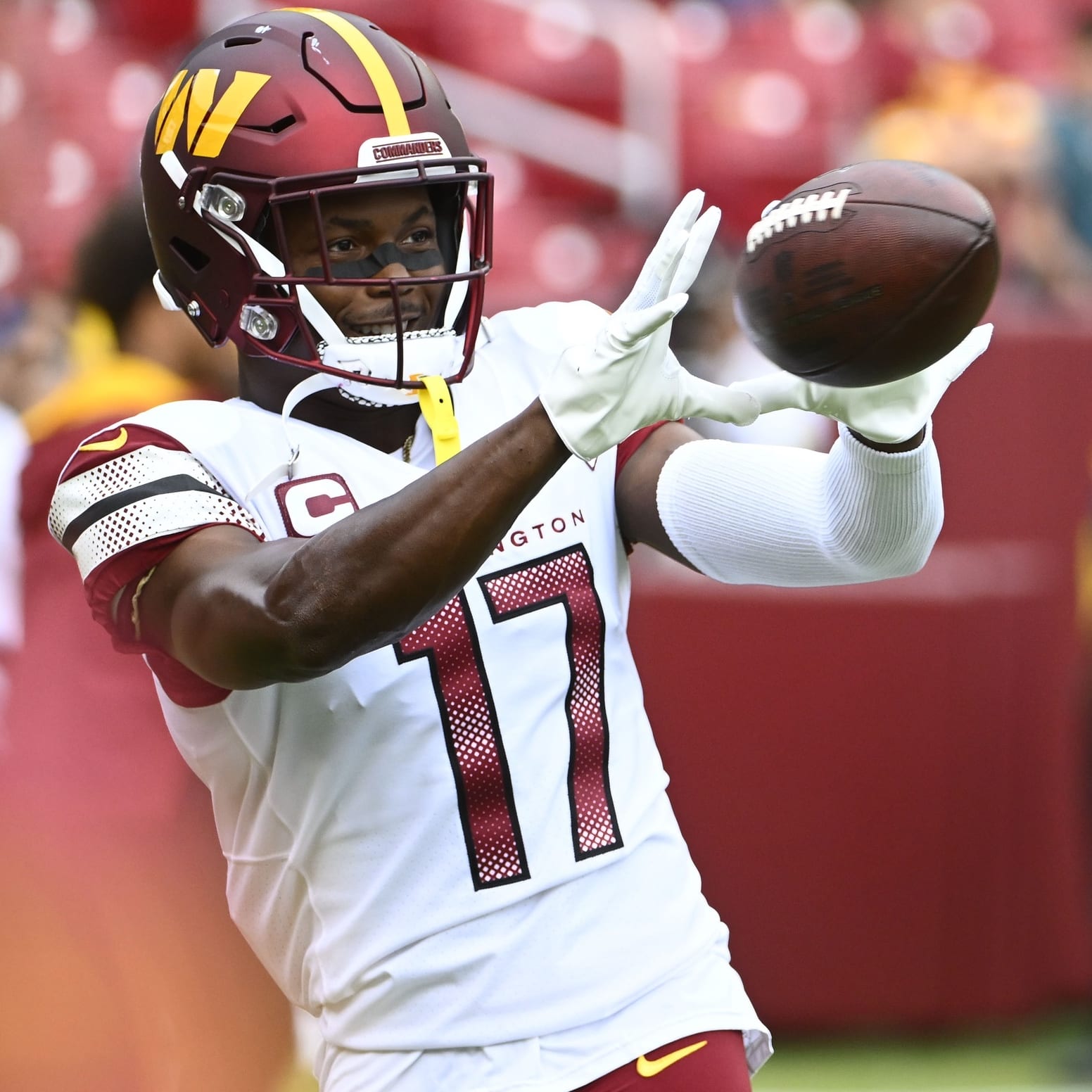
The Commanders and Jaguars are another interesting example, sharing a Week 7 bye, plus some other similarities — namely, upper-echelon QBs with cheap stacking options You won't see many teams that stack Jacksonville and Washington, in part because of the bye weeks, but also because most people don't want to double-tap quarterbacks from the same tier. If you have a chance to draft both, it's at least worth considering. There's the added bonus of them squaring off in Week 17, if your team makes it that far.
5. Consider Second-Order Uncommon Combinations
If we select two random players who aren't on the same team and don't have any relevant ADP logistics, we'd expect them to end up on the same fantasy team about 8 percent of the time. A lot of random duos will fall around that number, but a select few may be much lower for reasons that aren't immediately obvious.
Take the example of Jacoby Brissett and Brock Bowers. There's no reason not to draft them together, but there is good reason not to draft Bowers and Trey McBride to the same team, which means McBride's frequent presence on Brissett's teams then drives down the frequency of the Murray-Bowers combination.
Other examples include CeeDee Lamb and Kyler Murray (because Murray is so often paired with Jefferson, who is never on the same team as Lamb), Ja'Marr Chase and Dak Prescott (same idea), or Khalil Shakir and Zay Flowers (because of the aforementioned Allen/Jackson issue).
Dominate your fantasy football league this season by exploring our comprehensive draft kit. Packed with expert insights, rankings and strategy tips, the kit features our interactive mock draft simulator to prepare you for every scenario. Streamline your draft-day decisions using our printable cheat sheet and stay ahead of the competition with our up-to-date rankings for all formats. RotoWire has everything you need to win. To learn more, subscribe now and start optimizing your roster today.