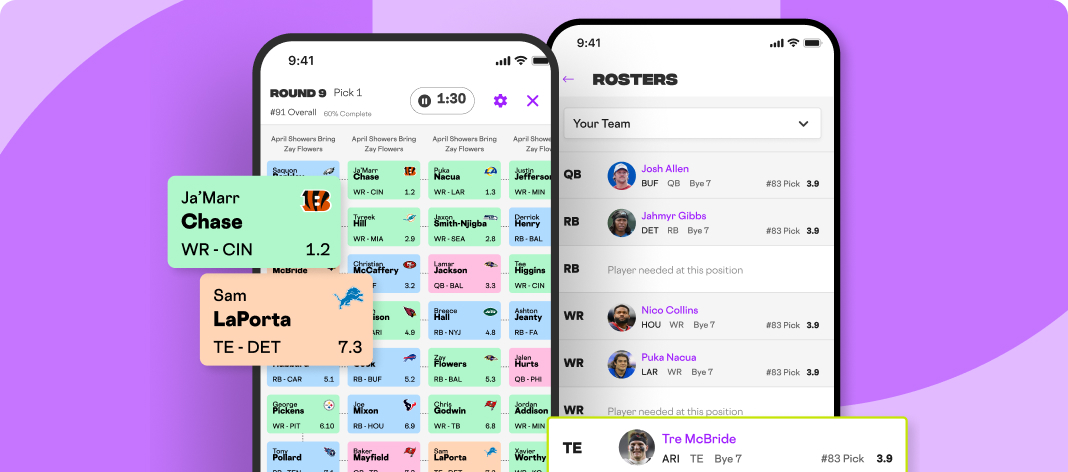


There's no best ball topic I enjoy more than this one. Whether you want to call it price-shopping or price arbitrage, the idea is the same. We're drafting on multiple platforms and trying to pick players where they tend to be cheapest (later ADP).
The ADP discrepancies between various best-ball platforms can sometimes be easily explained by differences in tournament structure or scoring system, e.g., RB Derrick Henry going earlier on half-PPR Underdog than on full-PPR DraftKings.
Other ADP discrepancies can't be explained away as easily, and sometimes we'll even see one that defies the obvious logic / common sense. Consider it a bonus that this approach naturally diversifies our best-ball portfolio, without needing to think about it too much or make sub-optimal picks in the name of exposure.
For up-to-the-minute updates on injuries, news and everything going on around the NFL, head to RotoWire's NFL Fantasy Football News Today or follow @RotoWireNFL on X.
General Trends to Exploit
- DraftKings has a full-PPR, WR-friendly scoring system, yet WRs often go slightly later than on Underdog (half PPR).
- DK has long been the best site for zero-RB builds. The 2024 and 2025 campaigns were obviously harsh on those builds, no matter the site, but that's partly due to unusually good injury luck among the top RBs the last couple of years.
- Note that this trend was much stronger a few years ago. ADPs on DraftKings have gotten sharper the past couple years, but there are still plenty of exploits to
There's no best ball topic I enjoy more than this one. Whether you want to call it price-shopping or price arbitrage, the idea is the same. We're drafting on multiple platforms and trying to pick players where they tend to be cheapest (later ADP).
The ADP discrepancies between various best-ball platforms can sometimes be easily explained by differences in tournament structure or scoring system, e.g., RB Derrick Henry going earlier on half-PPR Underdog than on full-PPR DraftKings.
Other ADP discrepancies can't be explained away as easily, and sometimes we'll even see one that defies the obvious logic / common sense. Consider it a bonus that this approach naturally diversifies our best-ball portfolio, without needing to think about it too much or make sub-optimal picks in the name of exposure.
For up-to-the-minute updates on injuries, news and everything going on around the NFL, head to RotoWire's NFL Fantasy Football News Today or follow @RotoWireNFL on X.
General Trends to Exploit
- DraftKings has a full-PPR, WR-friendly scoring system, yet WRs often go slightly later than on Underdog (half PPR).
- DK has long been the best site for zero-RB builds. The 2024 and 2025 campaigns were obviously harsh on those builds, no matter the site, but that's partly due to unusually good injury luck among the top RBs the last couple of years.
- Note that this trend was much stronger a few years ago. ADPs on DraftKings have gotten sharper the past couple years, but there are still plenty of exploits to be had.
- Underdog's half-PPR system (as opposed to full PPR) means that QBs carry slightly more weight relative to other positions. But ADP rarely, if ever, accounts for this. In fact, we often see better QB prices on UD than we see on full-PPR platforms like DraftKings and Drafters.
- The other reason premium QBs can be more powerful on Underdog? We're often looking for a two-QB build in the 18-round drafts, whereas 20-round contests on other sites lead to a lot more three-QB teams. We can actually feel good about the two-QB build when one of them is Lamar Jackson or Josh Allen.
- Drafters and FFPC tend to have sharper competition overall, so some might consider it a red flag when a player isn't as popular on those sites (ADP-wise) and there aren't scoring/structural reasons to explain it.
- FFPC has the added element of TE-premium scoring, which makes it tricky to compare the ADPs to other sites.
- The playoff-pod formats on DraftKings and Underdog heavily favor back-weighted production, making rookies and injury-rehab players more valuable.
- The massive weight on Weeks 15-17 makes it far more feasible to take "risks" on players who are unlikely to do a lot early in the season, e.g., WR Malik Nabers (ACL) and RB Zach Charbonnet (ACL). This also applies to a lot of rookies, and other young players who have shown some talent but aren't locked into starting jobs.
- This is often baked into ADP, e.g., Nabers will go earlier in playoff-pod formats compared to where he goes on Drafters or in UD's Marathon (contests based on cumulative points in Weeks 1-17). In other cases, like with lower-profile players, this often isn't accounted for in ADPs.
- The massive weight on Weeks 15-17 makes it far more feasible to take "risks" on players who are unlikely to do a lot early in the season, e.g., WR Malik Nabers (ACL) and RB Zach Charbonnet (ACL). This also applies to a lot of rookies, and other young players who have shown some talent but aren't locked into starting jobs.
Stay informed with fantasy football news and track usage roles with the NFL depth charts.
Practical Applications
I've written a bunch of long articles on the topic; the specific ADPs are of course outdated, but the articles explain strategies that can be applied in the future (teach-a-man-to-fish type of deal).
- This article, from June, focuses on values to be found on Underdog.
- This article, also from June, focuses on the values on DraftKings.
The coolest thing about these types of exercises is that we're not just getting "Player A on this site, Player B on that site" as the final takeaway. Things often line up so that entire stacks are cheaper on one site than on another.
| Underdog July ADP | Drafters July ADP | |
|---|---|---|
| WR Terry McLaurin | 44.5 | 39.2 |
| QB Jayden Daniels | 66.9 | 64.8 |
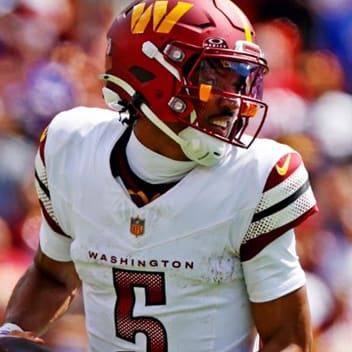
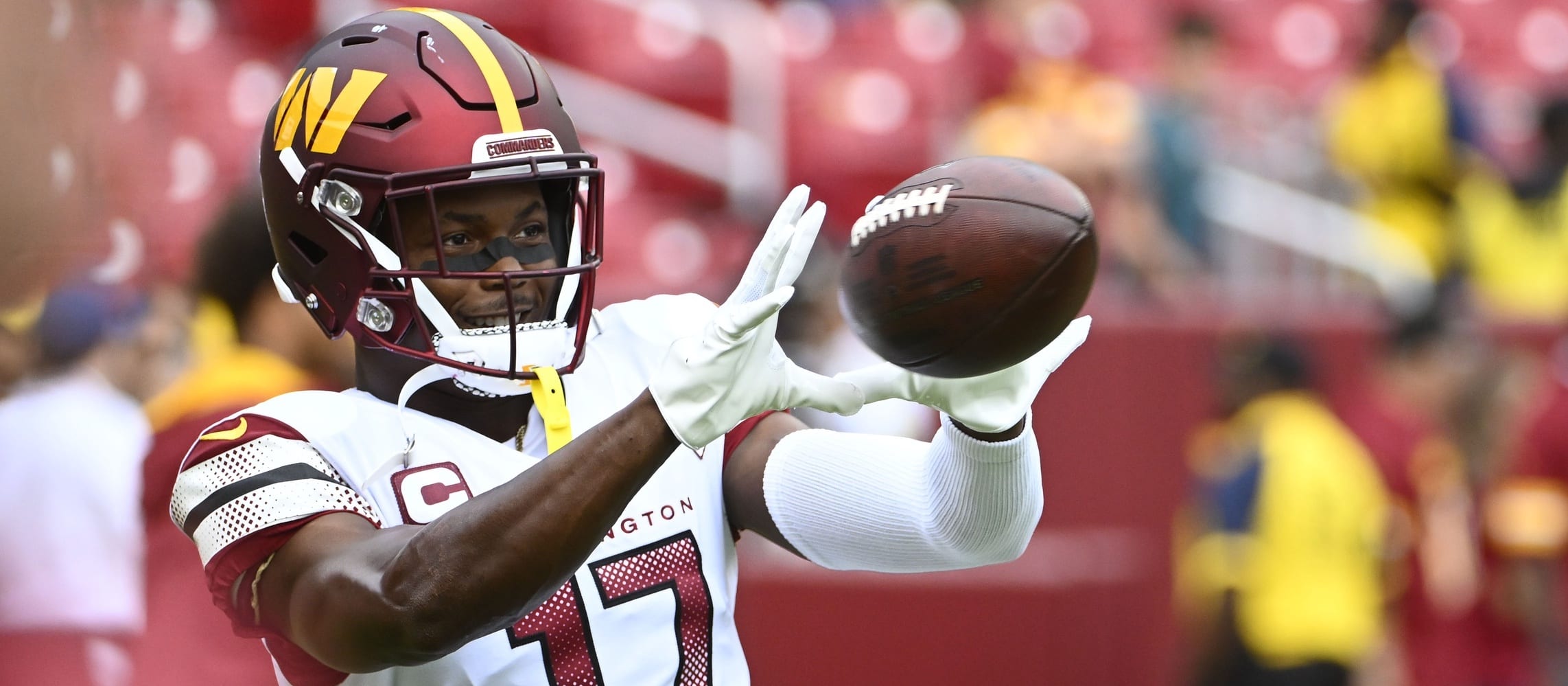
WR Terry McLaurin and QB Jayden Daniels are a good example this summer (as seen above). McLaurin's ADP on Underdog is mid-to-late Round 4, with Daniels' ADP then at mid-to-late Round 6. In other words, we can often get this stack by simply drafting both right around ADP, or perhaps slightly ahead.
- On Drafters this is also true, but McLaurin is more of an early-to-mid R4 pick, which means we're using the same strategy from earlier position and sacrificing value. There's not really a structural reason that McLaurin or Daniels would go much earlier on Drafters, as neither fits with the PPR-maven or all-ceiling, no-floor profiles that tend to play well in Drafters' cumulative-scoring format.
- The PPR angle might explain why McLaurin goes ahead of Cam Skattebo and Josh Jacobs on Drafters, but it doesn't explain why he's also ahead of WRs like Tetairoa McMillan and Luther Burden (both have earlier ADPs than McLaurin on Underdog).
- The bonus here: Daniels is arguably more valuable on Underdog than on Drafters (see: QB discussion above).
It's also true that many stacks are easier or harder to attain depending on our starting draft position — a topic RotoWire's John McKechnie has written about throughout the spring and summer*. Even slight changes in ADPs between sites can make it much easier/harder to draft a specific stack without making a huge reach pick. It's inevitable that some of our favorite stacks will be much easier to line up on a specific platform/contest (and possibly challenging elsewhere).
Once we start to put all of these different strategic ideas together, we'll often find that it makes sense to target certain stacks, builds and players for a specific contest/platform (rather than broadly across the industry). This naturally diversifies a best ball portfolio without sacrificing value, making it the ideal approach for anyone planning to draft dozens, hundreds or thousands of teams.
.
Dominate your fantasy football league this season with our 2026 RotoWire fantasy football draft kit. Packed with expert insights, rankings and strategy tips, the kit features our interactive mock draft simulator to prepare you for every scenario. Streamline your draft-day decisions using our printable cheat sheet and stay ahead of the competition with our up-to-date rankings for all formats.