Pitch modeling and stuff models have become a big part of the landscape in baseball, whether for teams and players or fantasy managers. Those models' effectiveness has been debated repeatedly. Regardless of which side you land on, the pervasiveness of these numbers and the number of times they are cited by analysts make it important to at least acknowledge them and use them as a starting point for analysis. That will be the goal of this week's Barometer.
Using 20 innings pitched as a cutoff, I compared every pitcher's Stuff+ number to their mark last year and then sorted the biggest risers and fallers. I picked some of the pitchers that I found most interesting to analyze from that group to determine the player pool for the risers and fallers this week. While Stuff+ will be referenced, the analysis will go into more detail with the goal of providing additional context around the player's Stuff+ number and what it means for their fantasy value moving forward.
Below are roughly the 25 biggest risers and fallers so far this season.
| Risers | Team | IP | 2026 Stuff+ | 2025 Stuff+ | Difference |
|---|---|---|---|---|---|
| Emerson Hancock | SEA | 41.2 | 103 | 90 | 13 |
| Roki Sasaki | LAD | 28.2 | 102 | 91 | 11 |
| Chase Dollander | COL | 37.1 | 107 | 97 | 10 |
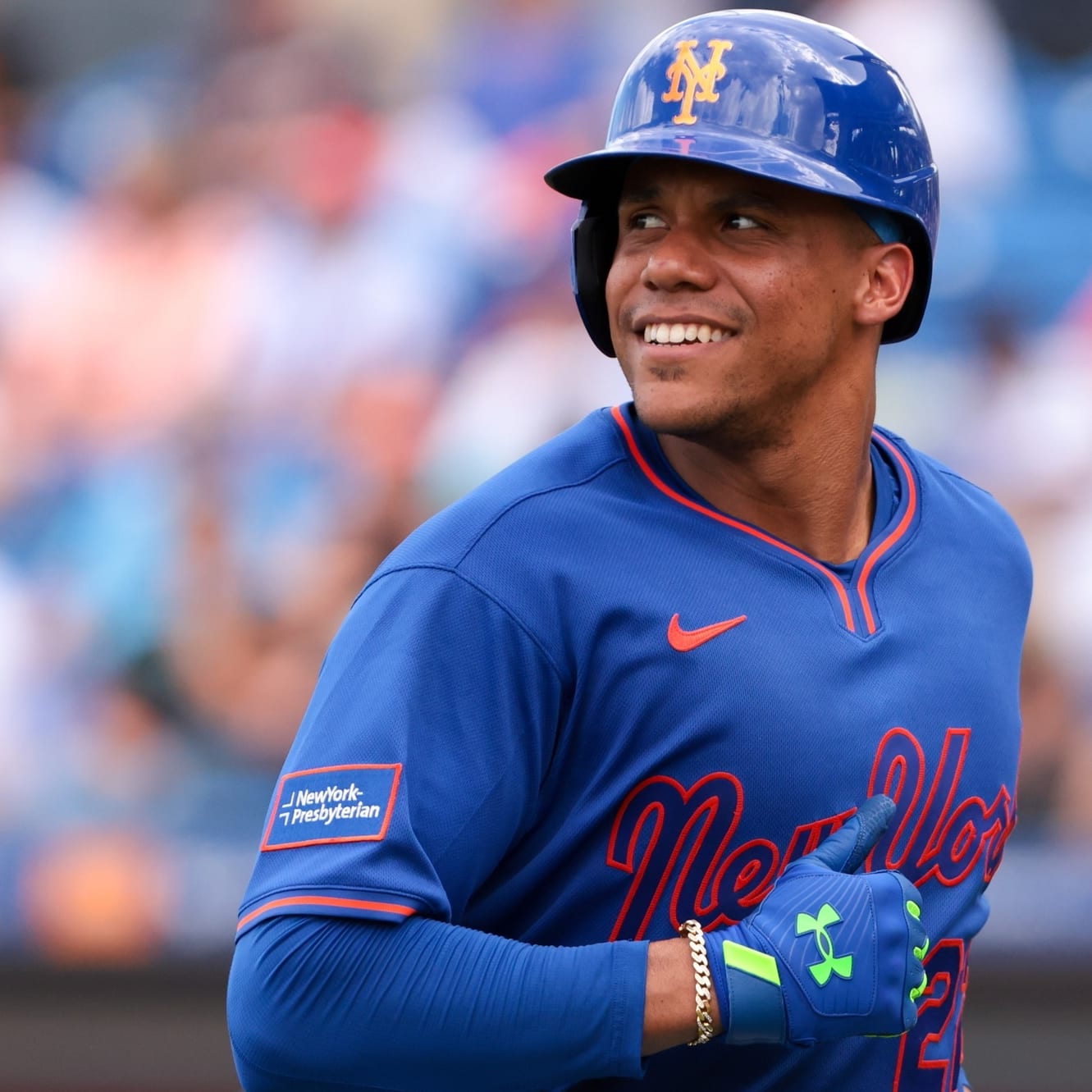
| Tobias Myers | NYM | 22 | 105 | 98 | 7 |
| Taj Bradley | MIN | 41 | 108 | 102 | 6 |
| Jesus Luzardo | PHI | 34.1 | 112 | 106 | 6 |
| Janson Junk | MIA | 33 | 102 | 96 | 6 |
| Jacob Misiorowski | MIL | 38 | 122 | 116 | 6 |
| Dustin May | STL | 30.2 | 104 | 98 | 6 |
Pitch modeling and stuff models have become a big part of the landscape in baseball, whether for teams and players or fantasy managers. Those models' effectiveness has been debated repeatedly. Regardless of which side you land on, the pervasiveness of these numbers and the number of times they are cited by analysts make it important to at least acknowledge them and use them as a starting point for analysis. That will be the goal of this week's Barometer.
Using 20 innings pitched as a cutoff, I compared every pitcher's Stuff+ number to their mark last year and then sorted the biggest risers and fallers. I picked some of the pitchers that I found most interesting to analyze from that group to determine the player pool for the risers and fallers this week. While Stuff+ will be referenced, the analysis will go into more detail with the goal of providing additional context around the player's Stuff+ number and what it means for their fantasy value moving forward.
Below are roughly the 25 biggest risers and fallers so far this season.
| Risers | Team | IP | 2026 Stuff+ | 2025 Stuff+ | Difference |
|---|---|---|---|---|---|
| Emerson Hancock | SEA | 41.2 | 103 | 90 | 13 |
| Roki Sasaki | LAD | 28.2 | 102 | 91 | 11 |
| Chase Dollander | COL | 37.1 | 107 | 97 | 10 |
| Tobias Myers | NYM | 22 | 105 | 98 | 7 |
| Taj Bradley | MIN | 41 | 108 | 102 | 6 |
| Jesus Luzardo | PHI | 34.1 | 112 | 106 | 6 |
| Janson Junk | MIA | 33 | 102 | 96 | 6 |
| Jacob Misiorowski | MIL | 38 | 122 | 116 | 6 |
| Dustin May | STL | 30.2 | 104 | 98 | 6 |
| Sean Burke | CHW | 39.2 | 97 | 92 | 5 |
| Randy Vasquez | SDP | 33.2 | 99 | 94 | 5 |
| Jake Irvin | WSN | 34.2 | 98 | 93 | 5 |
| Aaron Civale | ATH | 30.2 | 97 | 92 | 5 |
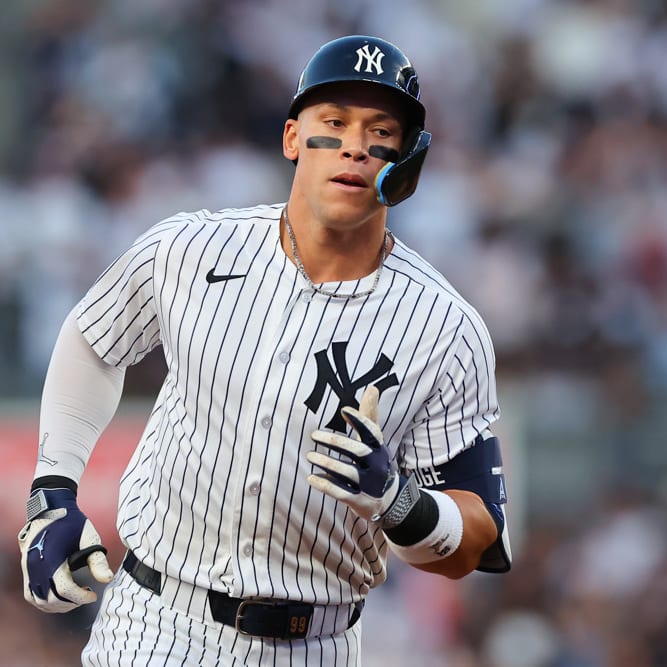
| Will Warren | NYY | 37.2 | 107 | 103 | 4 |
| Matthew Liberatore | STL | 36 | 99 | 95 | 4 |
| Martin Perez | ATL | 28.1 | 90 | 86 | 4 |
| Kodai Senga | NYM | 20 | 97 | 93 | 4 |
| Gavin Williams | CLE | 43.1 | 105 | 101 | 4 |
| Tyler Glasnow | LAD | 38.2 | 104 | 101 | 3 |
| Robbie Ray | SFG | 39.2 | 103 | 100 | 3 |
| Michael Wacha | KCR | 37.1 | 99 | 96 | 3 |
| Luis Severino | ATH | 38.1 | 107 | 104 | 3 |
| Logan Gilbert | SEA | 38 | 107 | 104 | 3 |
| Jeffrey Springs | ATH | 38.2 | 97 | 94 | 3 |
| Jack Kochanowicz | LAA | 35 | 96 | 93 | 3 |
| Trevor Rogers | BAL | 30.1 | 99 | 97 | 2 |
| Nick Martinez | TBR | 37 | 100 | 98 | 2 |
| Fallers | Team | IP | 2026 Stuff+ | 2025 Stuff+ | Difference |
|---|---|---|---|---|---|
| Reid Detmers | LAA | 40 | 105 | 115 | -10 |
| Edward Cabrera | CHC | 35.1 | 94 | 104 | -10 |
| Justin Wrobleski | LAD | 30 | 91 | 101 | -10 |
| Kyle Leahy | STL | 29.1 | 89 | 99 | -10 |
| Tomoyuki Sugano | COL | 31.2 | 78 | 88 | -10 |
| Paul Skenes | PIT | 34 | 101 | 110 | -9 |
| Carmen Mlodzinski | PIT | 34 | 93 | 102 | -9 |
| Chad Patrick | MIL | 28 | 96 | 105 | -9 |
| Michael King | SDP | 39.2 | 92 | 101 | -9 |
| Emmet Sheehan | LAD | 31 | 93 | 101 | -8 |
| Steven Matz | TBR | 31.1 | 96 | 104 | -8 |
| Michael McGreevy | STL | 39.1 | 80 | 88 | -8 |
| Tarik Skubal | DET | 43.1 | 116 | 123 | -7 |
| Casey Mize | DET | 31 | 88 | 95 | -7 |
| Bryce Elder | ATL | 43 | 85 | 92 | -7 |
| Andrew Abbott | CIN | 34.2 | 92 | 99 | -7 |
| Jacob Lopez | ATH | 30 | 92 | 98 | -6 |
| Shane Baz | BAL | 34 | 100 | 105 | -5 |
| Noah Cameron | KCR | 31.2 | 91 | 96 | -5 |
| Jose Quintana | COL | 24.1 | 81 | 86 | -5 |
| Spencer Arrighetti | HOU | 23 | 97 | 102 | -5 |
| Drew Rasmussen | TBR | 30.2 | 104 | 108 | -4 |
| Garrett Crochet | BOS | 30 | 113 | 117 | -4 |
| Ranger Suarez | BOS | 35 | 93 | 97 | -4 |
| Braxton Ashcraft | PIT | 34 | 101 | 105 | -4 |
| Tyler Mahle | SFG | 30.2 | 89 | 93 | -4 |
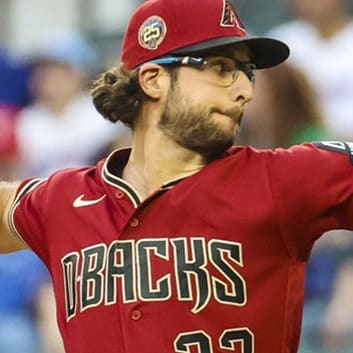
| Zac Gallen | ARI | 32.1 | 89 | 93 | -4 |
Risers

What's changed: Bradley has thrown his splitter more often and reduced the velocity of his cutter.
About three weeks ago, Ben Clemens wrote a piece on FanGraphs explaining Bradley's hot start to 2026. His primary conclusions were that Bradley lessened the velocity on his cutter, giving it more vertical break and differentiating the pitch more from his fastball, while also increasing the usage of his splitter. A few weeks later, those observations mostly remain true. Bradley has increased his splitter usage from 15.1 to 23.0 percent, and the pitch has both limited hard contact and generated whiffs (.226 xwOBA, .246 xSLG, 32.5 percent whiff rate) effectively. The reduced velocity on his cutter hasn't had the same drastic results, as his fastball has still been hit hard and hasn't generated swings and misses. However, his cutter has been effective in limiting damage by right-handed hitters.
The end result has been a steady, if unspectacular, pitcher. Bradley has allowed more than two earned runs in only one of his seven starts to this point, and his 25.3 percent strikeout rate resembles the mark he posted in 2024, when it looked like he was on the path to being a top breakout pitcher.

What's changed: Increased usage of sinker and increased velocity
All Rockies pitchers are rightfully met with skepticism due to their home park and the lack of success for their starters throughout franchise history. It's unlikely that will change in a meaningful way, but Colorado's front office, which underwent significant changes this offseason, made a point of saying it would experiment with pitcher usage and pitch mix to try to increase effectiveness. About five weeks into the season, the team's starters have a 4.88 ERA — good for 25th in the league. That may not sound like a positive, but it's the team's best mark since 2021, when it maintained a 4.77 ERA. In between, the team's starters have posted ERAs of 6.65, 5.54, 5.91 and 5.22. What makes this more interesting is that the Rockies don't seem to be using blanket advice for each of their pitchers.
Overall, the team has lowered the usage of fastballs and sinkers for its rotation, but Dollander has instead used his sinker more in place of his fastball. The result has been nearly a 10-percentage point increase in his groundball rate and a vastly improved 0.96 HR/9. Interestingly, his swinging strike rate and CSW% have both spiked even with the increased sinker usage. While the snap reaction may be to suggest regression is coming in that regard, this is where talent comes into play. Dollander was widely regarded as one of the best pitching prospects in the 2023 draft and that has started to translate, in spite of Coors Field. He's thrown each of his four seamer, slider and changeup at greater than a 10 percent clip, and each has a whiff rate of at least 30 percent.
Dollander's usage has also been unique. He's only "started" one game, but has regularly worked behind an opener that often doesn't even complete the first inning. While that hurts his value in quality start leagues, he's still worked a traditional starter's workload by completing at least 5.1 innings in each of his last four starts. Coors Field could still win as the weather warms up, but Dollander shouldn't be dismissed.

What's changed: Increased sinker usage
The analysis for Burke can be relatively brief, because there is a lot of overlap in pitch mix discussion with Dollander. Specifically, Burke has increased his sinker usage from 4.8 percent in 2025 to 15.5 percent in 2026. His groundball rate has correspondingly increased to 42.5 percent, and his HR/9 has fallen from 1.54 in 2025 to 0.68 in 2026. Unlike Dollander, Burke doesn't have elite velocity or swing-and-miss stuff, which is evident from his Stuff +. However, pitchers on bad teams (or teams with low expectations) often go unnoticed, and Burke is turning into a streamer in shallow formats and is looking like a reliable starter in deeper leagues.

What's changed: Increased sweeper and sinker usage
Williams' fastball has been variations of bad throughout the early portions of his career, so it's not particularly surprising to see his results improve as he's deemphasized the pitch the last two seasons. He's shifted his sweeper and sinker usage up in response, an interesting combination given that the former is his best swing-and-miss pitch, while the latter is focused on inducing soft contact.
His underlying skills suggest he could get the best of both worlds. His swinging strike rate has jumped to a career-high of 12.8 percent clip and a very impressive 32.6 CSW%. That has translated to a 30.3 percent strikeout rate. Williams has also increased his groundball rate to 47.0 percent, yet he's still allowed 1.46 HR/9. That's come with an unlucky 19.5 HR/FB%, which should regress.
The Williams breakout many have been waiting for the last couple of seasons looks to be here, even after a tough start Tuesday night.

What's Changed: Improved Control
There's rightfully been a lot of hype about Cam Schlittler, but it's also safe to say that Warren hasn't gotten enough credit for an apparent breakout of his own. On the surface, not much looks different. His velocity and pitch usage has mostly remained unchanged from last season. However, Lance Brozdowski pointed to Warren's shift toward the third-base side of the rubber in his first couple starts of the year as a key to improving his location. That's reflected not only in Warren's Location+ (113 as compared to 97 last season) and walk rate (9.1 percent to 5.3 percent), but also in his results against lefties.
His placement toward the bottom of the list is purposeful. A shift on the rubber isn't necessarily a gimmick (it's worked for other pitchers in the past) but there should be some concern that hitters will adjust as they get used to the new release point of his pitches. Furthermore, there is a rotation crunch coming in New York, with both Gerrit Cole and Carlos Rodon on their way back. There is already one rotation spot open, but Warren would likely be in competition with Ryan Weathers for the final spot, barring a move to a six-man rotation.
Fallers

What's gone wrong: His curveball has stopped generating whiffs.
Cabrera has limited runs effectively and generally been able to pitch deep into games, so there's only so much to worry about. That's particularly true when we're seemingly seeing one high-profile pitcher suffer an injury everyday.
On the other hand, the hoped-for breakout after Cabrera joined the Cubs this offseason doesn't look to be imminent. It's tempting to simply blame his poor fastball and sinker combination, which has often been the culprit for his struggles throughout his career. The more accurate explanation looks to be that his curveball is no longer an elite pitch, or at least hasn't gotten elite results.
A simple glance shows that the Stuff+ on that pitch specifically has fallen from 123 in 2025 to 105 this year. To drill down a bit further, he's surrendered an inordinate amount of hard contact with the pitch. For example, he's given up a .500 SLG on the pitch, as opposed to a.245 mark in 2025. Similarly, his whiff rate has fallen from 45.2 to 29.8 percent.

What's gone wrong: His fastball and sinker have gotten hammered
Patrick has allowed two or fewer earned runs in five of his seven appearances, but he's been a detriment in all of the other traditional categories. He's worked fewer than five innings four times and has just a 14.9 percent strikeout rate. Patrick has also had extreme control problems, with his Location+ dropping to 94 and his walk rate jumping to 11.9 percent. All of those factors combine together to create a 1.44 WHIP, 20 strikeouts across 31.1 innings and one win. Even if his ERA remains suppressed, he's had a disappointing season given the expectation that his success in 2025 created.
The news only gets worse from there. Patrick is heavily reliant on hard stuff; he throws his fastball, cutter and sinker a combined 84 percent of the time. Of those pitches, both his fastball and cutter have lost double-digit points off of their Sutff+ ratings, and that's reflected in the results. Patrick's cutter remains strong, but he has surrendered a .516 and .650 SLG with his four-seamer and sinker, respectively, with expected marks not far behind. Given his non-traditional usage and the results he's had thus far, Patrick's spot in the rotation could be in jeopardy when/if Quinn Priester and Brandon Woodruff get healthy. At best, Patrick isn't a usable fantasy option.

What's gone wrong: His knuckle curve has turned into a liability
During the most productive stretches of his career, Gallen had one of the better curveballs in the league. While it never achieved standout marks as measured by Stuff+, he racked up 27 runs prevented with the pitch from the 2022 through 2024 season, as measured by Statcast. The pitch's performance began to decline last season, both in its ability to generate whiffs and the batted-ball outcomes against it. That has only gotten worse in 2026. His whiff rate with the knuckle curve is 20.4 percent, almost exactly half of what it was last year. Hitters are hitting .333 and slugging .667 against it, with expected marks of .349 and .833, respectively.
After his overall strikeout rate dropped from 25.1 percent to 21.5 percent from 2024 to 2025, he currently has a strikeout rate of only 14.2 percent. The only thing saving Gallen from a completely disastrous ERA is his ability to suppress home runs, but his fantasy relevance looks to be behind him despite being in only his age-30 season.