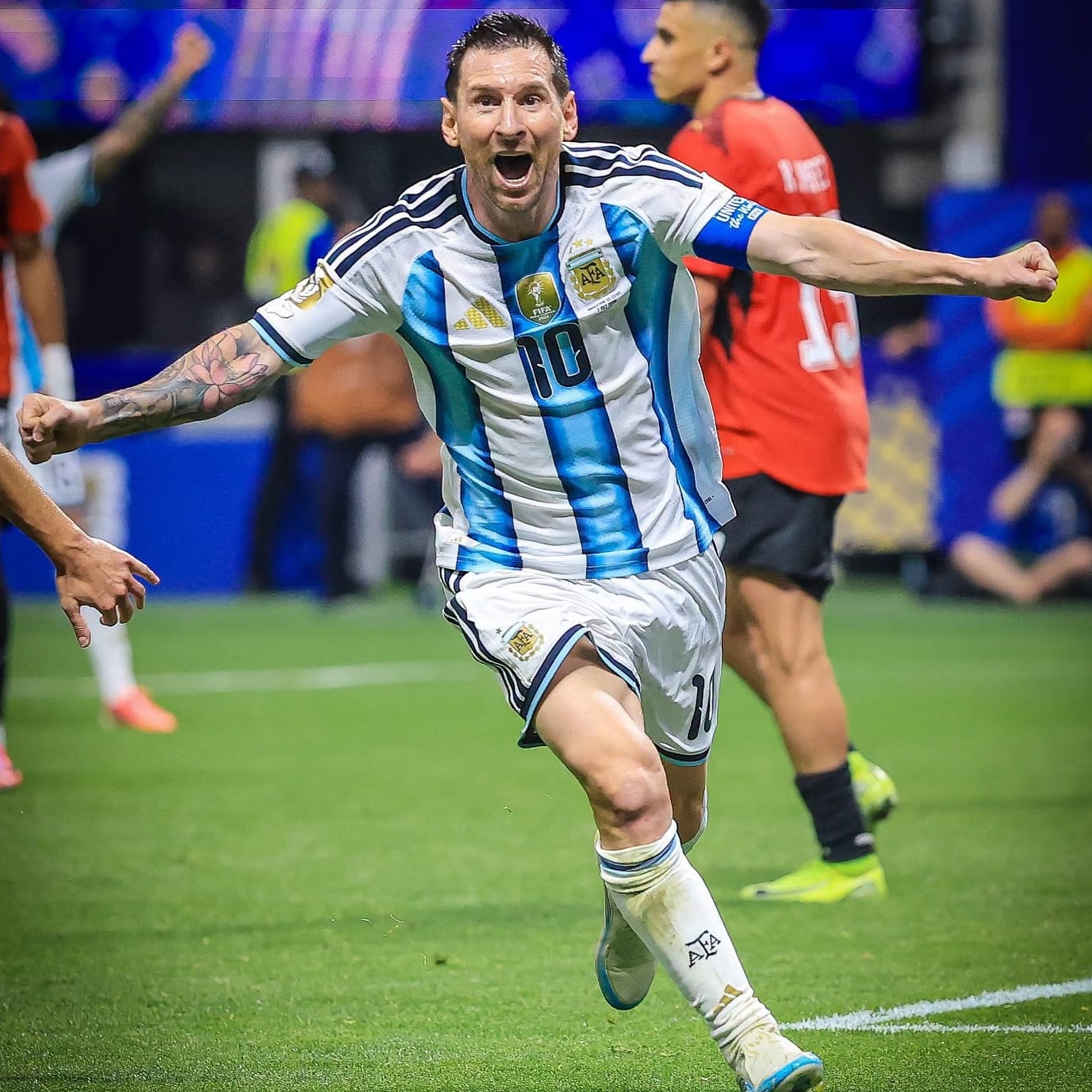
DFS Soccer World Cup Strategy for the 2026 FIFA World Cup
Every four years, DFS soccer resets. The Premier League shuts down. Champions League is a memory. And you're building rosters with players you've never touched, injury news that comes from the dark web, and game dynamics that don't exist in club soccer.
The 2026 FIFA World Cup in North America is the first 48-team edition, spread across three countries, and I think the DFS opportunity is going to be bigger than anything we've seen. More teams. Weirder group dynamics. A massive wave of casual players who only show up for the World Cup. If you've spent a season grinding Premier League DFS (and if you haven't, start with our beginner's guide to DFS soccer), you know international soccer plays different. But 2026 isn't just different. It's structurally different.
The real edge happens before June, especially for the first set of group matches. I'll break down how I get ready, what makes 2026 different from 2022 and how you can exploit the spots this tournament creates.
The Information Gap: Your Biggest Edge
You know the Premier League inside out. You can rattle off xG numbers for every team. You follow the beat reporters. You know which full-backs get forward and which ones sit deep. You've got 38 weeks of data.
None of it matters.
International tournaments run on different information. You don't have a full season of data. You've got 10-to-15 qualifying matches (for most teams), maybe a friendly or two, and then you're making decisions with gaps everywhere. Coaching changes happen between tournaments. Players regress or surprise you. The guy who was essential in 2022 might not make the squad.
Most casual players won't do anything about that. They'll show up two days before, check RotoWire's projections, and call it research. The gap between reading one source and watching qualifying tape is where you find value.
Find the beat writers. Every national team has reporters covering them, and they're not always famous names. Could be regional guys, could be small-country specialists, but they'll know about injuries and tactical shifts before the mainstream World Cup media picks it up.
Build a spreadsheet of nailed-on starters versus bubble guys. RotoWire has tools for this (see: predicted lineups, group previews). The point is knowing which players are locks and which ones could get benched as the tournament gets closer.
Understand what each team is trying to do. Is Brazil playing aggressive or sitting deep? Is Argentina coming in as defending champs with everything locked in or is Lionel Scaloni experimenting? This matters because it affects how many shots and assists you should project.
By the knockout rounds, the rest of the field starts catching up. But in the group stage, when people are still figuring out which countries are in which groups, you're multiple matches deep.
The 48-Team Format Changes the Math
The 48-team format is the biggest story because there are some massive favorites, and it's going to reshape this tournament.
Instead of eight groups of four, you've got 12 groups of four with the top two from each group plus the eight best third-place teams advancing. More group stage matches, but more importantly, way more potential for blowouts. The old 32-team format kept groups mostly competitive. Germany vs. Mexico, France vs. Australia. Skewed, but upsets still happened (Saudi Arabia vs. Argentina)
Now you get situations where a top-10 team lands with three significantly weaker sides. You're going to see 5-0 scorelines. You could see salary stacks where the favorite is -1000 and priced through the roof.
Group Stage Motivation Dynamics
Motivation dynamics are where most DFS players get burned at the World Cup.
In the Premier League, motivation is stable. Manchester City in December plays the same as Manchester City in April (usually). Lineups are predictable. You know who plays.
The World Cup group stage is chaotic. By Matchday 3, some teams are through. Some are eliminated. Some need a specific result. That creates situations you don't see in club soccer.
Dead rubbers are where it starts. If Germany qualifies after two matches, Match 3 becomes rotation city. Your nailed-on guy from Matches 1 and 2 might not play. This happened constantly in 2022. Favorites rested players, underperformed, got upset because the lineup was completely different.
An eliminated team plays loose because there's nothing to lose. A team fighting for goal differential pushes hard in the final minutes. And if a side has already clinched, the coach experiments. Younger guys get run. Full units rotate.
Staggered kickoff times are worth paying attention to. If you've got matches at 4 p.m. ET, 7 p.m. ET, and 10 p.m. ET, the 4 p.m. team knows exactly what result they need before kickoff. Late games have information early games didn't. This part will make DFS even more difficult in Classic slates.
How Extra Time Changes Knockout Strategy
The group stage is about motivation and volume. Knockouts flip it.
Extra time changes the math. In the Premier League, 1-1 ends with one point each. In World Cup knockouts, 1-1 after 90 means 30 more minutes. Still tied at 120? Penalties. Penalty shootouts add valuable points at DraftKings, but nothing at FanDuel.
A 1-1 draw in 90 minutes goes 30 more minutes with both teams desperate. Defenders stack tackles and interceptions. Keepers get extended exposure. A keeper with six saves in 90 could have eight or nine in 120. That's the difference between cashing and finishing in the top one percent.
Set Pieces Matter Even More at the World Cup
International soccer lives on set pieces. World Cup soccer especially.
Club teams play up to 50 matches in a season. They fine-tune set-piece routines until they're automated. National teams play 10-to-15 matches a year. They don't have time for that fine-tuning, and that goes for the team attacking and team defending. Poor communication usually hurts the defending team more than the one taking the set piece.
On DraftKings, set-piece takers are valuable because crosses score 0.75 points each. A corner-taker can accumulate four-to-six points just from crosses on average. FanDuel scores crosses at 0.5 points, so they still matter, just less per attempt. FanDuel also pays 2.5 for chances created, which rewards creative set-piece delivery. Both platforms reward the specialist.
2022 proved this. Lionel Messi finished with three assists for the tournament, several coming from dead-ball situations. Dominik Livakovic became a cash game monster because Croatia played defensive, gave up low-volume chances, and he accumulated saves and clean sheets.
Know who takes corners and free kicks for each team before the tournament starts (RotoWire compiles a full list). Is the taker an attacker who can also score from open play, or a dedicated set-piece guy? That affects their ceiling. Find out which teams convert corners at high rates. France at 15-percent conversion versus Portugal at eight percent is real information about expected output.
In blowouts, a team dominating 4-0 gets more corner kicks, more free-kick opportunities, and they're more likely to convert when the defense is gassed. Set-piece specialists have ceiling in blowouts, and that's your GPP leverage spot.
The Casual Player Influx
If you've played DFS soccer during the Premier League, you already have a massive structural advantage over the World Cup field.
During the Premier League season, you've got professionals, grinders and serious amateurs. The pool is stable. If someone's underowned, it's because somebody did the work.
The World Cup flips that. Casual players flood in. People who don't play DFS any other time of year go all-in during June. Most of them are winging it.
Even Underdog is getting in on it with a $250K best ball draft tournament, their first soccer draft. More platforms means more casual players across the board.
The biggest tell is famous-name bias. Cristiano Ronaldo, Lionel Messi, Kylian Mbappe, Erling Haaland. In World Cup DFS, when someone only knows a player or two in a slate, they usually get boosted ownership. Maybe Messi gets 50-percent ownership in a GPP when his projection warrants 25 percent.
Defense gets completely ignored. Premier League grinders understand that full-backs create volume through crosses and tackles. Casual players want goals. A defender has to be obviously world-class before they'll roster him. Defensive value gets underpriced constantly, and that's free money if you're paying attention.
Salary construction is another weakness. Professionals spread salary across positions. The casual field loads up on three famous attackers and cheap out everywhere else, leaving value at defender and goalkeeper.
Late news is where you really separate. A starter gets benched two hours before kickoff and the casual player sees it and panics. You've already got a backup roster built because you saw the rotation coming.
For more on how ownership and stacking shape lineup construction, see our roster construction guide.
Here's what I do: I'll fade low-floor big goalscorers like Haaland or Ronaldo in Showdowns if I don't like the matchup because I know they're 60-70% owned. On DraftKings, I'll grab full-backs with elite crossing numbers at 20-percent ownership if they're getting 10-plus crosses. Each cross is 0.75 points, so volume matters. On FanDuel, those same full-backs still get 0.5 per cross plus 1.6 per tackle and clearance, so the floor is there through a different stat mix. I refresh lineups in the hours before games. And I look for mispricings where the casual pool has stacked salary in one spot.
RotoWire's World Cup DraftKings strategy tools and FanDuel projections make this easier because you can filter by ownership and compare across platforms.
Lessons from 2022 That Apply to 2026
The 2022 World Cup showed what works and what doesn't.
Tight games showed up more than people expected. The 2022 tournament averaged 2.68 goals per match overall, but a lot of that came from blowouts in the group stage. Knockout rounds were a different story. 1-0 and 2-1 results dominated once the stakes got real. Teams don't know each other the way club sides do. The pressure is massive. Mistakes get magnified. They play careful when it matters.
Defensive floors mattered more than most DFS players accounted for. A defender who plays 90 minutes with five tackles, three interceptions and 50 completed passes puts up around seven points on DraftKings before touching any bonus categories (higher on FanDuel where tackles, interceptions, clearances and blocked shots are all 1.6). Attackers in tight knockout games are tougher to project and often don't have the floor. A goal plus an assist plus extra volume gets you there, but in a 1-0 game, only one attacker is hitting that line.
Goalkeepers were elite plays in 2022. A keeper with five-to-six saves and a clean sheet is 15-17 points on DraftKings (20-23 on FanDuel with higher clean sheet and save values). In a 3-2 game, he still gets solid points. The gap between a clean sheet and conceding is massive in a low-scoring tournament. I'm hunting for keepers in matchups where I'm projecting a lot of save opportunities.
Favorites didn't run away with things. France came in as defending champs and one of the top two on the board. They did fine but didn't dominate their group. England was supposed to roll and barely escaped. The talent gap is smaller in international soccer than club soccer. A mid-tier national team might have three elite club players and can grind out a result.
You can stack underdogs in GPPs. Upsets happen more frequently. Your variance is higher, but so is your ceiling. A team ranked 20th will have multiple world-class players.
Set-piece specialists had hero nights. Livakovic became a legend partly on penalties but really because he was getting saves every game, averaging almost four per game. In low-scoring soccer, a keeper facing low volume but saving most shots is as valuable as an attacker in a high-scoring match.
Preparation showed up in the results. Argentina wasn't favored going in but Scaloni had them locked in tactically. If you'd watched qualifying and knew Argentina was more cohesive than people thought, you could have found value stacking their guys at better prices than the market offered.
Showdown Strategy at the World Cup
One-game Showdowns are a World Cup staple. Captain at 1.5x plus five FLEX guys from a single match. Casual players are terrible at this. (For a full breakdown with example builds, check out our Showdown strategy guide.)
Captain selection is everything. The obvious move is the famous attacker. But if everyone does that, you're splitting winnings. I'll captain a midfielder, full-back or goalkeeper to have a less popular captain.
Matchup matters. A world-class player against an elite defense is a worse captain than a good player against a weak defense. In Showdowns, it's probability of scoring times point upside. A midfielder who's 40 percent to score plus get an assist could have better EV than an attacker at 35 percent to score.
Target players on the team controlling the match. More touches, more opportunities. Casual players want to captain attackers. Sometimes that's right. But if the story is a dominant midfielder like Rodri or Jude Bellingham touching the ball 80-plus times and controlling the tempo, that's captain value and nobody's seeing it.
For FLEX: Build around your captain's team. If Messi is captain, stack other Argentina attackers. Find the defender on Team A with the highest tackle and interception floor, or one who will send in tons of crosses. Think about a midfielder from the weaker team if they're chasing the game. More chaos, more offensive fouls, more opportunities.
The Bottom Line
I don't think anything is going to compare to 2026. Prize pools are already bigger than anything we've seen. Underdog launched their first-ever soccer contest, The World Pup, with $250K in prizes. The casual field will be the softest with the World Cup happening in North America. And 48 teams means more group stage games, more blowouts, and more dead rubbers than any previous World Cup.
The work you do now is what pays off in June. Qualifying tape, beat writers, set-piece taker lists, starter spreadsheets. None of that is hard. It's just time. The casual player won't spend it. You should.
FAQ: DFS Soccer World Cup Strategy
How is the 2026 World Cup format different for DFS? The 2026 FIFA World Cup features 48 teams in 12 groups of four instead of the old 32-team setup. More group stage matches, bigger quality gaps between teams, and more potential for blowouts. That means more stacking opportunities and more predictable ceiling games in the early rounds.
What is the information gap in World Cup DFS? Most casual players show up a few days before and barely research. If you've watched qualifying tape, know who takes set pieces, and follow national team beat reporters, you have a real edge, especially in the group stage before the field catches up.
How do dead rubbers affect DFS soccer lineups? When a team qualifies early, they rotate heavily in their final group match. Your nailed-on starter from Matchday 1 might not play Match 3. Track which teams are likely to advance early and plan for rotation before it happens.
Why do set pieces matter more at the World Cup? National teams play 10-15 matches a year, not 50. They don't have time to fine-tune complex attacking patterns, so they lean on set pieces. That makes set-piece takers disproportionately valuable in international tournaments.
How does extra time work for DFS soccer scoring? In knockout rounds, a tied match goes to 30 minutes of extra time. Defenders and goalkeepers benefit most with more tackles, more saves, more accumulation time. On DraftKings, shootout goals score 1.5 points and shootout misses cost 1 point, with shootout saves worth 1.5 for goalkeepers. FanDuel does not score shootout penalties.
Should I stack favorites or underdogs at the World Cup? In cash games, stack favorites. They control possession and generate volume. In GPPs, underdogs are viable because upsets happen more at the World Cup than in club soccer. A 20th-ranked team with 2-3 world-class players can steal a result.