

Evaluating performances early in the season is always a difficult task, but that challenge has become more evident in 2026 as MLB has tried to take a page out of the NFL's book with new TV deals on streaming services, which has in turn led to more standalone games. That led to a very disjointed schedule for the opening weekend, with Saturday being the only day that all 30 teams were in action.
Given that the stats cited in this article are based on only three games, it's important to keep early surface results in perspective. On the other hand, it's equally important to spot early trends and player skill changes that can affect fantasy rosters for the entire season.
With that in mind, this article will primarily focus on usage and other underlying metrics such as bat speed and pitch velocity. Of course, there will also be some surface-level performances that were simply too strong to ignore.
Risers
 Chase DeLauter, OF, Guardians
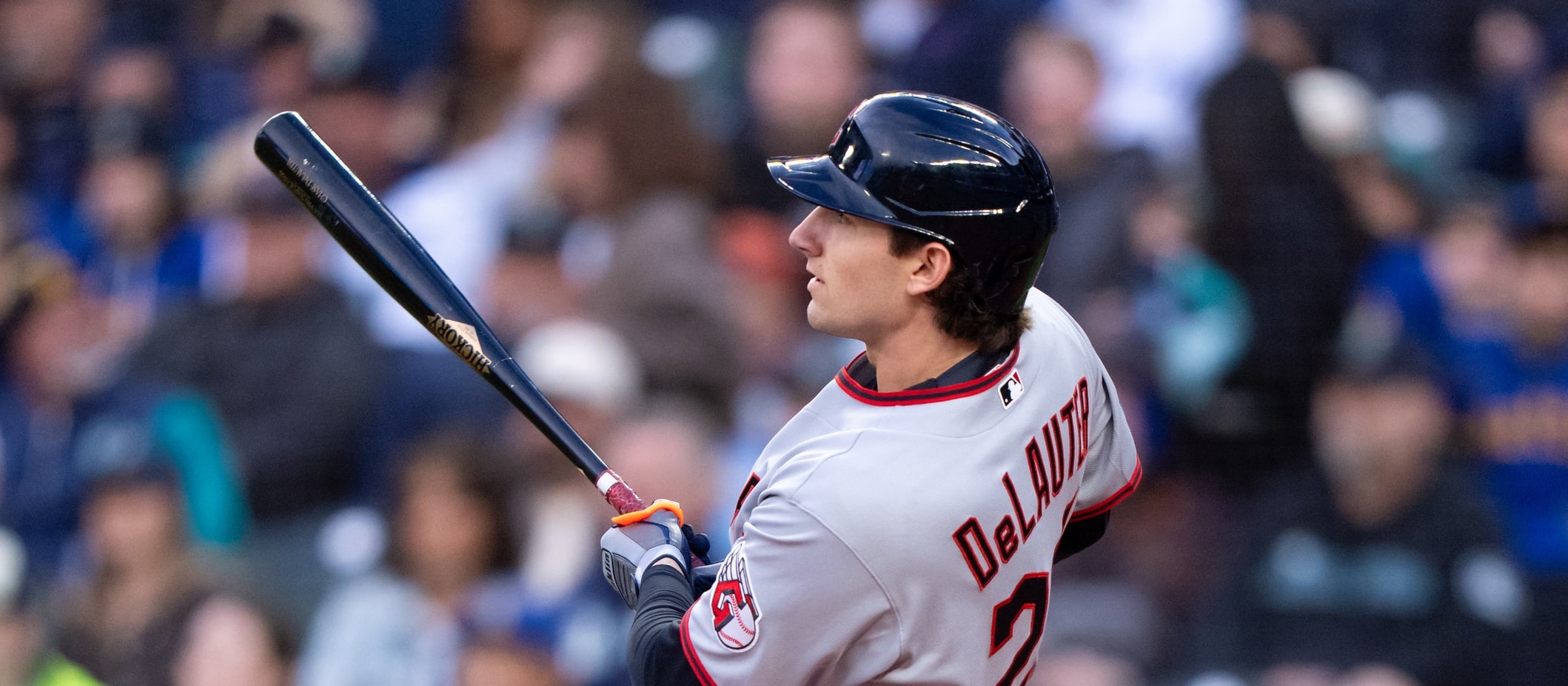
There are two hitters who were easy inclusions on this list based on their surface-level production across the opening weekend of the season, with DeLauter being the first. Talent has never been his issue, as DeLauter has consistently been ranked inside of James Anderson's top 100 prospects, peaking inside the top 15. Instead, health has held DeLauter back, as his season high in plate appearances is 242 (in 2023), and he's logged only 164 and 177 in 2024 and 2025, respectively.
Healthy for the time
Evaluating performances early in the season is always a difficult task, but that challenge has become more evident in 2026 as MLB has tried to take a page out of the NFL's book with new TV deals on streaming services, which has in turn led to more standalone games. That led to a very disjointed schedule for the opening weekend, with Saturday being the only day that all 30 teams were in action.
Given that the stats cited in this article are based on only three games, it's important to keep early surface results in perspective. On the other hand, it's equally important to spot early trends and player skill changes that can affect fantasy rosters for the entire season.
With that in mind, this article will primarily focus on usage and other underlying metrics such as bat speed and pitch velocity. Of course, there will also be some surface-level performances that were simply too strong to ignore.
Risers
Chase DeLauter, OF, Guardians
There are two hitters who were easy inclusions on this list based on their surface-level production across the opening weekend of the season, with DeLauter being the first. Talent has never been his issue, as DeLauter has consistently been ranked inside of James Anderson's top 100 prospects, peaking inside the top 15. Instead, health has held DeLauter back, as his season high in plate appearances is 242 (in 2023), and he's logged only 164 and 177 in 2024 and 2025, respectively.
Healthy for the time being, DeLauter started all four games for the Guardians across their weekend series against the Mariners while slotting second in the lineup. Of course, this is all burying the lede, as he also tallied four home runs in those four games. The combination of health, talent and team context could lead to a breakout season for DeLauter in 2026.
 Munetaka Murakami, 1B/3B, White Sox
Fantasy players seemed to have a healthy amount of skepticism regarding Murakami ahead of his first season in MLB. The source of that concern primarily stemmed from strikeout rates in the range of 28 to 29 percent across his last three seasons in Japan, and particularly his struggles against high-velocity pitches. Both of those problems figured to get even bigger given the strength of pitching in MLB relative to the Nippon Professional Baseball League, so the concern was seemingly grounded in solid logic. Teams around the league seemed to share the concern, as Murakami settled for a relatively modest contract.
Murakami provided an emphatic answer to those concerns in his first series with the White Sox, homering once in each of the team's three games against the Brewers. The homers came off of pitches at 93.2, 91.8 and 90.5 mph. While not premium velocity, Murakami didn't show any problems catching up with fastballs. Perhaps more telling for his potential long-term success is the fact that Murakami has exhibited above-average bat speed. He's averaged 73.7 mph on his swings (74th percentile) and has a 50 percent fast-swing rate (75 mph or more). His swing length also hasn't been out of the ordinary at 7.6 feet, with the league average at 7.3. Each of those metrics suggests velocity may not be as big of a concern as believed this winter. Pitchers will undoubtedly make adjustments, so this assessment will be open to revision, but the opening statement from Murakami has answered lingering concerns.
 Jacob Misiorowski, SP, Brewers
Through Sunday night, 57 pitchers have worked at least five innings. Among them, Misiorowski has the second-highest swinging strike rate (SwStr%) and called + swinging strike rate (CSW%), with only Dylan Cease besting him in each. It's not news that Misiorowski can generate strikeouts, but there were multiple positive signs in his initial outing against the White Sox. The first was simply his ability to generate 11 punchouts. In 2024, he generated double-digit strikeouts in two of his 14 starts despite a 31.9 percent strikeout rate.
That leads to the second positive from his start, which was that the Brewers allowed him to throw 94 pitches, face 20 batters and complete 5.0 innings. Looking back to 2025, he was allowed to throw more than 90 pitches in only three starts, faced at least 20 batters in only five starts and completed at least 5.0 innings on seven occasions. Given what we saw the rest of the weekend — Chad Patrick was pulled after only 74 pitches and Brandon Sproat was crushed — Milwaukee may not have much of a choice but to rely on Misiorowski as a workhorse and team ace.
Note: Nolan McLean was another potential breakout pitcher with a very strong opening start. He ranked third in CSW% among pitchers who threw at least 5.0 innings with a mark of 36.9 percent.
 Nolan Schanuel, 1B, Angels
Schanuel hasn't offered much pop through his first two full seasons as a pro, but he has worked to improve his bat speed each of the last two offseasons. The results are becoming apparent early in 2026. In 2025, Schanuel's bat speed jumped from 62.2 mph in 2024 to 67.5 mph in 2025, and early on this season that mark has climbed to 71.0 mph. It's too early to quote barrel rate and other measures of contact quality, but Schanuel does have two home runs in the Angels' first three games. He won't become an elite power hitter, but Schanuel may improve enough to gain more intrigue as a fantasy option while hitting directly behind Zach Neto and Mike Trout.
Fallers
 Lawrence Butler, OF, Athletics
Butler had work done on both of his knees early in the offseason and was handled conservatively by the Athletics for much of spring training. He started only four exhibition games, and he played in the outfield in only two of those. It's not a particular surprise that Butler would draw some extra days off early in the regular season, but he started only one of three games in the team's opening series against the Blue Jays. Particularly concerning was his absence from Saturday's lineup against righty Dylan Cease, given that the team knew a lefty was on the mound Sunday for Toronto (a more natural day to sit Butler). There's still plenty of time for Butler to deliver on his power-speed potential, but his early-season usage clearly suggests he isn't fully healthy or up to speed, casting doubt on his ability to make an impact — particularly on the basepaths — even when he is in the lineup.
 Carlos Estevez, RP, Royals Bryan Abreu, RP, Astros
Seranthony Dominguez, please have a seat. https://t.co/QdG4oD0zca
— Jeff Erickson (@Jeff_Erickson) March 29, 2026
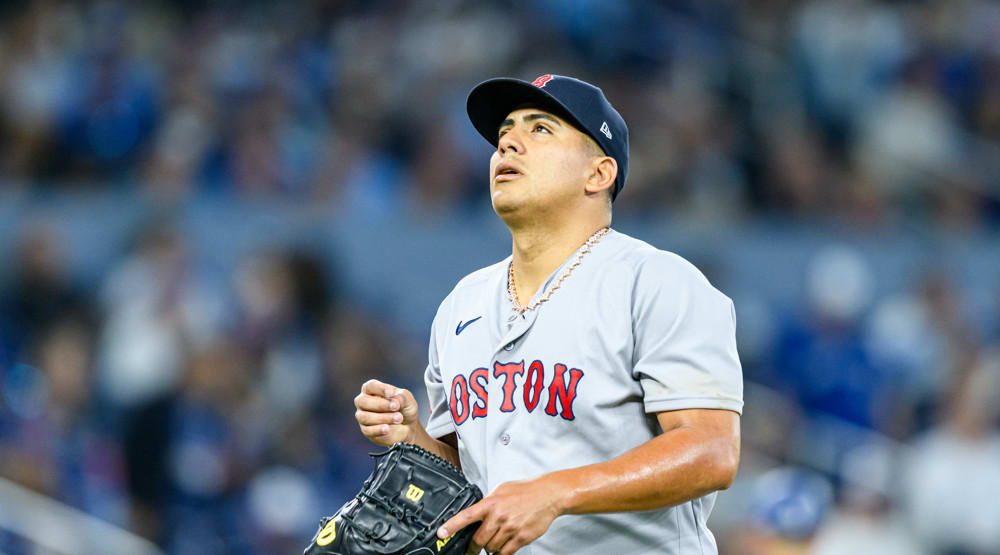
It was a rough opening weekend for many closers around the league, as Jeff Erickson highlighted on his X account. The purpose of this article isn't necessarily to hit every one of those struggles, but Estevez and Abreu look to have had the most damaging performances. Estevez has struggled with velocity all spring, then averaged 91.2 mph in his initial appearance Saturday. The end result was a blown save. In addition to providing an update on an ankle injury Estevez suffered in the same outing, manager Matt Quatraro already hinted at moving Estevez into a lower-leverage role during media availability Sunday. Estevez has walked a tightrope in recent seasons in terms of ratios, but he has consistently delivered saves. Fantasy managers hoping for the same production in 2026 will likely need to — or have already — hit the waiver wire aggressively.
Abreu was supposed to be at least a short-term source of saves while Josh Hader (biceps) ramped up, with the potential of setbacks extending Abreu's viability as a closer. Instead, Abreu appeared in two of Houston's first three games and has walked four of the nine batters he's faced while giving up four earned runs. His velocity is also down, which caused manager Joe Espada to express concern about potential injury, and he also said Abreu may not be throwing his pitches with full conviction. Regardless of the exact reason, it's difficult to trust Abreu in the short term, and his long-term chances of picking up saves was never particularly strong.
For more closer updates, check out our new Closer Carousel column which debuted today.
 Emmet Sheehan, SP, Dodgers
Speaking of reduced velocity, Sheehan is another highly drafted pitcher who had velocity struggles in the spring that have carried over into the regular season. The Dodgers have blamed this on mechanical issues, but regardless of the reason — injury being the other obvious potential explanation — his first start continued an alarming trend.
Emmet Sheehan had issues maintaining his stuff and command in spring, something they attributed to some mechanical stuff he was working through.
Related: here is Sheehan's fastball velocity by inning tonight. pic.twitter.com/CT6mruhNvf
— Fabian Ardaya (@FabianArdaya) March 28, 2026
As Fabian Ardaya's tweet illustrates, Sheehan's velocity dropped 2.7 mph from the first to the fourth inning. The end result from Friday's start was that Sheehan managed to complete only 3.1 innings with mediocre results. This could just be a small setback preceding a breakout season, but there is at a minimum a reason for concern for Sheehan's next few starts.